
3333 North 188Th Avenue, Litchfield Park, AZ 85340
For more information about senior living options: (866) 208-4318
Litchfield Countryside Home Care Costs & Pricing
At Litchfield Countryside Home Care, the monthly costs for residential accommodations are competitively positioned within the broader market of Maricopa County and Arizona. For a semi-private room, residents can expect to pay $3,000, which is slightly above the county's average of $2,801 and the state's average of $2,820. When it comes to private rooms, the fee rises to $3,500; again, this reflects a premium over both Maricopa County's average of $3,318 and Arizona's statewide figure of $3,345. These rates reflect not only the quality of care provided but also the personalized services tailored to meet the needs of residents in a nurturing environment.
| Floor plans | Litchfield Countryside Home Care | Maricopa County | Arizona |
|---|---|---|---|
| Semi-Private | $3,000 | $2,801 | $2,820 |
| Private | $3,500 | $3,318 | $3,345 |
Assisted Living communities with a similar price nearby
-
from -$100 / mo
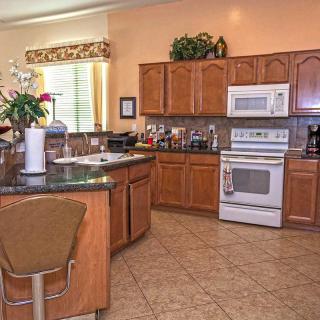
Royal Paradise Care
$2,900 to $3,800 / month11.4 miles away -
About the same
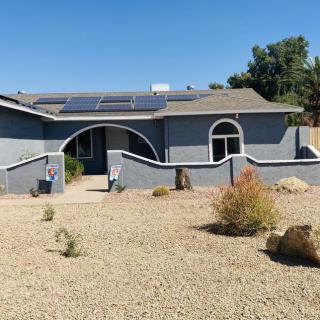
Bella Amore Assisted Living
$3,000 / month20.5 miles away -
from -$150 / mo

Covenant Care Assisted Living Home
$2,850 to $3,705 / month8.0 miles away -
from -$500 / mo
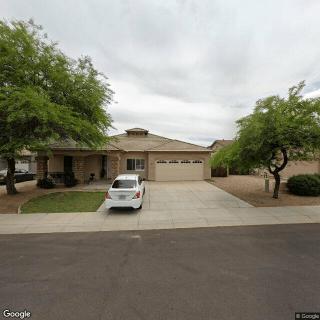
Anc Assisted Living Homes I
$2,500 to $3,500 / month9.5 miles away -
from -$300 / mo

Caring Hearts Senior Care
$2,700 to $3,500 / month11.6 miles away
Overall Review of Litchfield Countryside Home Care
Pros
 Litchfield Countryside Home Care is an outstanding care facility.
- The reviewers feel fortunate to have found them.
- They are very happy with the conditions and other factors at the facility.
- They would definitely recommend the facility to others.
Review
Litchfield Countryside Home Care in Litchfield Park, AZ is best suited for seniors who prize a small, home-like atmosphere where staff know residents well, routines feel predictable, and family input is welcomed as part of daily care. This community appears to excel at delivering warmth, personal attention, and a sense of security that comes from consistent caregivers who approach daily living as a family-centered partnership rather than a clinical routine. Families seeking a place where life feels comfortable, approachable, and grounded in everyday kindness will likely find this setting a natural fit.
Those who should consider alternatives include residents with highly complex medical needs that require frequent on-site skilled nursing, intensive rehabilitation, or highly specialized memory-care programming. Larger campuses with wide-ranging clinical capabilities, robust activity calendars, or resort-style amenities may better suit families pursuing a broader service mix or more extensive on-site medical resources. For those who value scale, variety, and formal clinical infrastructure, the option landscape may feel insufficient here.
The strongest positives center on care quality and living conditions. The community is described as outstanding, with families feeling fortunate to have found them and openly satisfied with the environment and the many conditions that influence daily life. A consistently favorable impression on cleanliness, safety, and the overall daily experience signals a setting where residents likely enjoy dependable routines and a reassuring, predictable cadence to each day.
Another clear pro is the trust and reassurance that come from positive experiences across multiple reviews. The 5-star rating, echoed across both accounts, suggests reliable caregiver engagement, clear lines of communication with families, and a sense of community that residents and relatives can rely on. In practical terms, this often translates to staff who respond promptly, residents who appear well-cared-for, and families who feel included in care decisions, enduring factors that matter when choosing whether a home truly feels like “home.”
Yet potential drawbacks exist mainly in the implied trade-offs that accompany a smaller, home-based model. The reviews do not outline extensive clinical depth, breadth of programming, or large-scale medical oversight, which means some families may need to confirm whether specialty services (rehab, memory support, complex wound care) are available on-site or via partnerships. The intimacy that makes daily life more personalized can also mean a tighter staff footprint, which might challenge coverage during scheduling gaps or staff absences. These are legitimate questions to explore, and the absence of detail should prompt direct inquiry.
Ultimately, the key decision comes down to prioritizing warmth, personal touch, and consistent day-to-day attentiveness over breadth of services and campus size. The pros, outstanding, attentive care; clean, comfortable, and welcoming environments; strong family communication, largely offset the potential cons by delivering a high-touch experience where concerns are noticed quickly and addressed with clarity. For families who value trust and a homelike rhythm over expansive clinical offerings, this community presents a compelling, well-supported option.
Practical next steps for families: arrange a thorough tour and observe a shift to see how staff interact with residents and how information flows to families. Ask about staff-to-resident ratios, what levels of medical oversight exist on-site, and how care plans are developed and updated. Clarify what is included in the price, what constitutes extra charges, and how respite and short-term stays are handled. Finally, check whether the setting can accommodate any specialized needs that may arise, and weigh that against the emotional comfort, predictability, and sense of belonging that two five-star reviews already signal. If those elements align with what matters most, Litchfield Countryside Home Care stands out as a prudent, reliable choice.
 5 resident community capacity
 Assisted Living
 Board and Care Home
 Activities on-site
 Beautician on-site
 Cable or satellite TV
 Devotional services on-site
 Dining room
 Fully furnished
 Garden
 Housekeeping services
 Move-in coordination
 Outdoor common areas
 Private
 Respite or short term stays offered
 Telephone
 Wheelchair accessible showers
 Wi-Fi/high-speed internet available
 24-hour supervision
 Ambulatory care
 Assistance with bathing
 Assistance with dressing
 Assistance with transfers
 Diabetes diet
 Diabetic care
 High acuity care
 Meal preparation and service
 Medication management
 Special dietary restrictions
 Transportation arrangement (medical)
 Transportation to doctors appointments
 Christian services
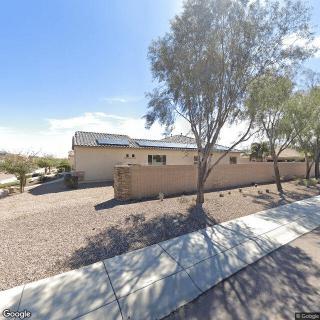

 Assisted Living Expenses and Long-Term Care Insurance: A Comprehensive Exploration
 Securing Financial Support for Assisted Living: A Comprehensive Overview
 Social Security Benefits and Assisted Living: Navigating Options Across the U.S.