
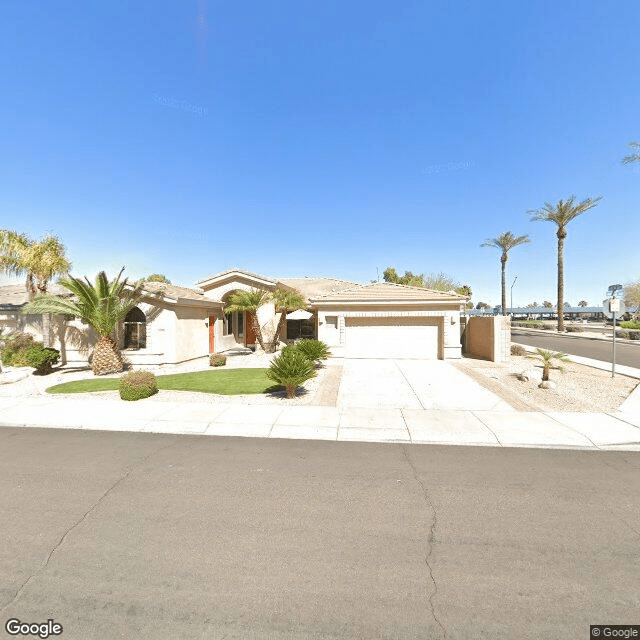
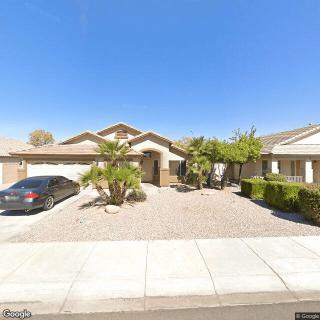
14808 W. Amelia Ave, Goodyear, AZ 85395
To contact a resident: (602) 725-0268
For more information about senior living options: (866) 208-4318
Goodyear ALH Costs & Pricing
Goodyear ALH offers competitive pricing for its residential care services when compared to both Maricopa County and the broader state of Arizona. For semi-private rooms, Goodyear ALH is priced at $2,500 per month, which is notably more affordable than the county average of $2,801 and the state average of $2,820. Similarly, private room accommodations at Goodyear ALH are available for $3,500 monthly, presenting a cost-effective alternative to the county's average of $3,318 and the state's $3,345. This pricing strategy positions Goodyear ALH as an attractive option for individuals seeking quality care in a welcoming environment without compromising their financial plans.
| Floor plans | Goodyear ALH | Maricopa County | Arizona |
|---|---|---|---|
| Semi-Private | $2,500 | $2,801 | $2,820 |
| Private | $3,500 | $3,318 | $3,345 |
Senior living communities with a similar price nearby
-
from +$400 / mo
Royal Paradise Care
$2,900 to $3,800 / month9.1 miles away -
from +$300 / mo
Home of Helping Hands Assisted Living, LLC
$2,800 to $3,500 / month1.1 miles away -
from -$100 / mo
Jolley Family Assisted Living Home II
$2,400 to $3,875 / month8.9 miles away -
from +$350 / mo

Covenant Care Assisted Living Home
$2,850 to $3,705 / month7.1 miles away -
About the same
Anc Assisted Living Homes I
$2,500 to $3,500 / month10.1 miles away
Overall Review of Goodyear ALH
Pros
 The new owners are nurses with hospice, mental health and dementia experience.
- They did a very good job with her mother.
- The staff are caring and attentive.
- She is now having meals with the other residents.
- She is enjoying the activities.
- She likes to sign for the other residents.
- The care is recommended to other families.
Cons
 They can be very charming and know what to say to get families to place their loved ones there, but they seem to care more about money than the residents.
- The level of care promptly diminished after placement, making it unsafe for the resident to remain.
- A complaint was filed with the State and it was substantiated.
- The reviews warn others not to place their loved ones there.
Review
Goodyear ALH is best suited for families that want hands-on clinical leadership at the helm, especially when dementia- or memory-care needs are present and a facility with nursing-focused experience is appealing. The new owners bring direct nursing, hospice, mental health, and dementia expertise, which can translate into sharper clinical oversight and more informed responses to complex resident needs. For families who prioritize medical direction and structured activity engagement, this community can feel like a strong match, at least in theory, because those credentials are front and center in the operations.
On the other hand, those who require a consistently proven track record of dependable daily care and a transparent, steady culture may want to consider alternatives. The history here includes dramatic swings in perceived quality, with some families praising the care while others report a rapid decline after admission. Reports of charm used to secure placement, followed by care that deteriorates, and a substantiated state complaint, are red flags for families who cannot tolerate abrupt shifts or questionable safety. If a preferred facility is expected to deliver predictable routines, strict safety practices, and unwavering consistency, it’s prudent to look elsewhere.
The strongest positives center on clinical leadership and attentive staff. The new owners’ nursing and dementia-oriented background offers a framework for better symptom management, medication oversight, and more responsive handling of challenging behaviors. Positive anecdotes highlight attentive caregivers, engaged residents, and meaningful activities that help mom or dad stay socially connected and integrated into meals and daily life. These elements can offset some risk by providing a caring environment where professional training translates into practical, day-to-day support.
Yet the downsides cannot be brushed aside. Several reviewers describe a pattern where initial enthusiasm gives way to diminished care once the loved one is settled, with concerns about being “too focused on the money” rather than the resident’s well-being. Instances of unsafe conditions and a complaint substantiated by the state are not minor footnotes; they signify real safety and quality gaps that must be weighed carefully. In practice, this means families should prepare for the possibility that care quality may fluctuate and that ongoing monitoring and escalation will be essential if choosing this community.
For families evaluating this option, the practical path is to demand concrete assurances and tight oversight. Inquire about staffing levels, turnover, and training programs; request up-to-date care plans and details on dementia-specific protocols; ask for the daily schedule, meal plans, and activity calendars; and insist on transparent communication channels for concerns. Observe care interactions during a visit, speak with current residents and their families, and request a trial period or a clearly defined transition plan with measurable benchmarks. Finally, verify how management has addressed past complaints and what corrective actions are in place to prevent recurrence.
Ultimately, Goodyear ALH represents a calculated choice for a subset of families: those who prize clinical leadership and the potential for more specialized dementia care, and who can tolerate some variability in day-to-day consistency. For others, especially with a heightened emphasis on uniform performance, safety, and long-term safety culture, the combination of positive oversight and prior quality concerns argues for a careful comparison with peers. If proceeding, proceed with a rigorous due-diligence regime, clear expectations, and a plan to monitor progress, escalate issues, and reassess promptly if outcomes do not align with stated goals.
 Board and Care Home
 Activities on-site
 Devotional services off-site
 Indoor common areas
 Private
 Respite or short term stays offered
 Phoenix Sky Harbor International (22 miles away)
 Diabetic care
 High acuity care
 Incontinence care
 Medication management
 Meals provided


 Nurturing Our Elders: Linda's Journey of Supporting Her Mother
 A Comprehensive Exploration of Common Misunderstandings about Powers of Attorney
 Senior Move Management: Understanding the Role, Value, and Associated Costs