
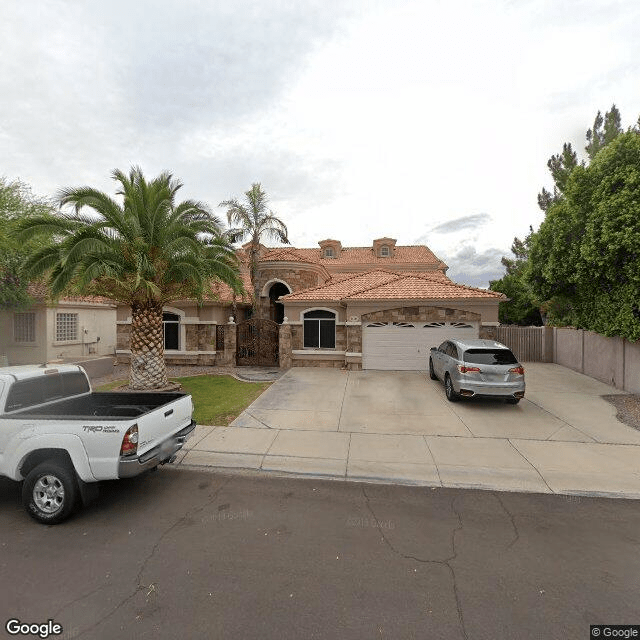
21428 North 55Th Avenue, Glendale, AZ 85308
For more information about senior living options: (866) 208-4318
Arrowhead Lakes Adult Home Care Costs & Pricing
Arrowhead Lakes Adult Home Care offers competitive pricing for its private room accommodations, set at $3,000 per month. This rate is notably lower than the average costs in Maricopa County, which stand at approximately $3,318, and the state of Arizona, where the average reaches around $3,345. This positioning not only makes Arrowhead Lakes an attractive option for individuals seeking quality adult home care but also highlights its commitment to providing accessible services without compromising on the standard of care. By offering a more affordable alternative within the region, Arrowhead Lakes ensures that residents can receive personalized support in a comfortable environment while maintaining financial peace of mind.
| Floor plans | Arrowhead Lakes Adult Home Care | Maricopa County | Arizona |
|---|---|---|---|
| Private | $3,000 | $3,318 | $3,345 |
Assisted Living communities with a similar price nearby
-
from -$200 / mo
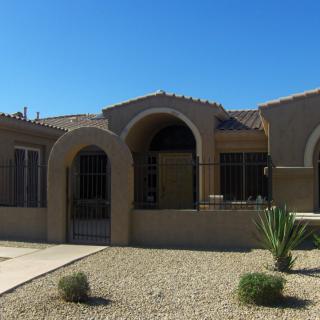
Pinnacle Peak Assisted Living
$2,800 to $3,100 / month15.4 miles away -
from -$100 / mo
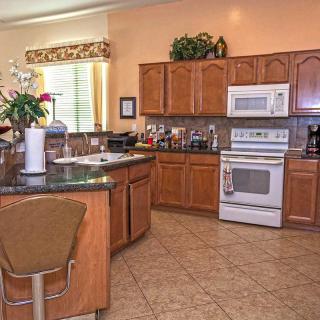
Royal Paradise Care
$2,900 to $3,800 / month10.7 miles away -
About the same
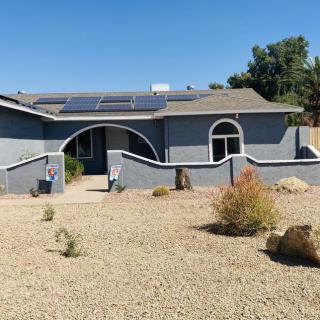
Bella Amore Assisted Living
$3,000 / month5.7 miles away -
from -$150 / mo

Covenant Care Assisted Living Home
$2,850 to $3,705 / month14.6 miles away -
from -$500 / mo
Anc Assisted Living Homes I
$2,500 to $3,500 / month16.4 miles away
Overall Review of Arrowhead Lakes Adult Home Care
Pros
 The owners are nice.
- The house is nice.
- The property is a beautiful luxury home.
- The bathroom is well appointed with a handicap shower.
Cons
 The house is not right for his dad.
- Rooms are too small.
- It is not active enough.
- It is not a good match for mom.
Review
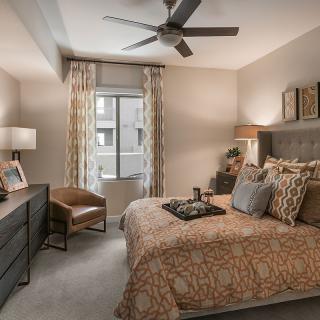
Arrowhead Lakes Adult Home Care in Glendale, Arizona is best suited for seniors who want a small, homey atmosphere where the owners are approachable and care feels personal. With only four residents, the setting emphasizes privacy, quiet, and a homelike rhythm over the bustle of larger campuses. This is a place for families prioritizing hands-on oversight, clean, well-kept interiors, and a sense of being welcomed into a private residence rather than checked in at a facility. The match hinges on tolerance for compact living spaces and a calm schedule; for someone who thrives on social programming, organized outings, or larger rooms, this arrangement may feel limiting.
On the upside, the core positives come through in the tone of the reviews: the owners are nice, and the house itself is described as nice and even beautiful, a luxury feel packed into a small footprint. The four-resident configuration can translate into a level of attentiveness and oversight that’s hard to match in bigger homes. The bathrooms are noted as well appointed with handicap showers, a practical asset for mobility needs, and the overall presentation suggests a residence that takes pride in its interior and upkeep. For a family seeking reassurance that care comes with a personal touch, these are meaningful plusses.
Yet the downsides are real and central to how well Arrowhead Lakes fits a given admission. Rooms are small, an issue that matters whether a resident has a private room or shares space, especially over the long term or for couples. The compact footprint also translates into a limited sense of personal space and potential constraints on furniture, storage, and daily living routines. In short, the environment prioritizes intimacy over expansiveness, which may be a deal-breaker for those who value more generous living areas.
Activity level is another core consideration. The feedback notes a lack of activity, suggesting the schedule may feel quiet or under-stimulating for residents who want regular engagement, social events, or structured programs. The heart of the value proposition, a private, owner-driven home setting, works counterpoint to this weakness: personal attention, flexible routines, and closer supervision can compensate for fewer activities, but only if the resident prefers a calm, low-traffic day. For someone who needs more frequent interaction, varied programming, or outdoor excursions, the gap is unlikely to be filled by the existing model.
Who should consider alternatives? Families weighing options for more social opportunities, larger personal spaces, or stronger clinical support should look at larger assisted living communities with diversified activity calendars and more expansive floor plans. If care needs might escalate, or if mobility or memory issues require more on-site programming, Arrowhead Lakes may not be the best long-term fit. It can work as a short-term solution or as a transition home for those who value comfort and privacy, but it’s less suitable for residents who want a busy calendar and rooms that feel more ample.
Practical next steps: visit with a clear checklist and early conversations about room size, calendar, staff-to-resident ratios, meal options, and how care is scaled if needs change. Ask to see the exact dimensions of the rooms, the degree of autonomy residents have within their space, and how safety protocols are handled in daily routines. Confirm the availability of activities, outings, and guest access, and probe whether respite care or trial stays are possible. If the resident’s priorities align with a quiet, personal, home-like setting and they are comfortable with smaller spaces, Arrowhead Lakes can be a strong, personally attentive option; otherwise, seek a community with more expansive living space and a livelier programming slate.
 5 resident community capacity
 Assisted Living
 Board and Care Home
 Respite Care
 Activities on-site
 Air-conditioning
 Cable or satellite TV
 Devotional services off-site
 Dining room
 Fully furnished
 Garden
 Handicap accessible
 Housekeeping services
 Indoor common areas
 Move-in coordination
 Outdoor common areas
 Private
 Private bathrooms
 Swimming pool / hot tub
 Telephone
 Wheelchair accessible showers
 Wi-Fi/high-speed internet available
 Phoenix Sky Harbor International (20 miles away)
 24-hour supervision
 Ambulatory care
 Assistance with bathing
 Assistance with dressing
 Assistance with transfers
 Diabetes diet
 Diabetic care
 High acuity care
 Incontinence care
 Meal preparation and service
 Medication management
 Special dietary restrictions
 Transportation arrangement (medical)
 Transportation to doctors appointments
 Birthday parties
 Christian services

 8 Key Indicators That Suggest It May Be Time to Transition from Assisted Living to Skilled Nursing Care
 Vibrant Senior Living: A Comprehensive Guide for Active Older Adults
 When to Transition from Assisted Living to Memory Care: Key Indicators, Steps, and Finding the Right Community