

21721 South 158th St., Gilbert, AZ 85298
To contact a resident: (480) 396-6270
For more information about senior living options: (866) 208-4318
Hamilton House Costs & Pricing
Hamilton House offers a competitive pricing structure for its residential options, with semi-private rooms available at $3,200 per month and private rooms at $4,000. When compared to the average costs in Maricopa County, which are slightly lower at $2,801 for semi-private rooms and $3,318 for private accommodations, Hamilton House positions itself as a premium choice with additional services or amenities that may justify the higher price point. Similarly, Arizona's overall averages of $2,820 for semi-private and $3,345 for private rooms reflect a statewide trend that Hamilton House surpasses. This pricing strategy indicates a commitment to quality care and an enhanced living experience for residents seeking supportive housing options.
| Floor plans | Hamilton House | Maricopa County | Arizona |
|---|---|---|---|
| Semi-Private | $3,200 | $2,801 | $2,820 |
| Private | $4,000 | $3,318 | $3,345 |
Senior living communities with a similar price nearby
-
from -$575 / mo

The Eldercare Home Of Tempe
$2,625 to $3,412 / month12.7 miles away -
from +$400 / mo
Sonoran Adult Care
$3,600 to $4,000 / month7.1 miles away -
from -$200 / mo
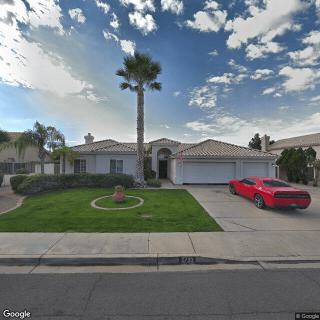
Desert Winds I
$3,000 to $3,800 / month15.0 miles away -
from +$300 / mo
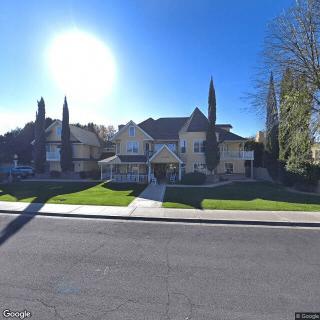
Jim & Patti Jones II
$3,500 to $4,500 / month14.5 miles away -
from -$200 / mo

Jim And Patti Jones Assisted Living Home III
$3,000 to $3,500 / month12.3 miles away
Overall Review of Hamilton House
Pros
 They are very happy with Hamilton House, noting friendly staff, clean facilities, and enjoyable activities as part of a good experience.
- They are pleased with Hamilton House, appreciating the friendly staff, cleanliness, and nice activities that contribute to a positive experience.
- They are pleased with this place, describing it as a small residential facility with a calm and quiet atmosphere.
- They value the one-on-one care made possible by the small number of residents, leading to attentive support.
- They feel it was a good move to choose this residence.
Review
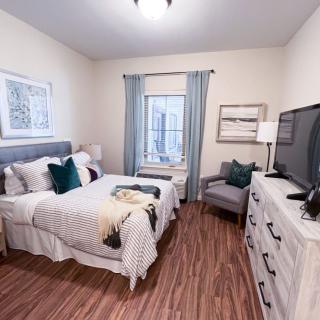
Hamilton House in Gilbert is best suited for seniors who want a warm, home-like setting where care is intensely personal and the pace remains calm. The small residential footprint creates a quiet, low-stress environment, with daily life oriented around consistent routines and close staff attention. Cleanliness and a friendly atmosphere are consistently highlighted, and activities, while modest in scale, are well-regarded. For residents who prize individualized attention, familiar faces, and a sense of safety that comes from one-on-one interactions, this community delivers a level of accessibility and reassurance that larger campuses often struggle to match.
Those who should consider alternatives are seniors who crave a bustling social milieu, a broad menu of amenities, or heavier medical oversight on site. A larger community can offer more extensive group programming, more frequent outings, and a wider array of services that some residents find essential for sustained engagement and independence. Families seeking intense social activity, diverse programming, or a campus with a richer medical-infrastructure should compare options carefully. This is not the spot for someone who equates senior living with high-energy social life or comprehensive hospital-level services.
The strongest positives are concrete and well-prioritized. Staff friendliness, a clean facility, and meaningful activities combine with a calm, safe atmosphere to support residents’ mood, safety, and sense of belonging. The small resident mix makes care feel highly personalized, with caregivers readily available for conversation, reminders, and individualized routines. These benefits help offset the absence of a larger social calendar or on-site bustle. In practical terms, the setting often translates into quicker responsiveness and a feeling that daily life is shaped around the resident rather than around institutional routine.
Yet the main trade-off is social breadth. With fewer peers around, spontaneous social opportunities can be limited, and even excellent one-on-one care may not fully compensate for a lack of constant group interaction. This dynamic will suit many, especially when quiet companionship and predictable engagement are valued, but it can feel isolating for residents who thrive on a thriving communal energy. Families should assess whether the resident’s social needs will be met by the program’s intentional activities and the staff’s capacity to foster meaningful connections in a more intimate setting.
Ideal residents are those with mild to moderate assistance needs who do not require continuous skilled nursing. Hamilton House supports daily living with attentive staff and accessible care, while preserving a homey, intimate atmosphere, important considerations for couples or individuals who want to stay connected to a small, familiar community. It’s less appropriate for someone who anticipates frequent medical interventions, rehab, or an expansive calendar of events. The setting favors consistency, dignity, and close caregiver relationships over the breadth of services found on larger campuses.
In sum, Hamilton House offers a warm, clean, and personally attentive option in Gilbert that shines for residents who want one-on-one care within a peaceful, homelike environment. For families prioritizing social variety, medical intensity, or expansive amenities, it makes sense to look at alternatives. The decision should hinge on whether the resident’s preferred lifestyle aligns with a small-scale, high-touch setting. Touring the community and speaking with staff will reveal whether the pace, attention, and environment meet the resident’s needs and long-term comfort.
 Board and Care Home
 Activities on-site
 Bath tubs
 Devotional services off-site
 Indoor common areas
 Outdoor common areas
 Private
 Private bathrooms
 Respite or short term stays offered
 Phoenix Sky Harbor International (20 miles away)
 Diabetic care
 High acuity care
 Incontinence care
 Medication management
 Meals provided




 Seniors and Modern Transportation: Exploring Uber, Lyft, and Other Ride-Hailing Options
 Comprehensive Guide to Qualifying for Home Health Care Services
 Powerful Realities of Elder Abuse and the Most Effective Ways to Report It