
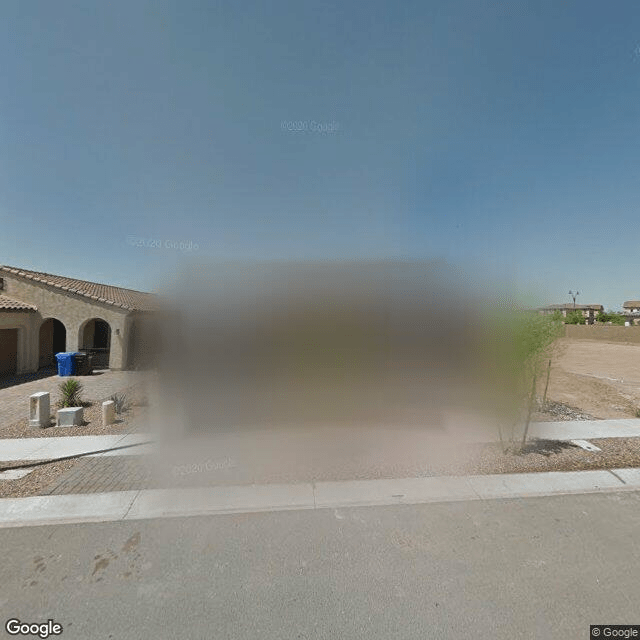
1812 S Racine Ln, Gilbert, AZ 85295
To contact a resident: (480) 809-7947
For more information about senior living options: (866) 208-4318
H&A Family Care Home Costs & Pricing
H&A Family Care Home offers competitive pricing for its private room accommodations at $3,000 per month, which positions it favorably compared to the average costs in Maricopa County ($3,318) and across the state of Arizona ($3,345). This pricing structure not only reflects H&A Family Care Home's commitment to providing quality care at accessible rates but also highlights its strategic advantage within a market where costs can vary significantly. Residents and their families can find reassurance in knowing they are receiving valuable services in a nurturing environment without exceeding local financial benchmarks.
| Floor plans | H&A Family Care Home | Maricopa County | Arizona |
|---|---|---|---|
| Private | $3,000 | $3,318 | $3,345 |
Assisted Living communities with a similar price nearby
-
from -$375 / mo

The Eldercare Home Of Tempe
$2,625 to $3,412 / month10.9 miles away -
from -$500 / mo
Bella Vista Assisted Living Home
$2,500 to $3,000 / month6.2 miles away -
from +$200 / mo

Evergreen Assisted Living
$3,200 to $7,500 / month23.2 miles away -
from -$500 / mo
Coming Home Assisted Living Home
$2,500 to $3,000 / month6.3 miles away -
from +$500 / mo
Diamond Quality Assisted Living Care Home
$3,500 to $4,500 / month24.6 miles away
Overall Review of H&A Family Care Home
Pros
 The quality of care at H&A is fantastic, with caring staff who look out for residents' needs.
- H&A provides affordable, high-level care for loved ones.
- H&A Family Care Home is close to family homes and offers more one-on-one care due to its small size.
- The rooms are good-sized, private, and wheelchair- and walker-accessible.
- They communicate well with families and provide updates when needed.
- They follow all mandated state rules and operate with careful oversight.
Review
This community is best suited for families seeking a tightly run, home‑like setting where a loved one receives highly personalized attention and consistency in caregiving. H&A Family Care Home in Gilbert is clearly a fit for seniors who value one‑on‑one interaction, a quiet, predictable routine, and a setting that feels like a family environment rather than a clinical campus. It works particularly well for residents who benefit from intimate oversight by owners and a small caregiving team, where relationships matter as much as daily tasks. Proximity to relatives is a practical plus, ensuring frequent visits translate into meaningful, real-time updates and direct involvement in care decisions. In short, this is a strong match for elders who thrive in a low‑stakes, high‑touch atmosphere and for families who want clear lines of communication and visible accountability.
That said, an explicit note for those considering alternatives is warranted. Families looking for a bustling campus with a wide slate of organized activities, extensive on-site medical services, or transportation‑driven access to a broad network of appointments may find this setting too intimate. The very strengths of H&A, its small size, direct involvement of the owners, and a tight care team, can translate into fewer scheduled programs, fewer on-site therapies, and less of the campus‑style infrastructure some seniors expect. For residents requiring higher levels of skilled nursing, complex rehabilitation, or frequent slate changes in daily activities, larger facilities with a broader service mix are likely to be more suitable. This is not a deficit; it simply marks a difference in what kind of daily life and care ecosystem will feel most right.
From a decision‑making perspective, the strongest positives center on the one‑to‑one attention that a three‑resident home can deliver. Staff turnover is less visible in a setting where caregivers know every name and preference, enabling nimble responsiveness to changing needs and quick adjustments to routines. Families repeatedly describe the team as genuinely caring, with owners who are “tremendous” in their involvement, an anchor for trust when navigating tough health moments. The private, wheelchair‑ and walker‑accessible rooms support dignity and autonomy, reducing the friction that can accompany transitions to senior living. When care plans shift, the boundaries between family input and professional oversight feel clear and collaborative, not bureaucratic.
Communication is another standout asset. The care team’s proactive updates and the ongoing sense that concerns are addressed promptly create a rhythm of reassurance that goes beyond what many larger facilities offer. Being able to pick up the phone and hear that someone is paying attention to a parent’s morning routine, medication reminders, or a change in mood matters as much as the concrete services provided. That transparent communication translates into less anxiety for families and a sense that the home’s operations are deliberately tuned to the resident’s daily reality, not to a calendar of generic tasks. In a setting where every detail matters, this level of attentiveness can be the deciding factor for families who have wrestled with impersonal experiences elsewhere.
Still, it is prudent to acknowledge the trade‑offs inherent in a small model. The reviews do not highlight a broad menu of enrichment options or expansive on‑site programming, which can be a drawback for seniors who crave constant social stimulation. The same limited scale that supports intimate care can also constrain activity variety and peer interactions. Medical oversight, while reliable and steady, tends to hinge on visiting professionals rather than a full‑time clinical staff on site; families should verify what levels of nursing care and after‑hours responsiveness are guaranteed and how quickly incidents are managed when the primary team is not physically present. These are not fatal flaws, but they are legitimate considerations when calibrating care expectations against a larger facility’s offerings.
In the final assessment, H&A Family Care Home stands out for families prioritizing a high‑touch, trustworthy, private‑room option in a small, tightly knit environment. It is especially compelling for seniors who no longer require intensive on‑site medical therapy but still require vigilant daily support, respectful autonomy, and straightforward, frequent communication. For households whose chief criteria include personalized interaction, owner involvement, and a value proposition that preserves resources for care rather than overhead, this community earns strong, actionable confidence. If the decision criteria tilt toward robust social calendars, extensive on-site therapies, or broad nursing capabilities, alternatives with larger staffing and program breadth deserve close consideration. The next practical step is a visit: meet the owners, tour the private rooms, and observe the daily flow to confirm that the vibe and cadence align with the resident’s needs and the family’s expectations.
 6 resident community capacity
 Assisted Living
 Board and Care Home
 Respite Care
 Cable or satellite TV
 Dining room
 Fully furnished
 Garden
 Housekeeping services
 Move-in coordination
 Outdoor space
 Private
 Telephone
 Wi-Fi/high-speed internet available
 Phoenix Sky Harbor International (18 miles away)
 24-hour supervision
 Activities of daily living assistance
 Assistance with bathing
 Assistance with dressing
 Assistance with transfers
 Diabetes diet
 High acuity care
 Meal preparation and service
 Medication management
 Special dietary restrictions
 Transportation arrangement (medical)
 Transportation to doctors appointments





 Funding and Affording Assisted Living: A Thorough Overview
 Assisted Living Expenses and Long-Term Care Insurance: A Comprehensive Exploration
 Securing Financial Support for Assisted Living: A Comprehensive Overview