
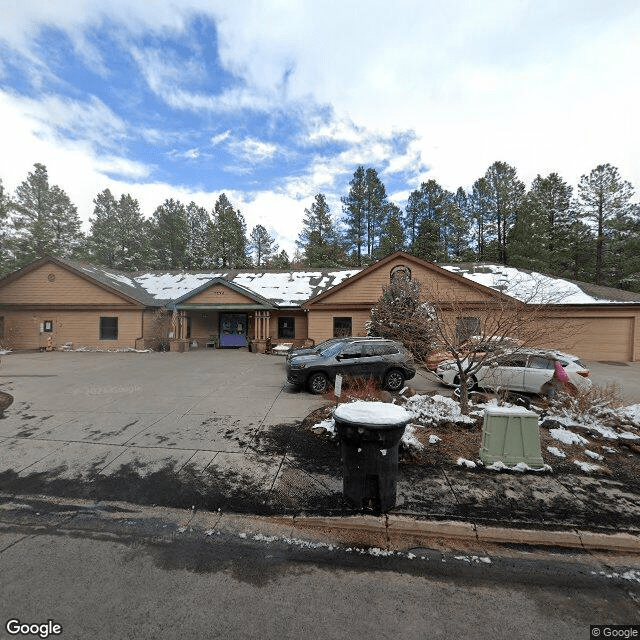
752 N Switzer Canyon Drive, Flagstaff, AZ 86001
To contact a resident: (928) 226-1915
For more information about senior living options: (866) 208-4318
Overall Review of Olivia White Hospice Home
Pros
 The staff were amazing and provided 24-hour care for the mom during the last month of life.
- They were kind and caring to the entire family.
- The dad, Joe, was cared for by phenomenal staff for 117 days, and his passing was peaceful.
- The staff showed love and compassion toward him, and he formed connections with each member.
- They fulfilled his simple wishes, like coffee and donuts, and he became like their grandpa to the family.
- They gave him dignity and made his last days remarkable.
- The team is professional yet personal and compassionate.
Cons
 The place needs a bigger parking lot for families visiting.
Review
Olivia White Hospice Home in Flagstaff is best suited for families facing the final chapter of a loved one’s life who want intimate, hands-on hospice care delivered in a warm, home-like setting. This community shines when the priority is comfort, dignity, and around-the-clock presence. The care team is described as extraordinary in their 24/7 responsiveness, building routines around each patient’s preferences and small rituals. For families, the reassurance comes from seeing professional nursing and supportive aides who combine clinical skill with genuine kindness, creating an environment where the emotional load of end-of-life transition is shared rather than carried alone. The setting works most effectively for those who want care that feels personal and respectful, with staff who become familiar faces rather than distant operators.
Those weighing alternatives should note that Olivia White’s core strength is hospice-focused care, not a full-service long-term facility. It is not the best fit for families seeking extensive medical procedures, rehab programming, or broad social activity calendars outside the end-of-life frame. If a loved one requires more aggressive medical oversight, ongoing skilled nursing beyond comfort care, or memory-care supports that extend far beyond 24/7 presence, other campuses may offer a better match. Additionally, for visitors who need ample parking or larger on-site spaces to accommodate frequent gatherings, the current layout can be a practical drawback. In short, this is the right choice for deeply compassionate end-of-life support, with alternatives more suitable for broader medical needs or more expansive facility amenities.
The strongest pro is the staff. Reviews repeatedly emphasize 24/7 access to caregivers who treat patients with love, maintaining a steady, professional warmth that never sacrifices empathy. This isn’t merely routine care; it’s relational, with families feeling seen and included in the care decisions that shape someone’s last days. The ability to fulfill small requests, coffee and donuts, familiar routines, and personalized touches, demonstrates attentiveness that quiets anxiety and reinforces dignity in the final chapter. Another clear advantage is the environment itself, a serene, beautiful setting that invites reflection and comfort. When care decisions hinge on the quality of interpersonal interactions, Olivia White stands out because professional competence is inseparable from heartfelt presence.
The reviews underscore the human dimension: caregivers become part of the extended family, offering continuity that helps patients and loved ones anchor a sense of normalcy during fraught moments. Nurses remember personalities, preferences, and daily rhythms, turning care into a respectful, individualized experience rather than a one-size-fits-all program. In practice, this relational continuity translates to fewer jarring interruptions and more predictable evenings that honor personal identities. Such a culture is crucial for those who fear that end-of-life care will feel clinical or impersonal. The message is practical: expect care that respects every patient’s story while delivering the consistency and attentiveness families need for true peace of mind.
Logistically, a parking limitation surfaced as the primary tangible drawback. While not a deal-breaker for everyone, it’s a factor for families who visit frequently or during peak times and prefer convenient, on-site parking. Everything else, care quality, staff engagement, and the home-like atmosphere, helps offset this constraint, but it does remain a reality to plan around. The facility’s strengths in caregiving culture and emotional support overwhelm the friction of a tighter parking footprint, especially for those who measure value by the depth of human connection and the reliability of daily routines. In practical terms, this means the choice hinges less on glossy amenities and more on whether a dedicated, compassionate caregiving team can accompany the family through the end-of-life journey with grace and respect.
In the final assessment, Olivia White Hospice Home is a trustworthy, seasoned option for families prioritizing compassionate, continuous end-of-life care delivered with a personal touch. It excels for loved ones who will benefit from intimate, relationship-driven support, where caregivers know names, preferences, and histories, and where dignity governs every movement of the day. It is less suitable for families seeking broad medical services, rehab-focused goals, or extensive long-term programming. Prospective decisions should include a visit to observe staff interactions, discuss daily rhythms, and gauge parking logistics to ensure smooth visitation. For those who want a setting that feels like an extended family tending to a beloved member’s final days, Olivia White Hospice Home stands out as a practical, experienced choice in Flagstaff. Families confronting end-of-life care will find here a level of empathy and professionalism that is rare, actionable, and deeply comforting.
 Assisted Living
 Activities on-site
 Devotional services off-site
 Indoor common areas
 Flagstaff Pulliam (5 miles away)
 Ambulatory care
 Diabetic care
 Meals provided


 Vibrant Senior Living: A Comprehensive Guide for Active Older Adults
 When to Transition from Assisted Living to Memory Care: Key Indicators, Steps, and Finding the Right Community
 Assisted Living and Memory Care: Understanding Their Core Differences