
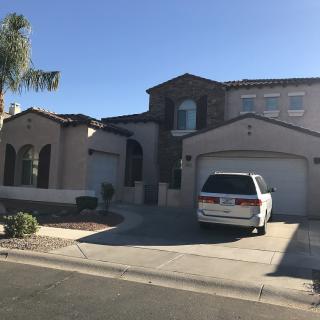
985 East Virgo Place, Chandler, AZ 85249
For more information about senior living options: (866) 208-4318
Overall Review of Markesh Assisted Living
Pros
 The staff at Big Heart Angel Assisted Living are tender, loving, patient, and gentle, delivering outstanding care.
- Chris is described as a big-hearted angel who never leaves the family's side.
- The facility's protocols allow family visits, even when others are locked out, enabling meaningful time with loved ones.
- It feels like a family, with residents, dogs, meals shared together, and gifts for all.
- Every birthday is celebrated with a party and the whole family is invited; holidays are celebrated with gusto.
- A harp concert for residents and staff-supported videos show the caring, engaged community.
- The caregivers made the dad's last months happy and celebratory, staying with the family through the nights.
- The big heart angels do the heavy lifting so families can focus on loving their loved ones.
Review
Markesh Assisted Living in Chandler is best suited for families that want a warm, family‑style atmosphere where caregivers deliver tender, steady attention and where daily life centers on connection, celebration, and visible resident engagement. This community appears ideal for seniors who no longer live independently but still crave emotional support, companionship, and occasions that feel like home. Families that value being able to participate in meals, visits, and shared activities alongside staff will find the culture aligns with their expectations. Those requiring heavy clinical oversight, complex medical management, or dementia care with dedicated memory‑care programming and round‑the‑clock nursing support may want to consider alternatives better suited to medical intensity and structured clinical routines.
The strongest positives revolve around extraordinary caregiver dedication and a palpable culture of care. Reviews highlight tender, loving, and consistent attention to a resident’s needs, with staff that treat families as part of a larger care team. The ability to bring a pet, share meals family‑style, and participate in celebrations, birthdays, holidays, and even impromptu performances, creates a sense of belonging that many families seek but rarely find in other settings. The staff’s willingness to stay connected during difficult moments and their readiness to celebrate a resident’s life with attention and dignity stands out as a defining strength. In short, the heart of this community is the people who show up with compassion every day.
From a practical standpoint, cleanliness, good nutrition, and a culture of celebration emerge as tangible strengths that offset the intangible benefits of companionship. The consistently positive tone of the reviews suggests a well‑ordered, clean environment where residents are fed well and kept comfortable, with routines that feel predictable yet hospitable. The emphasis on family involvement, videos, concerts, and personal touches, contributes to emotional well‑being and reduces the isolation that can accompany aging in place. For families balancing caregiving with work and other obligations, these elements translate into real ease of mind, since care appears to extend beyond routine tasks to meaningful moments that uplift both residents and their loved ones.
However, the reviews provide no explicit critique, which is instructive yet leaves questions about clinical depth unanswered. Potential gaps worth considering include the level of medical oversight, the availability of licensed nursing around the clock, and the facility’s capacity for memory‑care or highly medically complex needs. Without a broad range of feedback, families should verify whether Markesh offers robust medical coordination, regular care planning updates, and access to specialized services if a resident’s condition evolves. The absence of documented downsides in the two reviews does not eliminate the need to confirm these critical details during a tour and through references.
Those weighing alternatives should consider how the environment aligns with medical realities. If a loved one requires intensive daily nursing, strict clinical protocols, or dementia‑specific programming with trained staff available 24/7, a larger community or a setting that highlights memory‑care capabilities may be more appropriate. For residents who thrive on personal connections, flexible visiting, and a celebratory, home‑like atmosphere, this approach, emphasizing warmth, continuity of caregivers, and family engagement, can offset a relatively lighter clinical footprint. The key is matching the care model to the resident’s current and anticipated needs, not simply to a desirable vibe.
In making a decision, practical next steps are essential. Prospective families should observe caregiver interactions firsthand, ask about staff turnover and ratios, review the care planning process, and confirm what medical services are available in‑house versus through external partners. Inquire about dementia care options, emergency procedures, and how family participation is integrated into daily routines. Also verify costs, contract terms, and what is included in monthly rates to determine whether the emotional and social benefits align with financial realities. Taken together, Markesh’s appeal hinges on its exceptional, compassionate staff and a culture that treats residents like family; for the right resident and family, that combination can be decisive, delivering quality of life that outweighs the absence of a broader clinical footprint.
 5 resident community capacity
 Assisted Living
 Board and Care Home
 Cable or satellite TV
 Dining room
 Fully furnished
 Garden
 Housekeeping services
 Move-in coordination
 Outdoor space
 Telephone
 Wi-Fi/high-speed internet available
 Phoenix Sky Harbor International (18 miles away)
 24-hour supervision
 Activities of daily living assistance
 Assistance with bathing
 Assistance with dressing
 Assistance with transfers
 Diabetes diet
 Meal preparation and service
 Medication management
 Special dietary restrictions
 Transportation arrangement (medical)
 Transportation to doctors appointments



 8 Key Indicators That Suggest It May Be Time to Transition from Assisted Living to Skilled Nursing Care
 Vibrant Senior Living: A Comprehensive Guide for Active Older Adults
 When to Transition from Assisted Living to Memory Care: Key Indicators, Steps, and Finding the Right Community