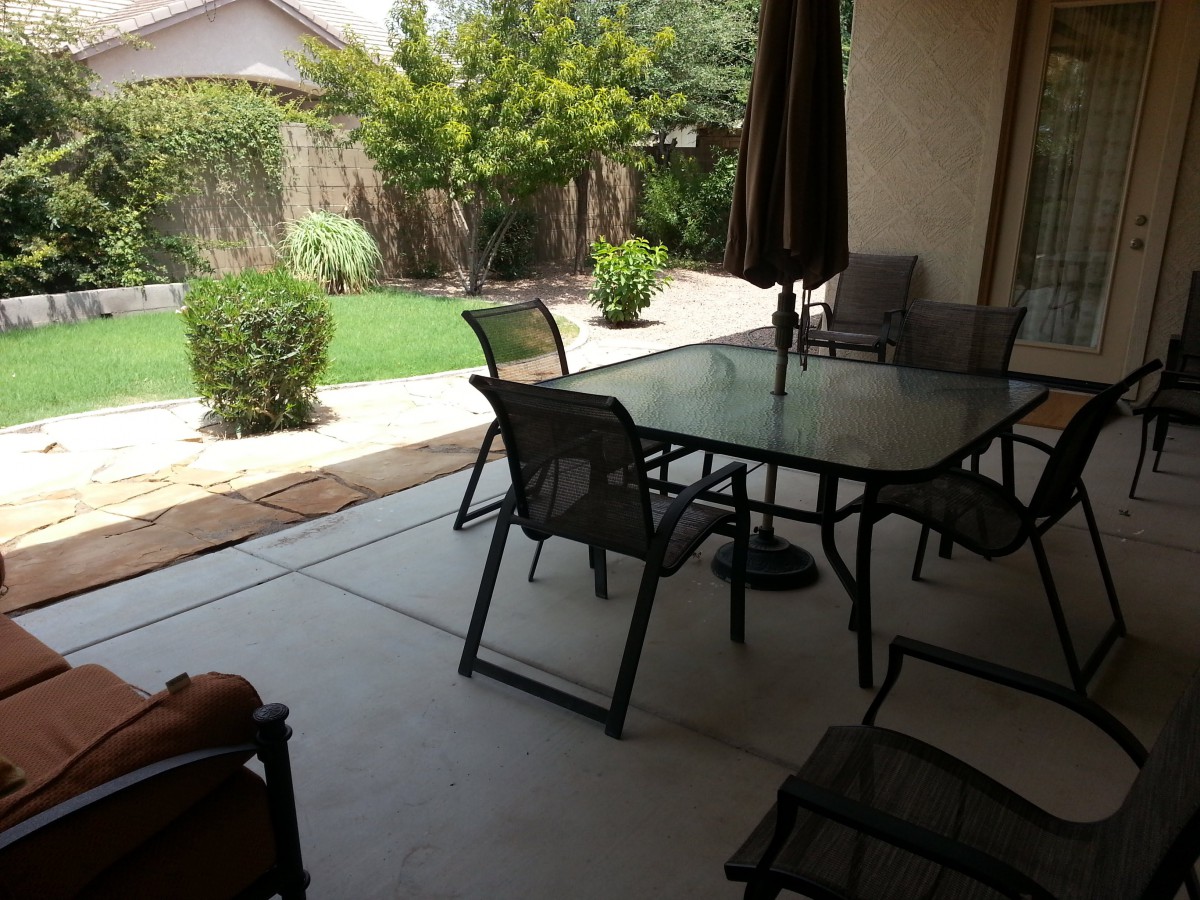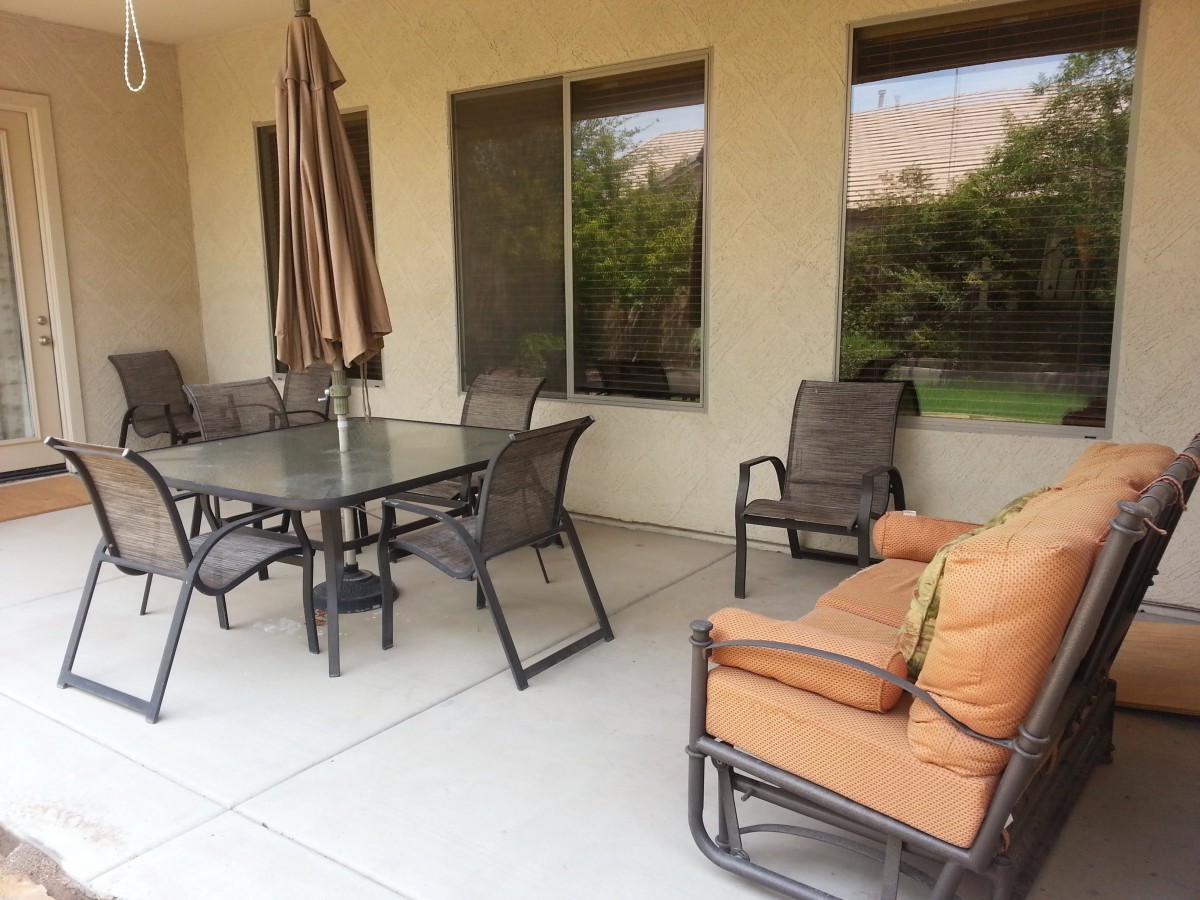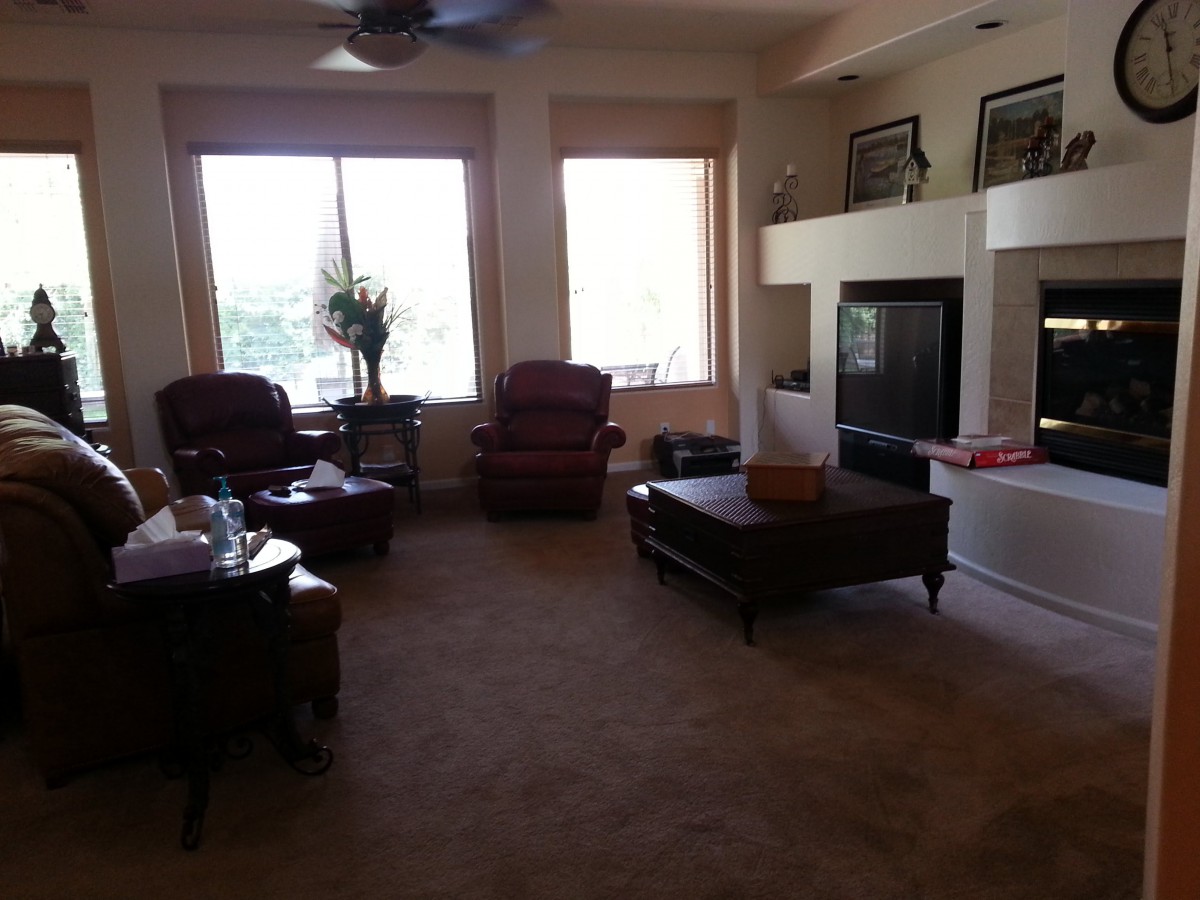

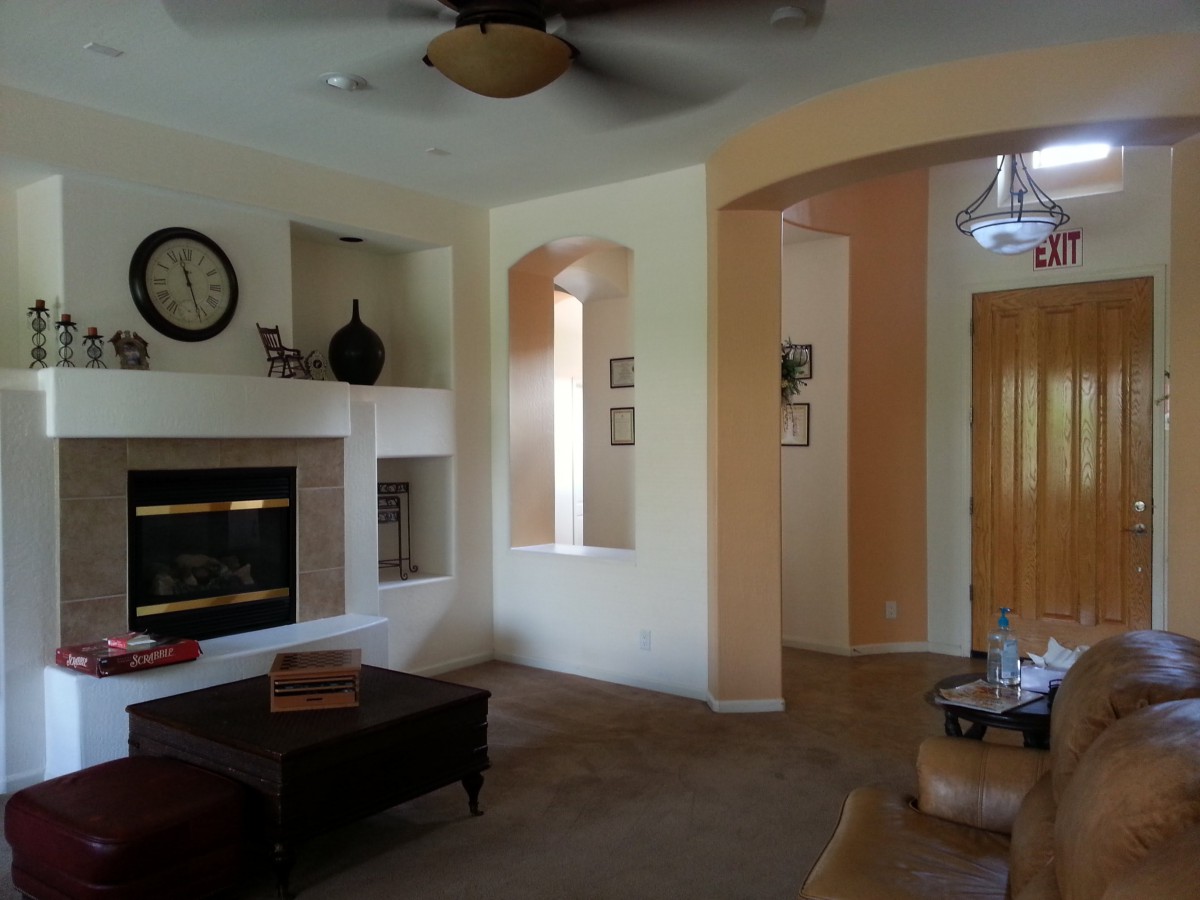
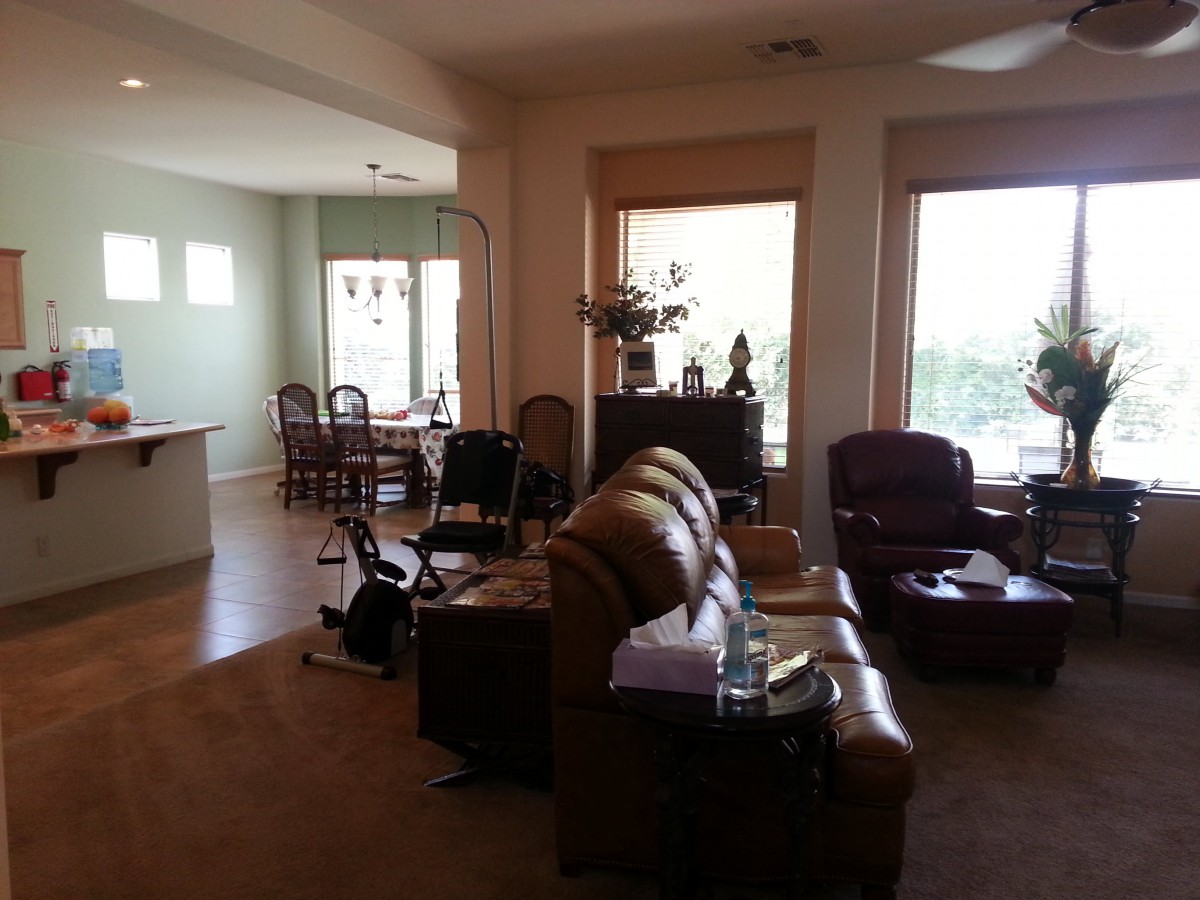
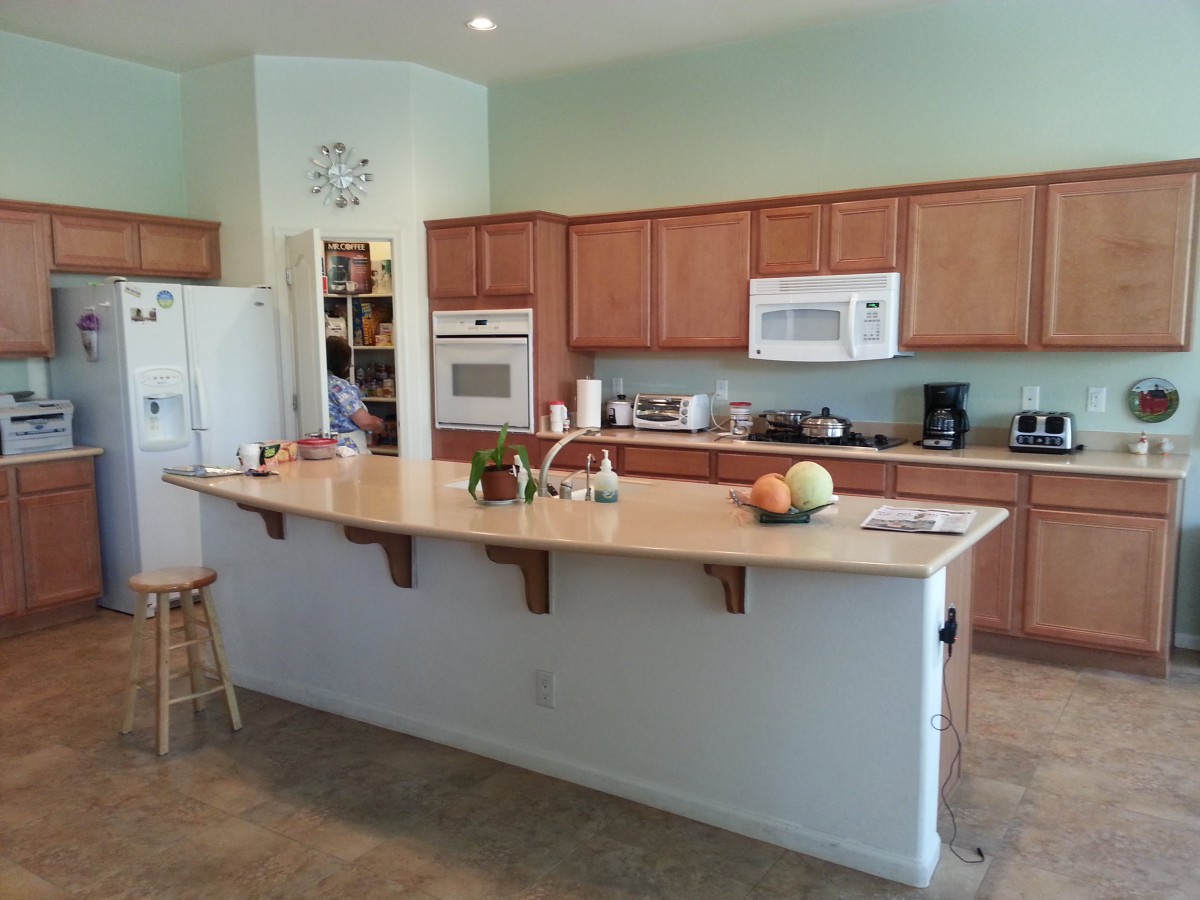

1450 West Mulberry Drive, Chandler, AZ 85286
For more information about senior living options: (866) 208-4318
Happy Family Home Care Costs & Pricing
Happy Family Home Care offers competitive pricing compared to the broader market in Maricopa County and the state of Arizona. With a monthly cost of $1,700 for semi-private rooms, Happy Family Home Care significantly undercuts the county average of $2,801 and the state average of $2,820. Similarly, their private room option is priced at $1,999, making it more affordable than both the county's average of $3,318 and Arizona's overall average of $3,345. This pricing structure not only highlights Happy Family Home Care's commitment to providing quality care at an accessible cost but also positions them as a value-driven choice for families seeking supportive living environments.
| Floor plans | Happy Family Home Care | Maricopa County | Arizona |
|---|---|---|---|
| Semi-Private | $1,700 | $2,801 | $2,820 |
| Private | $1,999 | $3,318 | $3,345 |
Assisted Living communities with a similar price nearby
-
from +$300 / mo
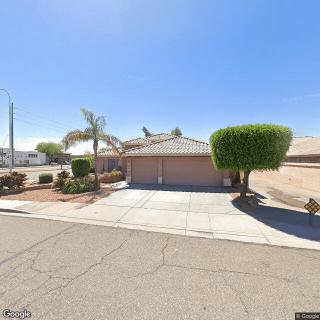
Angel's Adult Group Home
$2,000 to $3,000 / month6.9 miles away -
from +$305 / mo
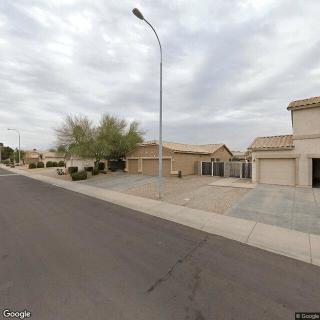
Divine Mercy Assisted Living Home
$2,005 to $3,110 / month4.2 miles away -
from +$100 / mo
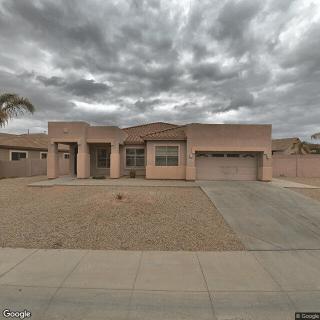
Divine Grace Assisted Living Home
$1,800 to $2,500 / month16.5 miles away -
from +$300 / mo
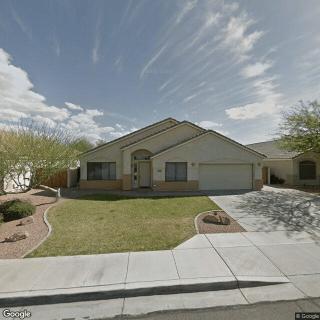
Portobello Assisted Living Home
$2,000 to $2,500 / month13.5 miles away -
from +$300 / mo
Greenway Home Care
$2,000 to $3,000 / month24.2 miles away
Overall Review of Happy Family Home Care
Pros
 They are doing a very good job caring for her and her needs.
- It has been a very positive experience.
- Everybody is very attentive and kind.
- They have provided families with peace of mind knowing she is being cared for well.
- Families are pleased with everything that has been done.
- It is a truly wonderful community, with kind, genuine people.
- The staff are excellent and communicate well.
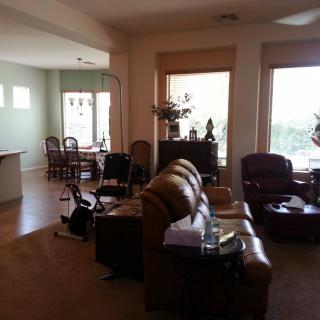
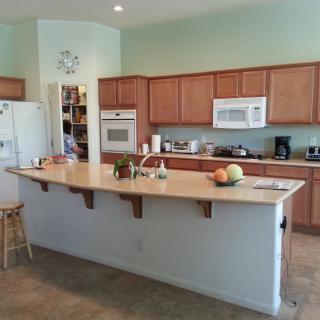
- The facility looks amazing, is well kept, and very clean.
- Residents eat more and enjoy the food since the move.
- It is a highly recommended community.
Cons
 The meals only seem to be sandwiches, hotdogs, etc.
- There was a very bad experience with medication errors, frozen dinners, dirty conditions most of the time, no activities, and staff who do not understand nor speak English.
Review
Happy Family Home Care in Chandler is best suited for seniors who value a small, home-like setting where caregivers are consistently attentive and families can experience real peace of mind about daily care. The strongest feedback centers on a personal, non-institutional atmosphere where staff are described as kind, patient, and genuinely engaged in addressing individual needs. This environment appeals to families who want a straightforward, predictable daily routine and want to avoid a large, impersonal campus. For residents who prize close caregiver relationships and a sense of “being at home,” this community can deliver a comforting, familiar feel that eases the transition from independent living.
However, this community may not be the right fit for families prioritizing rigorous clinical oversight, broad activity programming, or seamless language compatibility across staff. Several reviews raise red flags about medication management, cleanliness consistency, and meal quality, with accounts mentioning frozen dinners and quality concerns. Additional critiques point to a lack of structured activities and potential language barriers among staff. Given the mixed experiences described, it is prudent to compare with other small homes or larger facilities that publish explicit care protocols and demonstrate proactive clinical governance before making a final decision.
On the plus side, the strongest recurring benefit is the impression of home and the perceived attentiveness of caregivers. Families note that staff are responsive and communicative, able to tailor care to individual needs, which translates into real peace of mind for relatives worried about ongoing supervision. The environment is repeatedly described as clean and well-kept, reinforcing a sense of safety and daily comfort. When meals are praised, it is framed as meaningful progress toward better daily living, with one review highlighting improved eating and satisfaction with the food. These elements, personalized attention, cleanliness, and meal satisfaction, tend to lift overall satisfaction and reduce caregiver anxiety when supported by consistent routines.
Yet the negative voices cannot be ignored. The most serious concerns center on medication errors and inconsistent cleanliness, coupled with reports of limited activities and odd dietary practices in some accounts. Language barriers also appear in critiques, suggesting that staff communication may not always meet the expectations or needs of residents and families. Taken together, these issues threaten safety, engagement, and overall quality of life, and they create a risk profile that requires careful verification before a long-term commitment. These are not minor quibbles; they strike at core elements of daily living and health.
Balancing the positives against the negatives, the home-like setting and attentive staff offer compelling value if the operation demonstrates tight clinical controls and rich activity programming. If families can observe a transparent medication management routine, clear incident reporting, and consistent meal planning, the positives can outweigh the downsides. Conversely, if language compatibility, predictable safety checks, and robust activity options are not solidly addressed during a trial period, the concerns become decisive. The best-fit families will be those that can participate in oversight and demand concrete assurances around safety protocols and staff training, turning everyday care into a well-governed, collaborative effort.
For families prioritizing warmth, intimacy, and hands-on attention, Happy Family Home Care can be a viable choice, so long as confidence exists in staff communication, medication safety, and a credible plan for resident activities. Those who require stringent clinical oversight, consistent cleanliness guarantees, or strong language alignment may want to explore alternatives with clearer protocols and more robust engagement programming. Prospective visitors should schedule a thorough tour, request a sample menu, observe a mealtime, and ask for direct references and ongoing care plans. A practical checklist focused on medication safety, daily structure, and resident engagement will guide a well-grounded decision, ensuring that the chosen setting genuinely aligns with a loved one’s safety, dignity, and day-to-day quality of life.
 5 resident community capacity
 Assisted Living
 Board and Care Home
 Respite Care
 Cats allowed
 Dogs allowed
 Activities off-site
 Bath tubs
 Cable or satellite TV
 Dining room
 Fully furnished
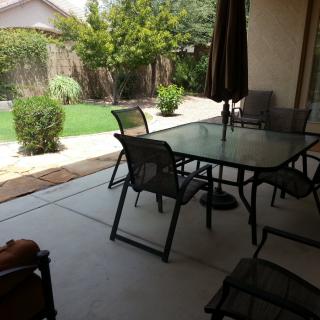
 Garden
 Housekeeping services
 Indoor common areas
 Move-in coordination
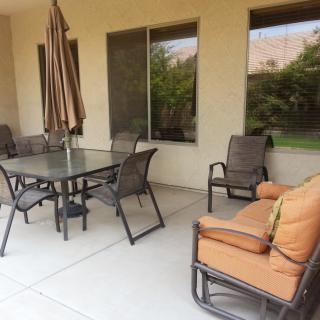
 Outdoor common areas
 Private
 Private bathrooms
 Telephone
 Wheelchair accessible showers
 Wi-Fi/high-speed internet available
 Phoenix Sky Harbor International (13 miles away)
 24-hour supervision
 Assistance with bathing
 Assistance with dressing
 Assistance with transfers
 Diabetes diet
 Diabetic care
 Incontinence care
 Meal preparation and service
 Medication management
 Special dietary restrictions
 Transportation arrangement (medical)
 Transportation to doctors appointments

 A Detailed Exploration of Assisted Living Medicaid Waivers Across the United States
 Comprehensive Residential Support and Assisted Living Solutions for Individuals with Disabilities
 Comprehensive Supportive Living Arrangements for Adults with Disabilities