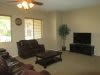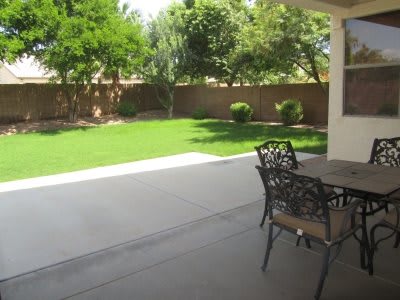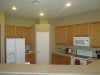
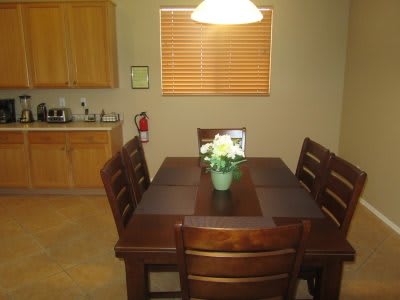
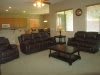
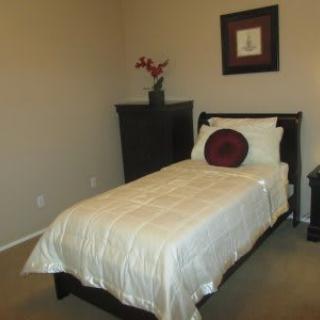
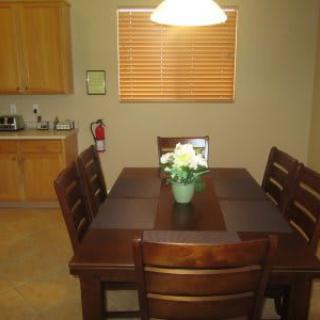





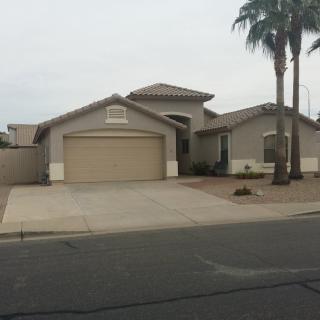
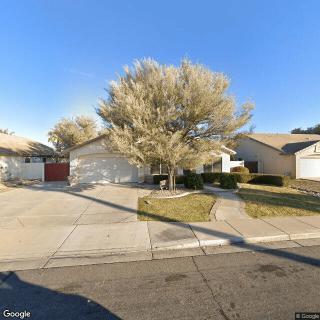
1890 East Woodsman Place, Chandler, AZ 85286
For more information about senior living options: (866) 208-4318
Canyon Oaks Assisted Living Costs & Pricing
Canyon Oaks Assisted Living offers competitive pricing for its accommodations compared to the broader market in Maricopa County and throughout Arizona. For a semi-private room, residents can expect to pay $2,000 per month, significantly lower than the county average of $2,801 and the state average of $2,820. Private rooms at Canyon Oaks are also attractively priced at $2,500, which is considerably less than the county's $3,318 and the state's $3,345. For those seeking more space, the one-bedroom option at Canyon Oaks comes in at $3,500 per month - still favorable when considering the county average of $3,473 and the state average of $3,532. Overall, Canyon Oaks Assisted Living provides residents with an appealing cost structure without compromising on quality care or comfort.
| Floor plans | Canyon Oaks Assisted Living | Maricopa County | Arizona |
|---|---|---|---|
| Semi-Private | $2,000 | $2,801 | $2,820 |
| Private | $2,500 | $3,318 | $3,345 |
| 1 Bedroom | $3,500 | $3,473 | $3,532 |
Memory care communities with a similar price nearby
-
About the same
Santo Nino Villas 2
$2,000 to $2,300 / month1.1 miles away -
About the same
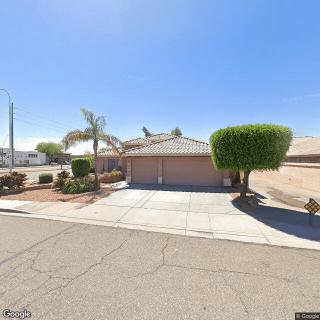
Angel's Adult Group Home
$2,000 to $3,000 / month10.0 miles away -
from +$255 / mo

Windsor Luxury Assisted Living, LLC
$2,255 to $5,950 / month18.7 miles away -
from +$225 / mo
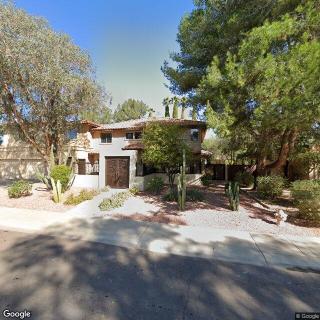
Harts Home - Exceptional Elder Care
$2,225 to $5,500 / month20.7 miles away -
from +$200 / mo

Desert Springs Communites
$2,200 to $2,500 / month13.7 miles away
Overall Review of Canyon Oaks Assisted Living
Pros
 The staff are wonderful and professional.
- Canyon Oaks provides a safe, clean, and professional environment for residents.
- Families have peace of mind knowing their loved ones are in good hands.
Cons
 Bad managers..they treat their staffs badly..
Review
Canyon Oaks Assisted Living in Chandler is best suited for families seeking reliable, staff-driven daily care in a safe, well-kept setting. The strongest signal from the on-site caregiving experience is the quality of the front-line team: caregivers described as wonderful and professional, delivering consistent attention and a reassuring presence for residents who need help with activities of daily living. For a relative who wants a straightforward, respectful daily routine, medication reminders, assistance with mobility, meals, and companionship, this community appears capable of delivering that core experience. The climate of care centers on dependable hands and a peaceful environment, which translates into real peace of mind for families who cannot be present around the clock.
However, this is not a one-note picture. Concerns about the management culture surface in multiple impressions, with warnings that managers may mistreat staff and that leadership could be out of step with the day-to-day needs of residents. For families that prize transparent governance, consistent administrative responsiveness, and a positive workplace culture as drivers of resident care, these signals require careful scrutiny. Alternatives should be on the table for those who prioritize a leadership footprint that is clearly aligned with resident welfare, staff welfare, and predictable operations.
On the positive side, the strongest, most durable pro is the safety and cleanliness paired with professional, patient staff. The two reviews praising the staff as wonderful and professional underscore a fundamental strength: the people who interact with residents regularly are competent, courteous, and reliable. That frontline service translates into true, practical benefits for daily living, less confusion, fewer safety concerns, steadier routines, and an ability to rely on someone when fall risk or medication reminders are involved. In short, Canyon Oaks delivers the everyday care that matters most to many families.
Yet the negative feedback about management cannot be dismissed. Reports that managers mistreat staff hint at a potentially fragile operating environment: morale, staffing stability, and consistent training can hinge on leadership tone. When leadership culture is perceived as punitive or unsupportive, even excellent caregivers may struggle to maintain high performance, particularly during busy shifts or complex care scenarios. The risk is that positive in-room interactions could be undermined by slower response times, scheduling gaps, or inconsistent policy enforcement if the administration tolerates or around-edges behavior. This is not an abstract concern; it directly touches resident safety, responsiveness, and the reliability of daily routines.
Prospective residents should go beyond a tour and demand concrete assurances. Ask to meet the administrator and a few frontline supervisors, request current staff-to-resident ratios for different shifts, and learn about turnover rates. Inquire how concerns are tracked, logged, and resolved, and request recent examples of how issues were handled. Talk to current residents and families about communication with the team and how quickly concerns are addressed. A visit during a typical meal or activity period can reveal whether the care tempo feels steady or reactive. A clear plan for staffing stability and open leadership channels can convert initial caution into confidence.
In the end, Canyon Oaks Assisted Living represents a practical choice for families who prioritize solid caregiving at the daily level, safety, and a calm living environment, provided management issues are understood and monitored. For those who see strong administrative leadership and a consistently positive workplace culture as non-negotiable, alternatives should be considered, and a side-by-side comparison of services, staff engagement, and governance will be essential. The community earns its middling rating from mixed experiences: the care team can be excellent, but leadership signals require verification before committing long-term. With careful due diligence and honest questions, Canyon Oaks can become the right home for a loved one whose daily needs align with what the staff delivers.
 5 resident community capacity
 Assisted Living
 Board and Care Home
 Memory Care
 Respite Care
 Activities off-site
 Bath tubs
 Beautician on-site
 Cable or satellite TV
 Dining room
 Fully furnished
 Garden
 Housekeeping services
 Indoor common areas
 Move-in coordination
 Outdoor common areas
 Private
 Private bathrooms
 Telephone
 Wheelchair accessible showers
 Wi-Fi/high-speed internet available
 Phoenix Sky Harbor International (15 miles away)
 24-hour supervision
 Assistance with bathing
 Assistance with dressing
 Assistance with transfers
 Diabetes diet
 Diabetic care
 High acuity care
 Incontinence care
 Meal preparation and service
 Medication management
 Special dietary restrictions
 Transportation arrangement (medical)
 Transportation to doctors appointments




 Understanding Dementia Behaviors: Practical Insights and Strategies for Caregivers
 When Dementia Sparks Anger and Aggression: Understanding the Connection and Ways to Cope
 Dementia Behaviors: In-Depth Understanding and Effective Coping Strategies