

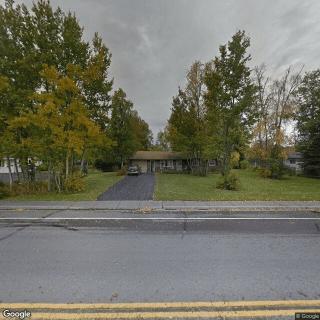
382 South Kobuk Street, Soldotna, AK 99669
For more information about senior living options: (866) 208-4318
Keen Eye Care Assisted Living Costs & Pricing
Keen Eye Care Assisted Living offers competitive pricing for its services, especially when compared to the broader market rates in Kenai Peninsula Borough and Alaska as a whole. The monthly cost for a semi-private room is set at $7,000, aligning with the borough's average but significantly higher than the state's average of $3,956. If residents opt for private accommodations, they will pay $7,500, which is considerably lower than both the local average of $13,750 and the statewide figure of $4,977. For those seeking one-bedroom units, Keen Eye Care also charges $7,500 - again surpassing the borough average of $3,789 while remaining close to the state's typical cost of $4,951. This pricing structure reflects a commitment to providing quality care tailored to individual needs within a supportive community context.
| Floor plans | Keen Eye Care Assisted Living | Kenai Peninsula Borough | Alaska |
|---|---|---|---|
| Semi-Private | $7,000 | $7,000 | $3,956 |
| Private | $7,500 | $13,750 | $4,977 |
| 1 Bedroom | $7,500 | $3,789 | $4,951 |
Overall Review of Keen Eye Care Assisted Living
Pros
 The staff take good care of residents and show them love.
- People love the facility.
- The place is highly recommended.
- Families have confidence in the facility's long-term care, with residents staying for many years.
Review
Keen Eye Care Assisted Living in Soldotna is best suited for families seeking a stable, intimate, long-term home for an elder who values genuine warmth, continuity, and daily acts of care that feel personal. The standout message from the available account is not a generic compliment but a lived pattern: a loved one has remained in residence for more than a decade, with caregivers who “take care of her and love her,” and a family that explicitly recommends the community. Such longevity implies low turnover, known routines, and staff who build trust with residents over years rather than months. For families prioritizing emotional security, predictable days, and staff invested in long relationships, Keen Eye Care Assisted Living presents a compelling fit.
At the same time, this setting will not be the default recommendation for every situation. Families seeking aggressive medical oversight, specialized memory-care programming, or a broad, consultant-driven activity calendar may want alternatives. The review does not document on-site medical clinics, nurse practitioner availability, or specialized dementia care tracks, so those needing intensive clinical coordination should compare options carefully. Geographic and logistical considerations also matter: Soldotna’s more remote Alaska context can influence access to broader medical networks and transportation for family visits. In short, the facility seems optimized for warmth and stability, not for high-intensity medical throughput or large-scale programming.
The core pros are strikingly direct. The caregiver-family relationship described, care and love directed at a resident, translates into daily safety, attentiveness to routines, and a sense of being valued. A decade-long residency strongly signals staff consistency, which reduces unsettling changes for residents and lowers caregiver-related anxiety for relatives. The resonance of the family’s “Highly recommend” verdict carries practical value: it reflects a holistic sense of satisfaction that likely spans daily living, safety, and personal dignity. In practical terms, these attributes often correlate with fewer behavioral disturbances, easier care coordination, and a more serene living environment, benefits that matter as much as any discrete service list.
Yet the absence of explicit drawbacks in the single review cannot be ignored. The lack of detailed information about staffing ratios, medical oversight, activity breadth, dietary standards, and accessibility features leaves concrete risk signals unspoken. For decision-makers, this means a need for due diligence before committing. Prospective families should seek clarity on who administers medications, how quickly emergencies are addressed, what specialized programs exist for memory care if needed, and how daily activities are structured. The location’s size and resources also matter when evaluating whether the level of personal attention promised in a testimonial can be sustained.
In weighing the positives against these unknowns, the relational strengths emerge as the decisive offset. When a resident’s sense of security, companionship, and routine reliability are paramount, the proof-of-life impact, long tenure, affectionate care, and enthusiastic family endorsement, can compensate for a lack of granular public program disclosures. For families where seeing daily compassion translated into tangible well-being is the primary objective, Keen Eye Care Assisted Living delivers a meaningful guarantee of warmth and stability that much larger or more clinical facilities may struggle to match.
The practical conclusion is clear and actionable. Keen Eye Care Assisted Living is a strong contender for seniors who thrive on consistent, loving caregiving and where long-term staff-resident bonds are a priority. Those with a primary need for expansive medical services, rigorous clinical oversight, or diverse on-site programming should compare closely with other local options and demand meets-and-greets, tours, and transparent pricing discussions before deciding. A visit to observe interactions, ask pointed questions about memory-care capabilities and care plans, and verify licensing and inspector reports will reveal whether the current strengths align with the resident’s evolving needs. For families prioritizing comfort, continuity, and heartfelt daily care in Soldotna, Keen Eye Care Assisted Living stands up well as a trusted, practical choice.
 5 resident community capacity
 Assisted Living
 Board and Care Home
 Memory Care
 Beautician on-site
 Cable or satellite TV
 Dining room
 Fully furnished
 Garden
 Housekeeping services
 Move-in coordination
 Outdoor space
 Private
 Telephone
 Wheelchair accessible showers
 Wi-Fi/high-speed internet available
 24-hour supervision
 Activities of daily living assistance
 Ambulatory care
 Assistance with bathing
 Assistance with dressing
 Assistance with transfers
 Diabetes diet
 Diabetic care
 Incontinence care
 Meal preparation and service
 Medication management
 Special dietary restrictions
 Transportation arrangement (medical)
 Transportation to doctors appointments




 Understanding Dementia Through Its Seven Stages: A Comprehensive Look at Progression and Expectations
 A Holistic Dementia Care Guide: Effective Strategies for Memory Support
 Memory Care Pathways: A Holistic Guide to Dementia Support