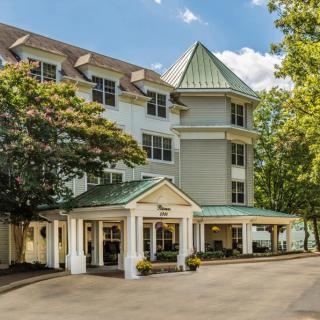
Manorcare Health Services-Arlington is a nursing home community in Arlington, VA.
Information last verified:
550 South Carlin Springs Road Revised, Arlington, VA 22204
For more information about senior living options: (866) 208-4318
3.8 from 133 reviews
5 stars
87
4 stars
7
3 stars
1
2 stars
5
1 stars
33
Overall Review of Manorcare Health Services-Arlington
common28 reviews mention this
Staff is repeatedly described as kind
Residents and families frequently describe the staff as caring and helpful.
Across many reviews, people say staff members are attentive, responsive, and supportive during rehab and recovery. Several comment on nurses’ and aides’ compassion, professionalism, and willingness to answer questions. A number of reviewers also mention specific team members by name, reinforcing that the day-to-day experience often comes down to individual caregivers.
differentiator14 reviews mention this
Rehab and therapy support stands out
Rehabilitation and therapy care is a consistent reason people recommend the facility.
Many reviews focus on rehab outcomes and the way therapy teams help residents regain mobility and strength. Physical and occupational therapy are described as encouraging and skilled, with some reviewers also crediting nursing and therapy coordination for progress. Even when other areas are criticized, multiple reviews still single out therapy as a high point of the stay.
caveat16 reviews mention this
Communication and call response are mixed
Some residents and families report delays and poor follow-through when they need help.
A recurring concern is that families cannot get answers quickly or that call-light and follow-up response can be slow. Several reviewers describe not being able to reach nursing, not getting timely assistance, or having issues persist until a family member stepped in. At the same time, other reviews say the team is communicative and available, so expectations appear to vary by situation and unit.
common12 reviews mention this
Food quality and meal experience vary
Dining receives both praise and complaints in residents’ experiences.
Some reviews say the food is good and that residents eat well, while others describe meals as cold, poor, or not meeting expectations. The community also offers restaurant-style dining in the amenity list, and residents reference both positive and negative meal experiences rather than a single consistent outcome. A few reviewers specifically mention dietary considerations, matching the way special diets are listed as part of dining support.
caveat14 reviews mention this
Facility cleanliness ranges from praised to criticized
Reviews describe cleanliness inconsistently, with both clean conditions and serious complaints.
Many people say the building is clean, smells good, and feels well maintained. Others describe the facility as dirty or in disrepair, including complaints about pests and unpleasant odors. The contrast between “always clean” feedback and reports of major cleanliness problems suggests the experience may differ across rooms or over time.
common
Nearby access to parks and retail
There are nearby options for parks, retail, and medical services.
Reviews do not drive location-specific praise here, but the area around the community includes nearby parks and everyday stops. That can be useful for family visits and errands, alongside access to nearby healthcare.
How we summarize
We summarize when many written reviews mention each theme; a review can touch several themes, and only frequently mentioned themes are displayed.
Features
Housing
161 resident community capacity
Types of Care
Skilled Nursing Facility
Amenities
Air-conditioning
Beauty salon
Cable or satellite TV
Computer center
Dining room
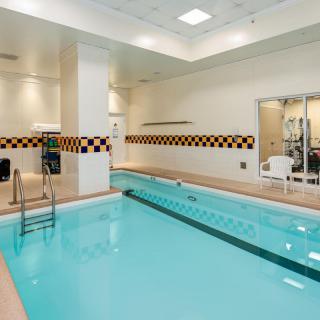
Fitness room
Fully furnished
Gaming room
Garden
Housekeeping services
Kitchenette
Move-in coordination
Outdoor space
Private bathrooms
Restaurant-style dining
Small library
Telephone
Wellness center
Wi-Fi/high-speed internet available
Transportation
Ronald Reagan Washington National (5 miles away)
Washington Dulles International (18 miles away)
Community operated transportation
Transportation arrangement
Transportation arrangement (non-medical)
Transportation to doctors appointments
Care Services
12-16 hour nursing
24-hour call system
24-hour supervision
Activities of daily living assistance
Assistance with bathing
Assistance with dressing
Assistance with transfers
Diabetes diet
Meal preparation and service
Medication management
Mental wellness program
Special dietary restrictions
Dining
Diabetes diet
Special dietary restrictions
Activities
Community-sponsored activities
Concierge services
Fitness programs
Planned day trips
Resident-run activities
Scheduled daily activities
Nearby Places of Interest
Parks
Glencarlyn Park (0.5 miles)
Bluemont Junction Trail (1.3 miles)
Huntley Meadows Park (3.5 miles)
Long Bridge Park (4.4 miles)
Georgetown Waterfront Park (4.6 miles)
Gravelly Point Park (4.8 miles)
West Potomac Park (4.9 miles)
Restaurants
McDonald's (0.9 miles)
Chick-Fil-A (1 miles)
Chipotle Mexican Grill (1.6 miles)
Taco Bell (1.7 miles)
McDonald's (1.7 miles)
Italian Store (1.8 miles)
Medium Rare (2.1 miles)
Pharmacies
CVS Pharmacy (0.9 miles)
CVS Pharmacy (1.1 miles)
CVS Pharmacy (1.6 miles)
CVS Pharmacy (1.7 miles)
CVS Pharmacy (2 miles)
CVS Pharmacy (2.4 miles)
CVS Pharmacy (2.4 miles)
Cafes
Starbucks (1.7 miles)
Tatte Bakery & Cafe (2.8 miles)
Starbucks (3.8 miles)
Starbucks (4.4 miles)
Blue Bottle Coffee (4.6 miles)
Junction Bakery & Bistro (4.7 miles)
For Five Coffee (5.3 miles)
Transportation
Ballston-MU Metro Station (1.8 miles)
East Falls Church Metro Station (2.3 miles)
Pentagon Metro Station (4.1 miles)
Van Dorn Street Metro Station (4.2 miles)
Crystal City Metro Station (4.2 miles)
Ronald Reagan Washington National Airport Metro Station (4.6 miles)
American Airlines Admirals Club (4.6 miles)
Hospitals
Georgetown University Hospital Pasquerilla Center (4.6 miles)
MedStar Georgetown University Hospital (4.6 miles)
Inova Fairfax Medical Campus (5.2 miles)
Labor and Delivery - Fairfax Hospital (5.3 miles)
Sibley Memorial Hospital (5.4 miles)
Inova Heart and Vascular Institute (5.4 miles)
Theaters
AMC Georgetown 14 (4.7 miles)
AMC Hoffman Center 22 (5.1 miles)
Physicians
Virginia Heart (5.1 miles)
Telegraph Corner Family Medicine (5.3 miles)
The Centers For Advanced Orthopaedics (5.6 miles)
Foxhall Pediatrics (5.6 miles)
American College of Obstetricians & Gynecologists (5.7 miles)
Medicare covers in-home health care services, which are medical and provided by licensed professionals under a physician's supervision, whereas non-medical personal assistance is generally not covered unless part of a broader skilled care plan. Eligibility for benefits depends on being homebound and needing intermittent skilled services from a Medicare-certified agency, with specific coverage limitations and additional resources available for navigating options.
In-home care is increasingly sought after by older adults for maintaining independence, with average private home care rates in 2025 varying by state and service type, reflecting geographical and local labor market influences. As demand rises, families are considering funding options like Medicaid waivers and long-term care insurance to manage costs effectively while ensuring quality care.
Home health care has become essential for supporting independence among the aging population, offering diverse services such as skilled nursing and rehabilitation in familiar environments, while also incorporating technology for personalized care. Despite its benefits, including improved recovery rates and emotional well-being, challenges like safety, staff availability, and insurance navigation must be managed for effective implementation.
Get PricingAsk A QuestionSchedule A TourContact Senior Advisor
By clicking submit, you agree to our Partner's Terms of Use. You
also consent to receive calls and texts, which may be autodialed, from our Partner. Your consent is not a condition to
using our Partner's service. Please visit our Partner's Privacy Policy for information about their privacy practices.

 161 resident community capacity
 Skilled Nursing Facility
 Air-conditioning
 Beauty salon
 Cable or satellite TV
 Computer center
 Dining room
 Fitness room
 Fully furnished
 Gaming room
 Garden
 Housekeeping services
 Kitchenette
 Move-in coordination
 Outdoor space
 Private bathrooms
 Restaurant-style dining
 Small library
 Telephone
 Wellness center
 Wi-Fi/high-speed internet available
 Ronald Reagan Washington National (5 miles away)
 Community operated transportation
 12-16 hour nursing
 24-hour call system
 Activities of daily living assistance
 Assistance with bathing
 Assistance with dressing
 Assistance with transfers
 Diabetes diet
 Medication management
 Mental wellness program
 Special dietary restrictions
 Concierge services
 Planned day trips
 Affordable private rooms at $3,200/mo, lower than Fairfax County and Virginia averages.

 Navigating Medicare Coverage for In-Home Care Services
 In-Home Care Costs in 2025: A Detailed State-by-State Exploration
 Understanding Home Health Care: A Comprehensive Guide