For more information about senior living options: (866) 208-4318
3.6 from 91 reviews
5 stars
54
4 stars
4
3 stars
4
2 stars
1
1 stars
28
Overall Review of River Oaks Health And Rehabilitation Center
common4 reviews mention this
Food quality shows up often
Residents and visitors repeatedly mention the food as a strength.
Several reviews highlight the meals as a reason families felt comfortable with the stay, including comments that the food is excellent and that it is consistently fresh. One review also singles out the cooks as doing a good job. A separate review references dietary staffing during a stated time period.
common2 reviews mention this
Activities help residents stay engaged
Residents benefit from regular activities and entertainment.
Reviews describe staff working to keep residents entertained, including mention of an activities director who goes above and beyond. Another review specifically calls out weekend options like music, plus games such as bingo and dominoes. This aligns with the community offering planned daily activities.
differentiator7 reviews mention this
Care and rehab support are central
Rehab care and day-to-day support are described as reliable by many families.
A number of reviews focus on the care experience during recovery, describing nursing support and follow-through on resident needs. Several commenters say they felt comfortable asking questions and that leadership addressed concerns quickly. Others mention therapy support as part of the recovery process, including feeling that the rehabilitation experience was smoother over time.
caveat6 reviews mention this
Some residents report cleanliness problems
Some reviews raise concerns about the facility’s cleanliness and upkeep.
There are recurring negative mentions of the building’s condition, including reports of pests and strong odors. A few reviews also describe housekeeping failures and rooms that did not seem prepared properly, along with concerns about staff attention to residents. While other reviews describe the facility as clean, these complaints show that at least some experiences fell short for certain visitors.
How we summarize
Counts show how many written reviews mention each theme; a review can touch several themes, and only frequently mentioned themes are displayed.
Features
Housing
120 resident community capacity
Types of Care
Skilled Nursing Facility
Amenities
Air-conditioning
Beauty salon
Cable or satellite TV
Computer center
Dining room
Fitness room
Fully furnished
Gaming room
Garden
Housekeeping services
Kitchenette
Move-in coordination
Outdoor space
Private bathrooms
Restaurant-style dining
Small library
Telephone
Wellness center
Wi-Fi/high-speed internet available
Transportation
Dallas-Fort Worth International (21 miles away)
Community operated transportation
Transportation arrangement
Transportation arrangement (non-medical)
Transportation to doctors appointments
Care Services
12-16 hour nursing
24-hour call system
24-hour supervision
Activities of daily living assistance
Assistance with bathing
Assistance with dressing
Assistance with transfers
Diabetes diet
Meal preparation and service
Medication management
Mental wellness program
Special dietary restrictions
Dining
Diabetes diet
Special dietary restrictions
Activities
Community-sponsored activities
Concierge services
Fitness programs
Planned day trips
Resident-run activities
Scheduled daily activities
Nearby Places of Interest
Restaurants
McDonald's (0.2 miles)
Joe T. Garcia's (2 miles)
Braum's (2.4 miles)
Whataburger (2.4 miles)
Blue Sushi Sake Grill (2.8 miles)
In-N-Out Burger (2.8 miles)
In-N-Out Burger (2.9 miles)
Hospitals
Cooks Childrens Clinic (0.5 miles)
Texas Rehabilitation Hospital of Fort Worth (4 miles)
Texas Health Harris Methodist Hospital Fort Worth (4.3 miles)
Klabzuba Tower / Texas Health Resources (4.4 miles)
Baylor Scott & White Hospital Medicine - All Saints (4.6 miles)
Baylor Surgical Center (4.7 miles)
JPS Hospital (5.3 miles)
Pharmacies
CVS Pharmacy (1.6 miles)
Walgreens (2 miles)
Walgreens (2.7 miles)
CVS Pharmacy (2.9 miles)
Walgreens (3.4 miles)
CVS Pharmacy (3.4 miles)
Walgreens (3.7 miles)
Parks
Linwood Park (2.7 miles)
Leonard Park (4.1 miles)
Fort Worth Water Gardens (4.3 miles)
Overton Park (6 miles)
Physicians
T Off Mens Health (2.7 miles)
Boulevard Clinic (3.2 miles)
Fort Worth Plastic Surgery Center (4.1 miles)
Heart Center of North Texas (4.3 miles)
Fort Worth Brain And Spine (4.4 miles)
Texas Health Care, Otolaryngology & Facial Plastic Surgey Associates (4.4 miles)
Cook Children's Pediatrics Forest Park (4.5 miles)
Cafes
Starbucks (2.7 miles)
Starbucks (3.6 miles)
Starbucks (4.2 miles)
Roots Coffeehouse (4.7 miles)
Press Cafe (5.7 miles)
Places of Worship
First United Methodist Church of Fort Worth (3.6 miles)
St Stephen Presbyterian Church (5.5 miles)
Transportation
Fort Worth Intermodal Transportation Center (4.1 miles)
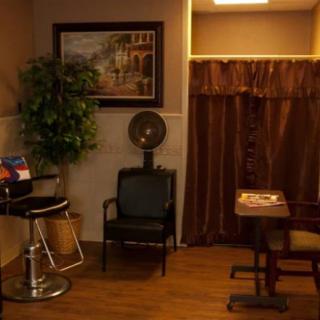
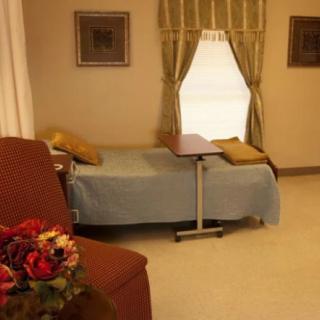
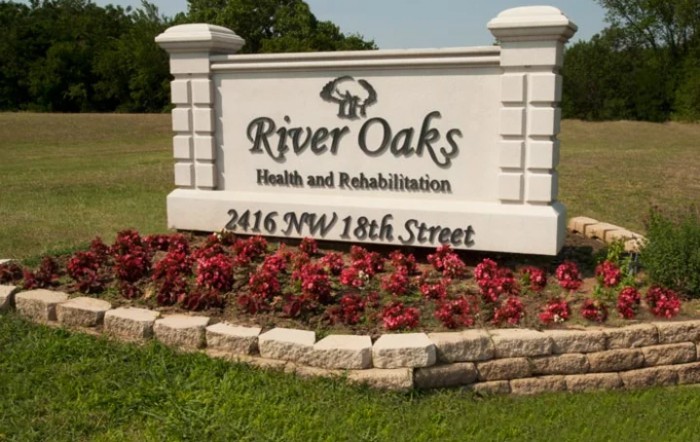
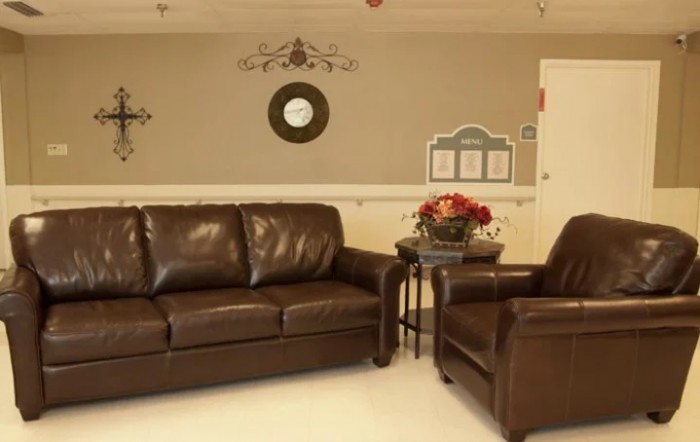
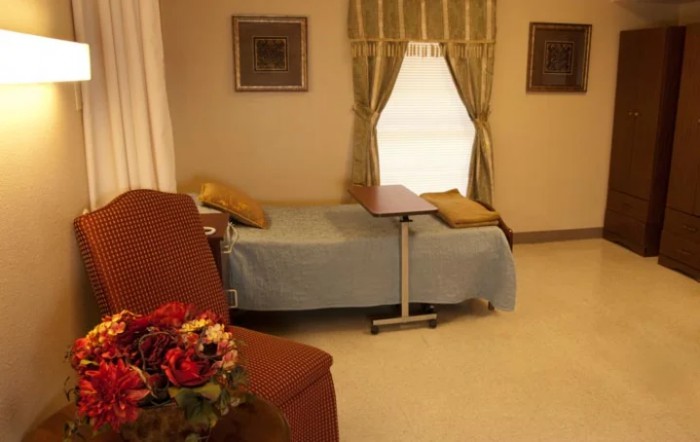
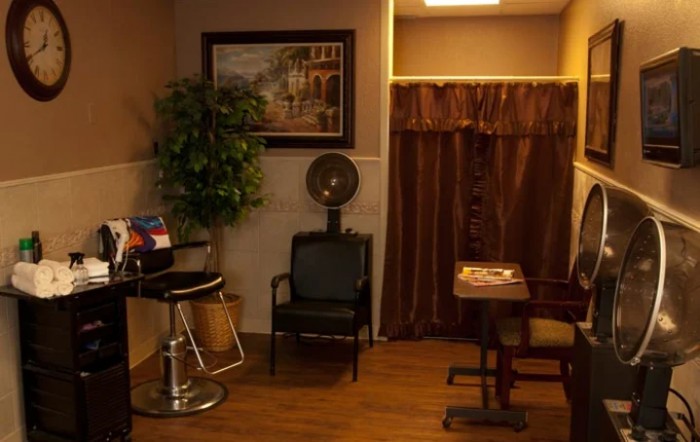
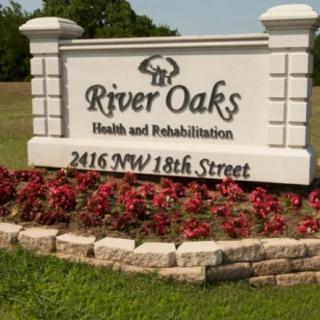
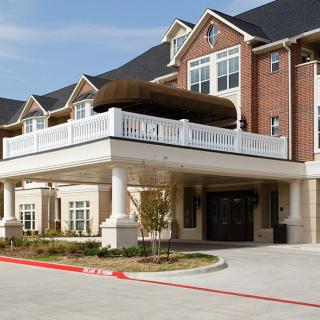
River Oaks Health And Rehabilitation Center on seniors.fyi includes 5 photos including images showing bedroom, painting, interior, living room, salon, waiting area, plant, rehabilitation, and more.
Nearby Communities
River Oaks Health and Rehab
Fort Worth, TX
3.7 from 86 reviews
$3,720 to $5,425 / month
Warm, inviting atmosphere with personalized, name-by-name resident interactions during tours.
Fort Worth Wellness & Rehabilitation
Fort Worth, TX
4.5 from 122 reviews
Extensive amenities and around-the-clock care in a well-equipped community.
Sansom Pointe
Sansom Park, TX
Peaceful setting with excellent nearby amenities (cafes, parks, pharmacies, physicians, restaurants, and hospitals).
Marine Creek Nursing And Rehabilitation
Fort Worth, TX
3.8 from 83 reviews
Extensive amenities and 24/7 care
AmeriCare Fort Worth
Fort Worth, TX
4.6 from 56 reviews
Compassionate, highly competent caregivers with tailored care.
Fireside Lodge Healthcare Ctr
Fort Worth, TX
3.8 from 65 reviews
Compassionate nursing staff with good meals.
The Stayton At Museum Way
Fort Worth, TX
3.8 from 36 reviews
$7,431 / month
Attentive staff, clean facility, and engaging activities.
The Westmore
Westworth Village, TX
4.6 from 142 reviews
$3,637 to $4,986 / month
Attentive, family-like staff with engaging activities and well-maintained surroundings.
James L West Alzheimer's Center
Fort Worth, TX
4.7 from 16 reviews
$6,540 to $8,340 / month
High-quality dementia care with excellent staff communication and a nonprofit, resident-centered environment.
Palliative care focuses on alleviating distress at any stage of a serious illness and can accompany curative treatments, while hospice care is for those nearing the end of life with a prognosis of six months or less, emphasizing comfort over curative measures. Both prioritize holistic care for patients and families but differ in timing, goals, and scope.
The guide details the tax deductibility of in-home healthcare expenses according to IRS guidelines, differentiating between medically necessary services and non-medical assistance, while emphasizing the need for proper documentation and itemization requirements. It also highlights state-level variations, the importance of record-keeping, and encourages seeking professional tax help to understand evolving regulations.
Gardening provides seniors with physical exercise, mental and emotional support, and social interaction opportunities, while accommodating their needs through raised beds and ergonomic tools. It promotes health benefits like improved dexterity and cardiovascular health, encourages sustainable practices, and allows for manageable upkeep with low-maintenance plants.
River Oaks Health And Rehabilitation Center photos
×
Interior
Living Room
Bedroom
Landscaping
Interior
Bedroom
Living Room
Landscaping, Rehabilitation, and Facility
Salon, Plant, and Waiting Area
Painting
Get PricingAsk A QuestionSchedule A TourContact Senior Advisor
By clicking submit, you agree to our Partner's Terms of Use. You
also consent to receive calls and texts, which may be autodialed, from our Partner. Your consent is not a condition to
using our Partner's service. Please visit our Partner's Privacy Policy for information about their privacy practices.


 120 resident community capacity
 Skilled Nursing Facility
 Air-conditioning
 Beauty salon
 Cable or satellite TV
 Computer center
 Dining room
 Fitness room
 Fully furnished
 Gaming room
 Garden
 Housekeeping services
 Kitchenette
 Move-in coordination
 Outdoor space
 Private bathrooms
 Restaurant-style dining
 Small library
 Telephone
 Wellness center
 Wi-Fi/high-speed internet available
 Dallas-Fort Worth International (21 miles away)
 Community operated transportation
 12-16 hour nursing
 24-hour call system
 Activities of daily living assistance
 Assistance with bathing
 Assistance with dressing
 Assistance with transfers
 Diabetes diet
 Medication management
 Mental wellness program
 Special dietary restrictions
 Concierge services
 Planned day trips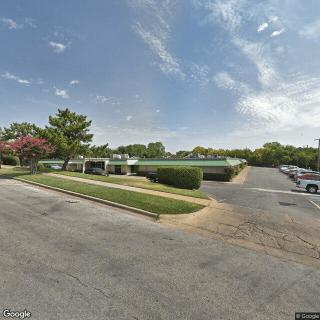
 Warm, inviting atmosphere with personalized, name-by-name resident interactions during tours.


 Understanding the Nuances of Palliative Care and Hospice: A Comprehensive Exploration
 Is In-Home Healthcare Tax Deductible? Your Comprehensive Guide
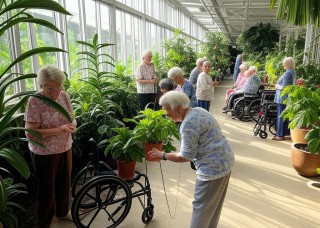 Nurturing Well-Being Through Gardening: A Detailed Guide for Senior Enthusiasts