Fernhill Estates is a nursing home community in Portland, OR.
Information last verified:
5737 North East 37Th Avenue, Portland, OR 97211
For more information about senior living options: (866) 208-4318
2.5 from 33 reviews
5 stars
10
4 stars
1
3 stars
2
2 stars
1
1 stars
19
Overall Review of Fernhill Estates
common5 reviews mention this
Staff communication and compassion
Residents and families describe staff as kind, attentive, and responsive.
Several reviews highlight warm, approachable nursing staff and feeling that caregivers take an interest in residents. Families also describe social services or office staff reaching out when needed and following up after contact. One reviewer specifically praised a staff member for returning calls and emails, and another simply called the staff wonderful.
caveat5 reviews mention this
Medication management concerns
Some reviewers report serious medication and follow-through problems.
A number of reviews raise concerns about missed or delayed ordered medications and whether families were kept informed. In several accounts, residents were described as becoming ill or requiring emergency treatment after medication issues. Others describe medication errors alongside gaps in wound care and diet follow-through, which reviewers frame as preventable.
caveat6 reviews mention this
Food quality is inconsistent
Dining reviews range from positive meals to repeated complaints about quality.
Food is a recurring topic, with some reviewers calling it great and healthy while others describe meals as cold, low quality, or generally unappetizing. Multiple reviews cite specific problems such as cold items, runny or unappetizing food, and meals that were not prepared or served as expected. One reviewer also said the dining room and food were not nice and that the building needed significant work.
caveat8 reviews mention this
Smells, cleanliness, and disrepair
Many reviewers mention strong odors, dirty conditions, or the need for upkeep.
Several reviews describe the facility as unclean and cite strong urine odors throughout the building. Others mention rooms or the overall building as in disrepair, with one reviewer calling out that resident spaces and conditions needed to be redone. A few accounts also describe issues like filthy rooms and persistent unpleasant smells as reasons for deciding against the facility.
differentiator2 reviews mention this
Care setting feels medical
Reviews suggest the environment feels more clinical than home-like.
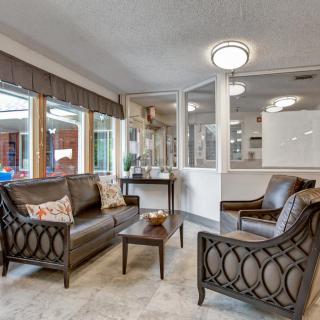
One family member described the inside appearance as leaning toward a medical setting rather than a home-like atmosphere, while also noting the level of care matched what their loved one needed. Another reviewer also characterized the facility through their overall experience, reinforcing that the setting and day-to-day feel may not match what some people expect from a residential home.
How we summarize
Counts show how many written reviews mention each theme; a review can touch several themes, and only frequently mentioned themes are displayed.
Features
Housing
63 resident community capacity
Types of Care
Skilled Nursing Facility
Amenities
Air-conditioning
Beauty salon
Cable or satellite TV
Computer center
Dining room
Fitness room
Fully furnished
Gaming room
Garden
Housekeeping services
Kitchenette
Move-in coordination
Outdoor space
Private bathrooms
Restaurant-style dining
Small library
Telephone
Wellness center
Wi-Fi/high-speed internet available
Transportation
Portland International (2 miles away)
Community operated transportation
Transportation arrangement
Transportation arrangement (non-medical)
Transportation to doctors appointments
Care Services
12-16 hour nursing
24-hour call system
24-hour supervision
Activities of daily living assistance
Assistance with bathing
Assistance with dressing
Assistance with transfers
Diabetes diet
Meal preparation and service
Medication management
Mental wellness program
Special dietary restrictions
Dining
Diabetes diet
Special dietary restrictions
Activities
Community-sponsored activities
Concierge services
Fitness programs
Planned day trips
Resident-run activities
Scheduled daily activities
Nearby Places of Interest
Pharmacies
Walgreens (0.3 miles)
Walgreens (1.7 miles)
CVS Pharmacy (2 miles)
Fred Meyer Pharmacy (2.2 miles)
Nectar - Mississippi (2.5 miles)
Walgreens (2.6 miles)
Kaiser Interstate East Pharmacy (2.9 miles)
Physicians
ZoomCare (1.2 miles)
Family Medical Group, PC (1.6 miles)
To Summy Od Myoptic Optometry Dr Summy To Optometrist Portland (2.1 miles)
Legacy Medical Group (2.3 miles)
Legacy Medical Group-Emanuel (2.5 miles)
Harpers Playground (3.3 miles)
The Oregon Clinic (3.8 miles)
Parks
Woodlawn Park (1.3 miles)
Irving Park (2 miles)
Peninsula Park and Rose Gardens (2.3 miles)
Normandale Park (2.4 miles)
Oregon Park (2.6 miles)
Overlook Park (2.9 miles)
Laurelhurst Park (3.1 miles)
Restaurants
The Bye and Bye (1.5 miles)
Moon & Sixpence British Pub (1.9 miles)
Eem (2.2 miles)
Henry's Tavern - Portl (2.2 miles)
Blossoming Lotus (2.3 miles)
Park City Pub (2.4 miles)
Por Que No (2.6 miles)
Places of Worship
St Rose Catholic Church (1.8 miles)
Theaters
Hollywood Theatre (2 miles)
Regal Pioneer Place (4 miles)
Transportation
TriMet Hollywood/NE 42nd Ave Transit Center (2.1 miles)
Alaska Airlines Lounge - PDX (2.2 miles)
Portland International Airport (PDX) (2.3 miles)
Portland Airport Rental Car Center (2.3 miles)
Concourse C (2.4 miles)
TSA Checkpoint A/B/C - Portland International Airport (2.4 miles)
Hospice care focuses on providing comfort and support for individuals nearing the end of life, with Medicare Part A covering services like nursing care and counseling for patients with a terminal illness and a life expectancy of six months or less. While most hospice services are low-cost for eligible patients, families should be aware that certain expenses, such as room and board, may not be covered.
Caregiver burnout is a common issue resulting from the intense physical, emotional, and mental demands of caregiving, leading to symptoms like fatigue and social withdrawal. To prevent burnout, caregivers should recognize early warning signs and implement self-care strategies, seek support, and prioritize their own well-being alongside that of those they care for.
Caregiver exhaustion, or burnout, stems from the relentless demands of caregiving, leading to emotional and physical depletion characterized by stress, frustration, and neglect of personal needs. Addressing this burden is essential to prevent long-term consequences, with early recognition and support being crucial for caregivers to maintain balance and implement self-care.
Get PricingAsk A QuestionSchedule A TourContact Senior Advisor
By clicking submit, you agree to our Partner's Terms of Use. You
also consent to receive calls and texts, which may be autodialed, from our Partner. Your consent is not a condition to
using our Partner's service. Please visit our Partner's Privacy Policy for information about their privacy practices.

 63 resident community capacity
 Skilled Nursing Facility
 Air-conditioning
 Beauty salon
 Cable or satellite TV
 Computer center
 Dining room
 Fitness room
 Fully furnished
 Gaming room
 Garden
 Housekeeping services
 Kitchenette
 Move-in coordination
 Outdoor space
 Private bathrooms
 Restaurant-style dining
 Small library
 Telephone
 Wellness center
 Wi-Fi/high-speed internet available
 Portland International (2 miles away)
 Community operated transportation
 12-16 hour nursing
 24-hour call system
 Activities of daily living assistance
 Assistance with bathing
 Assistance with dressing
 Assistance with transfers
 Diabetes diet
 Medication management
 Mental wellness program
 Special dietary restrictions
 Concierge services
 Planned day trips
 Knowledgeable, accessible staff (RN/BSN) who treat clients with respect.


 Comprehensive Guide to Medicare Coverage for Hospice Care
 Caring for Those Who Care: Recognizing, Understanding, and Overcoming Caregiver Burnout
 Caregiver Exhaustion: Recognizing the Signs and Restoring Your Well-Being