
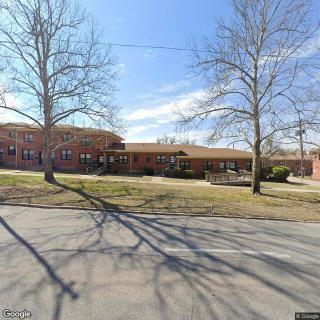
1409 North 17Th Street, Enid, OK 73701
For more information about senior living options: (866) 208-4318
Overall Review of The Living Center
Pros
 The reviewers were very pleased with the care.
- The care helped her get back on her feet.
- They would highly recommend The Living Center to anyone needing skilled nursing.
Review
This community is best suited for seniors who need skilled nursing care with a focused, outcome-driven rehabilitation plan. The Living Center in Enid shines for short-term post-acute recovery, where occupational therapy and physical therapy are the core drivers of regained independence. Families facing a recovery window after surgery, a serious illness, or a hospitalization will find the clearest value in the proven rehab pathway and the ability to measure real progress in daily functioning. The facility’s high overall rating, 4.8 from four reviews, including multiple five-star accounts, adds credibility to the claim that careful, task-oriented therapy can translate into meaningful gains. For families who want to know that a loved one will leave stronger than when they arrived, this is the most convincing angle to consider.
Those who should consider alternatives are typically families prioritizing long-term social programming, memory-care specialization, or broader lifestyle amenities beyond the rehab-focused model. If the plan involves extended custody, a more vibrant daily activities calendar, or a setting tailored to dementia care with dedicated units, other communities may deliver more robust options on those fronts. The Living Center’s public story centers on skilled nursing and rehab, so for someone seeking a more comprehensive long-term living experience with extensive social engagement or cognitive support, the comparison becomes essential. Prospective residents should weigh whether the emphasis on recovery outcomes aligns with the broader needs of the loved one over the weeks or months ahead.
The principal advantages are clear and repeatable in the available feedback. Family members describe care that is attentive and clinically capable, with therapy services that helped a relative “get back on her feet.” The combination of occupational and physical therapy appears to translate into functional improvements, like better mobility and the ability to perform daily tasks more independently, which is exactly what families want to see during a post-acute stay. The high rating across multiple reviews signals a consistent level of satisfaction that isn’t incidental. In a market where care quality can be uneven, this concentration of favorable reports, paired with a demonstrated path to recovery, serves as a dependable indicator for families prioritizing rehab outcomes above all else.
However, there are caveats to weigh. The review sample is small, and the publicly available feedback is limited to a handful of perspectives. With only four reviews, there isn’t a broad consensus on every facet of daily life, such as meal quality, social programming, or staffing consistency over longer stretches. One should be cautious about assuming uniform experiences across all shifts, all units, or all length-of-stay scenarios. Given the absence of detailed, long-term feedback, it is prudent to validate specifics during a visit: ask about therapy intensity, how care plans are coordinated with family members, and what the daily routine looks like beyond the rehab sessions. A tour, a conversation with the therapy team, and a review of the latest care plan will provide the clarity needed to fill these gaps.
Those considerations shape how the pros offset the cons. The standout rehab outcomes and the strong satisfaction signal suggest a reliable pathway to regain independence for many residents during a defined recovery window. For families focused on getting a loved one back home, that trajectory is compelling: it reduces uncertainty about progress and supports a clear goal. The limited negative signal, while not proving universality, also underscores the necessity of direct observation. The best approach combines the documented rehab strengths with proactive diligence: confirm the availability of preferred therapy times, understand how progress is measured and communicated, and verify support for discharge planning and coordination with home health services if continued outpatient rehab is required. In short, the measurable care gains are substantial enough to merit strong consideration, provided the setting aligns with the anticipated stay length and care objectives.
The bottom-line recommendation is practical and decisive. The Living Center is a strong choice for families whose primary aim is skilled nursing with demonstrable post-acute recovery, especially when the loved one is expected to return home or resume independent living after a period of rehabilitation. The combination of PT/OT effectiveness and high family satisfaction creates a compelling case for short-term stays where recovery is the explicit objective. Conversely, for those whose priorities extend beyond rehab, such as long-term social engagement, memory-care specifics, or a broader spectrum of daily living amenities, alternatives merit serious consideration. Prospective families should schedule an in-person visit, request up-to-date therapy schedules, review the discharge planning process, and compare neighboring options on cost, meal service quality, and activity offerings. In the right scenario, The Living Center can deliver the outcomes that families are seeking most: real, recoverable improvement and a clear path back to independence.
 50 resident community capacity
 Assisted Living
 Skilled Nursing Facility
 Activities on-site
 Beauty salon
 Cable or satellite TV
 Devotional services off-site
 Dining room
 Fully furnished
 Garden
 Housekeeping services
 Indoor common areas
 Kitchenette
 Move-in coordination
 Outdoor space
 Restaurant-style dining
 Small library
 Telephone
 Wi-Fi/high-speed internet available
 24-hour call system
 Ambulatory care
 Assistance with bathing
 Assistance with dressing
 Assistance with transfers
 Diabetes diet
 Diabetic care
 Medication management
 Mental wellness program
 Special dietary restrictions





 Assisted Living Expenses and Long-Term Care Insurance: A Comprehensive Exploration
 Securing Financial Support for Assisted Living: A Comprehensive Overview
 Social Security Benefits and Assisted Living: Navigating Options Across the U.S.