
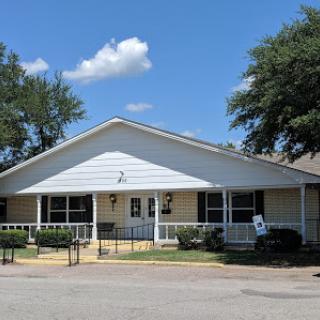
400 Southwest O Street, Antlers, OK 74523
For more information about senior living options: (866) 208-4318
Overall Review of Choctaw Nation Nursing Home
Pros
 The facility is described as a four-star facility with a great therapy team.
- It accepts Medicare and Medicaid and most insurances.
- It offers both long-term and short-term care.
- All rooms are private.
Cons
 The facility is described as absolutely horrible.
- It is listed as below average (worst) by Medicare.gov and Health US News.
- An investigation is currently underway.
- The facility has paid $45,713 in fines in the last three years.
- Staff turnover is 57.1 percent since the previous year, and it has a fire safety and emergency procedures rating of 2.
- An investigation should be conducted before placing anyone in this facility.
Review
Choctaw Nation Nursing Home in Antlers, Oklahoma is best suited for families seeking a skilled-nursing setting with private rooms and a clear emphasis on rehabilitation services, where the priority is strong therapy access and ongoing care coordination through Medicare/Medicaid and other major insurers. The facility appears most compelling for residents who want short-term rehab after a hospitalization or ongoing skilled nursing with a therapy focus, and who are comfortable navigating a campus that can deliver privacy and individualized treatment plans. In practical terms, this is a place to consider if therapy intensity and private-room comfort are non-negotiable and the family is ready to conduct careful due diligence on safety and staffing.
Those weighing alternatives should consider options with steadier staffing, clearer regulatory histories, and consistently positive safety ratings. The most salient red flags from the recent feedback center on regulatory concerns, a history of fines, and substantial staff turnover. Families that cannot tolerate frequent changes in caregivers, uncertain fire-safety procedures, or the stress of an ongoing investigation should look at facilities with more transparent compliance records and stronger frontline stability. For those who prioritize flawless day-to-day safety and consistent staffing above all, alternatives with more favorable CMS indicators will usually deliver greater peace of mind.
On the upside, the facility earns credibility from its therapy team and its ability to accommodate both long-term and short-term stays with all private rooms. The combination of a capable therapy program and private accommodation is a meaningful strength for residents who need intensive rehab, mobility support, and a dignified living environment during recovery or recovery-related ongoing care. The capacity to accept Medicare/Medicaid alongside private insurance broadens access, reducing financial friction for families navigating mixed coverage. These core advantages can translate into tangible gains in mobility, functional independence, and daily comfort when therapy goals align with the residentā€™s needs.
Yet the strongest cautions cannot be dismissed. The most damaging signals across the review set are the reports of a below-average, even troubling regulatory standing, a documented investigation, and more than a modest level of fines over a recent three-year window. A marked turnover rate among staff compounds the risk, potentially affecting continuity of care, responsiveness, and familiarity with individual resident routines. The fire-safety rating of two further underscores concerns about emergency preparedness and routine safety procedures. Taken together, these factors create a meaningful exposure that can erode trust and diminish the experience even where therapy and private rooms are solid.
In weighing the pros against the cons, the therapy strength and privacy advantages sometimes counterbalance, but do not eliminate, the core risks. For families with a high tolerance for navigating regulatory questions and who can leverage direct conversations with administration about staffing stability and safety upgrades, Choctaw Nation Nursing Home can still deliver valuable rehab outcomes and steady, private accommodations. For others, especially those who prize a consistently low-risk profile and predictable staffing, the cons loom large enough to merit a more conservative search. The decision hinges on how much value is placed on therapy intensity and private-room comfort relative to the potential volatility in safety and staffing.
Practical next steps are clear. Schedule a guided tour focused on therapy workflows, meet the therapy director, and request recent performance data on staffing ratios and turnover by shift. Obtain the latest CMS inspection results and any corrective action plans, and ask for clear summaries of fire-safety improvements and staff training initiatives. Speak with current residents or families about call-times, caregiver familiarity, and the ease of coordinating care with outside therapists. If the answers align with comfort thresholds for safety and consistency, the combination of private rooms and a strong rehab program can justify choosing this community; if not, pursuing alternatives with stronger, more stable safety and staffing profiles will likely serve the long-term interests of both resident and family better.
 72 resident community capacity
 Skilled Nursing Facility
 Air-conditioning
 Beauty salon
 Cable or satellite TV
 Computer center
 Dining room
 Fitness room
 Fully furnished
 Gaming room
 Garden
 Housekeeping services
 Kitchenette
 Move-in coordination
 Outdoor space
 Private bathrooms
 Restaurant-style dining
 Small library
 Telephone
 Wellness center
 Wi-Fi/high-speed internet available
 Community operated transportation
 12-16 hour nursing
 24-hour call system
 Activities of daily living assistance
 Assistance with bathing
 Assistance with dressing
 Assistance with transfers
 Diabetes diet
 Medication management
 Mental wellness program
 Special dietary restrictions
 Concierge services
 Planned day trips



 Navigating the Tax Landscape of Caregiving: Credits, Deductions, and Beyond
 Highly Beneficial Low-Impact Exercises for Senior Living Residents
 Is In-Home Healthcare Tax Deductible? Your Comprehensive Guide