

6060 Armor Duells Rd, Orchard Park, NY 14127
To contact a resident: (716) 662-4433
For more information about senior living options: (866) 208-4318
Absolut Care of Orchard Park Costs & Pricing
Absolut Care of Orchard Park offers semi-private rooms at a monthly cost of $8,400, which significantly exceeds the average rates for both Erie County and the state of New York, where semi-private accommodations are priced at $5,015 and $4,389 respectively. Similarly, their private rooms are priced at $8,700, again higher than the local county rate of $6,701 and the state average of $5,159. These figures indicate that while Absolut Care provides quality services and amenities, potential residents should carefully consider these costs in relation to nearby facilities and the broader market context.
| Floor plans | Absolut Care of Orchard Park | Erie County | New York |
|---|---|---|---|
| Semi-Private | $8,400 | $5,015 | $4,389 |
| Private | $8,700 | $6,701 | $5,159 |
Skilled Nursing Facilities with a similar price nearby
-
from -$300 / mo
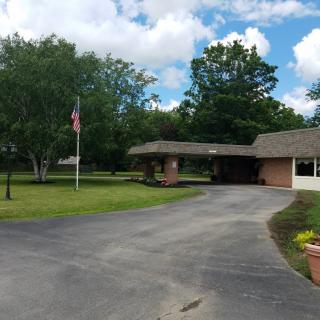
Absolut Care of Aurora Park
$8,100 to $8,400 / month7.2 miles away
Overall Review of Absolut Care of Orchard Park
Pros
 The receptionist is described as somewhat friendly.
- There is a handful of decent nurses and aides.
- During the inspection period, the facility was clean, fresh-smelling, and properly staffed, with employees who looked happy to be there.
Cons
 The facility was a snake pit.
- It desperately needed an interior facelift.
- The closet in the mother’s room was an outdated freestanding knotty pine, likely from the 1960s.
- It appeared the facility had not invested in cosmetic updates for decades.
- The administration was accused of lining their pockets.
- There was a thick, constant smell of urine, feces, and cleaner throughout the building.
- The staff were described as lazy, unprofessional, and often clueless or dishonest.
- All units were severely understaffed.
- Weekend staffing shortages left residents unattended and in wet diapers.
- The food quality was poor with few choices.
Review
Absolut Care of Orchard Park is best suited for families facing few options in the Orchard Park area, where proximity and cost may trump quality. In practical terms, this facility should be considered only when a family cannot locate a more capable option within a reasonable distance and a loved one’s care needs are manageable enough to tolerate inconsistent attention. The community is not suited for residents who require reliable staffing, rigorous cleanliness, or consistently compassionate care; those expectations will be routinely challenged here.
Any family weighing alternatives should prioritize facilities with proven staffing stability, spotless environments, and prompt, respectful responses to calls and needs. Those caring for individuals who require intensive assistance, frequent mobility help, or strict infection-control measures will find this option especially ill-suited. Weekend coverage, documented by multiple accounts, is notably unreliable, and the pattern of neglect reported by families, unclean rooms, lingering odors, and insufficient attention to basic needs, should push families toward other communities unless there is an immediate, drastic improvement plan.
The main drawbacks are persistent and deep-rooted: a pervasive smell of urine, feces, and cleaning agents that saturates common areas; worn carpet and dim, depressing patient rooms; visible dirt, cobwebs, and neglected maintenance; and an overall sense of disarray in how care is delivered. Staff performance reads as inconsistent at best, with frequent observations of unprofessional behavior, headphones and personal conversations on the clock, and occasional outright miscommunication or failure to answer questions. Units appear chronically understaffed, with RNs and aides stretched across multiple areas, which translates into delayed responses and care gaps that put residents at risk. Several notes describe situations where urgent needs or call-bell responses were not met for extended periods, underscoring a fundamental failure to protect resident safety.
Despite these severe shortcomings, a few tentative positives surface sporadically: a receptionist who is polite and a small minority of nurses and aides who perform competently and with genuine care. There are references to clean-appearing conditions during short windows of time, particularly during inspections, but these improvements vanish once inspections end, leaving the ongoing care experience far below acceptable standards. In short, occasional glimpses of attentiveness do not compensate for systemic flaws in staffing, hygiene, and day-to-day operations.
The balance of evidence makes clear that the pros do not offset the core cons. The risks to safety, dignity, and health, combined with inconsistent supervision, poor environment, and long-standing staffing challenges, make this facility a poor choice for most residents. Families should plan to visit with a critical eye, look for concrete staffing metrics, ask hard questions about weekend coverage, and insist on a transparent remediation plan. Until sustained, verifiable improvements are demonstrated, this community remains a risky fit.
For families determined to pursue care here, approach with a strict playbook: demand immediate, verifiable changes in staffing levels and assignments; request daily housekeeping and ongoing sanitation audits; insist on rapid call-button response and documented timelines; and maintain close, ongoing communication with administrators, often through a designated family liaison. Simultaneously, actively compare alternatives, other nearby nursing homes, short-term rehab facilities, or home-health options, that offer proven cleanliness, reliable staffing, and a culture of accountability. When in doubt, err on the side of safety and dignity: move toward options that deliver consistent care and respect, rather than hoping for sporadic improvements that fail to address chronic systemic failures.
 Skilled Nursing Facility
 Activities off-site
 Beautician on-site
 Devotional services on-site
 Indoor common areas
 Outdoor common areas
 Private
 Respite or short term stays offered
 Wheelchair accessible showers
 Buffalo Niagara International (13 miles away)
 Diabetic care
 High acuity care
 Incontinence care
 Meals provided
 Comprehensive Look at Senior Blood Pressure Charts: Normal and Elevated Levels by Age
 Top Canine Companions for Older Adults
 Comprehensive Guide to Blood Pressure Charts for Older Adults: Understanding Normal and High Readings by Age