
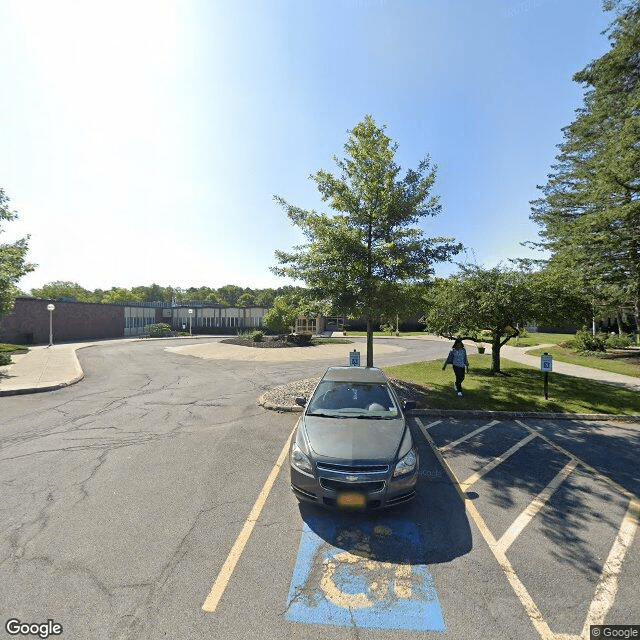
180 Washington Ave Extension, Albany, NY 12203
To contact a resident: (518) 456-7831
For more information about senior living options: (866) 208-4318
Overall Review of Daughters of Sarah Nursing Hm
Pros
 The rehab staff worked with him to improve and gave him the confidence to return home.
- The nursing staff was always available when called and kept the family informed of concerns.
- The care and attention he received allowed him to go home sooner than anticipated.
- He felt lucky to be cared for by knowledgeable, caring, and dedicated staff.
- The rooms and the overall environment seemed nice.
Cons
 Reaching his sister on the phone sometimes takes half an hour or more.
- The staff let that phone ring and ring until they tire of listening and then hang up on callers.
- The reviewer would not recommend this place to any loved one.
- They were at the 18-minute mark and still redialing.
- Care was hit and miss, mostly miss, with serious understaffing and the use of outside agency personnel who don’t know residents or standard nursing home procedures.
- There were disillusioned and embittered staffers who see cost cutting at the expense of resident care.
- Weekends were the worst.
- Aides had to be hunted down, often seeming to hide from those they were supposed to serve.
- Many aides showed a resentful attitude, as if doing residents a favor by doing their jobs.
- Doctors were a rarity.
- Mixups were frequent.
- Food service was ridiculous, slow, and inefficient; desserts were sometimes served before the entree.
- The place was dirty with deteriorating infrastructure.
- It was a painful embarrassment to the resident’s family.
- The level of care and compassion by the staff was just poor for this type of facility.
- The staff only became interested in a resident when a family member complained.
- The reviewer had to feed the resident themselves while aides watched and spoke rarely.
- Staff could observe that the resident wasn’t eating or being fed, without needing the family to point it out.
- They were concerned about safety issues and the handling of transfers, not the resident’s welfare.
- The facility was expensive, and its Jewish affiliation conflicted with the mother’s Catholic faith.
Review
This community is best suited for families pursuing a short-term rehab pathway, where the goal is to restore mobility and return a loved one home, and for residents who can tolerate and benefit from a well-appointed, comfortable setting while family oversight remains active. Positive rehabilitation narratives show that when the rehab team is engaged, progress is possible and can shorten a lengthy stay. In practice, this means it can work for those who enter with clear rehab goals and who have someone to coordinate care and monitor daily progress. Yet the benefits are uneven, and the environment alone does not compensate for deeper care gaps that surface once the initial recovery push fades.
Those considering alternatives should weigh the facility against options that promise steadier staffing, more consistent supervision, and stronger day-to-day caregiving. Persistent understaffing, weekend gaps, and the reliance on outside agency aides who do not know residents well are documented pain points. Families with high needs for reliable call-bell response, attentive daily assistance, and proactive medical oversight will likely find this community falls short. For long-term placements, or for anyone who cannot be on-site daily to advocate and intervene, other facilities with known, stable teams may deliver more predictable, resident-centered care.
On the plus side, there are credible, tangible rehab wins: residents move toward discharge home more smoothly when the therapy team is collaborative and the nursing staff remains accessible. Experiences where staff are described as knowledgeable, caring, and dedicated illustrate that when the system aligns, therapists coordinating with nurses, families kept in the loop, outcomes improve and families regain confidence. The rooms and overall environment are noted as pleasant, which helps comfort during a stressful transition. These elements remind decision-makers that the facility can perform at a high level under the right conditions.
The most consistent concerns center on staffing and care culture. Understaffing and the use of agency personnel who lack familiarity with residents create missed cues, mixups, and uneven quality of care. Weekend coverage often deteriorates, leaving families to “hunt down” aides or accept slower service. Reports of staff with a resigned or resentful attitude, limited doctor presence, and frequent procedural missteps paint a picture of a facility where reliability is variable. Food service is described as slow and inefficient, with quality control and meal timing sometimes inconsistent. The physical plant is said to be dirty at times and infrastructure deteriorating, reinforcing a sense that maintenance and daily operations do not always keep pace with resident needs.
In weighing the pros against the cons, the rehab potential provides a partial offset for families prepared to be actively involved, but the same factors that boost short-term rehab outcomes also raise risk for longer stays. A facility that can deliver effective therapy and timely communication on a good day may still expose residents to delays, miscommunications, and gaps in basic daily care on tougher days. For families seeking continuity, predictability, and a culture of genuine care, the downsides dominate and may overshadow meaningful rehab gains. The bottom line: this community can work when the plan is tightly managed, clearly communicated, and capped by a committed advocate on-site; otherwise, the cons tend to erode confidence and satisfaction over time.
Practical next steps for families considering this community: insist on meeting the rehab director and the front-line supervisors, and request recent staffing rosters and weekend coverage reports. Observe a weekend meal and care routine to gauge responsiveness and teamwork. Ask for concrete targets on call-bell response times, daily care plans, and how concerns are escalated and resolved. Review the facility’s maintenance and cleanliness routine, and probe how agency staff are oriented, supervised, and integrated into the care team. If deciding to move forward, negotiate a trial period with clear milestones for rehab goals, daily care quality checks, and a defined plan for transitions back home. If these assurances cannot be met, pursue alternatives that offer steadier staffing, accountable leadership, and a more consistently compassionate care culture.
 Skilled Nursing Facility
 Albany Cty (4 miles away)






 Engaging Brain Games and Innovative Apps to Keep Senior Minds Active
 Effective Strategies for Keeping Seniors' Minds Active: A Deep Dive into Brain Games and Apps
 In-Depth Look at the VA Aid and Attendance Program