
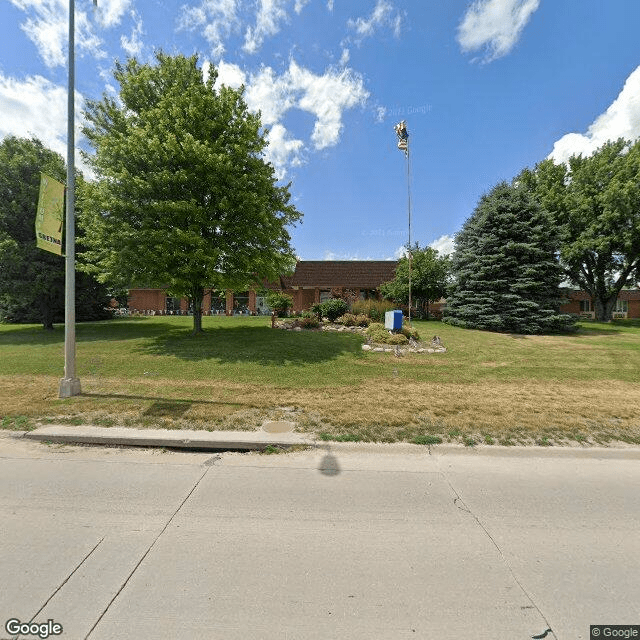
700 S Highway 6, Gretna, NE 68028
To contact a resident: (402) 332-3446
For more information about senior living options: (866) 208-4318
Overall Review of Gretna Community Living Center
Pros
 The caregivers have pleasant and caring relationships with residents and their families.
- They go out of their way to keep families informed and involved in care conferences.
- There is a real human connection to the care and a high quality of service.
- Many staff members have been there for a long time, contributing to stability and continuity.
- The facility is clean, odor-free, easy to reach by the Interstate, and has adequate parking.
- There is an attached rehab area for both in-patients and out-patients.
- An aviary in the common area provides daily enjoyment for residents.
Cons
 There are residents who need memory care, but no dedicated memory care services.
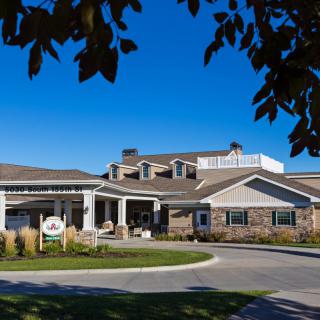
- The facility is not modern or glitzy.
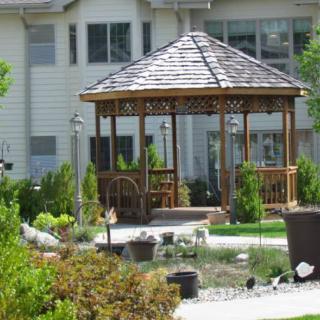
- The outdoor area is small and not secured, with only a short sidewalk in front for outdoor seating.
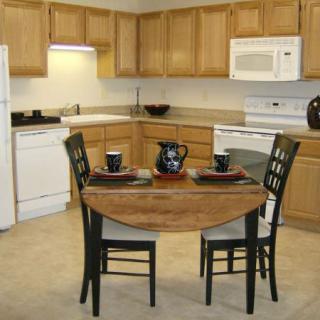
- There are two residents per shared room, which can cause issues.
- There are activities, but nothing outstanding.
Review
This community is best suited for families seeking dependable, person-centered care in a straightforward, homey setting. It is an ideal match for residents who require daily assistance or rehabilitation services and who qualify for Medicaid, valuing consistent, long-tenured staff over luxe amenities. It works well for couples or individuals comfortable sharing a room and who prioritise genuine caregiver relationships. Those for whom memory care is a primary need or who demand highly modern facilities with extensive security and built-in enrichment programs should look elsewhere.
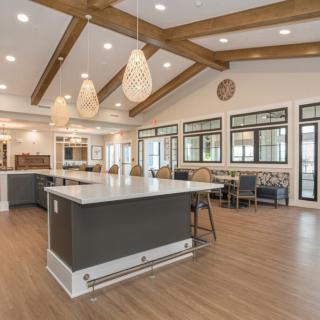
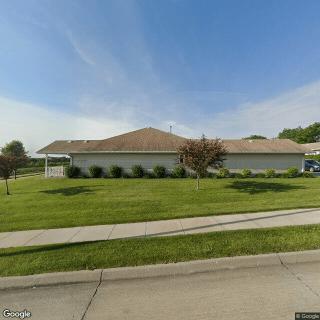
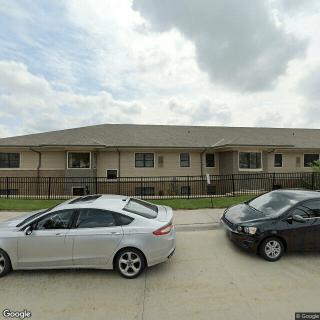
Located roughly 15 to 20 miles from Omaha, Gretna Community Living Center is easy to reach via the Interstate, with adequate parking once on site. An attached rehab area serves both in-patients and out-patients, giving residents consistent access to therapy without extra trips. The building is a one-story brick structure, plain but clean, with no pronounced odors. The dining hall is a central space that fosters social meals, supported by smaller tables for those who need assistance eating, and even a small aviary that provides a gentle social focal point.
Care quality stands out as the defining strength. Staff relationships with residents and families are routinely warm and engaging, and there is a clear commitment to keeping families informed and involved in care conferences. The sense that residents are more than a number persists; caregivers often have long tenures, contributing to continuity and a sense of trust. This level of human connection helps offset the facility’s old-fashioned feel and its lack of glitzy features, creating an environment where residents feel seen and valued rather than warehoused.
On the downside, the physical environment imposes limits that families must weigh carefully. Outdoor space is small and not secured, presenting safety considerations for residents with higher activity or wandering tendencies. Rooms frequently accommodate two residents, which can raise privacy questions and occasional tensions, even though staff respond quickly to concerns. The site lacks a dedicated memory care program, so residents with dementia who require specialized, structured activities may not find the level of programming available in purpose-built memory care units.
Food and daily routines offer solid value, with meals described as average to above-average and staff readily accommodating tray service to rooms. Activities exist, crafts, Wii bowling, music, yet none rise to a standout level; what matters is that staff know each resident well enough to tailor encouragement and participation to ability. The rehab wing adds practical value by supporting recovery and ongoing mobility, aligning with the overall emphasis on functional care rather than entertainment-driven programming. For families balancing budget with care quality, these elements collectively create a practical, reliable option.
For decision-making, Gretna Community Living Center delivers a clear, value-centric proposition: strong caregiver culture, affordable care, and accessible rehabilitation, all anchored in a no-frills, genuinely human approach. Pros offset most of the cons when the priority is steady, compassionate care within Medicaid budgets. If memory-care specialization, modern amenities, large outdoor spaces, or private rooms are non-negotiable, alternatives should be pursued. Otherwise, this community offers dependable care, meaningful staff-resident connections, and transparent family involvement that can meaningfully support both residents and their families. Prospective families should schedule a tour to observe caregiver interactions firsthand, discuss private-room options, and confirm the availability of memory-care alternatives nearby if dementia care needs escalate.
 Skilled Nursing Facility
 Eppley Airfield (22 miles away)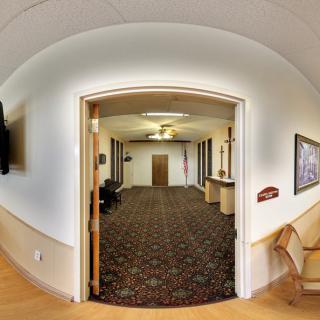

 Supportive Employee Benefits That Help Caregivers Attain Better Work-Life Harmony
 Top Cars for Senior Drivers and Essential Safety Innovations
 A Closer Look at Private Pay Home Care