
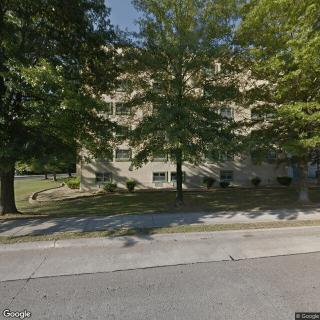
1220 East Marshall, Charleston, MO 63834
For more information about senior living options: (866) 208-4318
Charleston Manor Costs & Pricing
At Charleston Manor, the monthly costs for accommodations reflect a premium experience compared to both Scott County and the broader state of Missouri. For a semi-private room, residents can expect to pay $3,843, which is notably higher than the Scott County average of $2,922 but slightly below the state average of $3,772. When it comes to private rooms, Charleston Manor maintains its competitive pricing with a cost of $3,934 that aligns perfectly with Scott County's rates; however, it remains lower than the state average of $4,483. These figures indicate that while Charleston Manor may carry a higher price tag compared to local options in Scott County for semi-private accommodations, it offers consistent value for private rooms within the region. Overall, these costs underscore Charleston Manor's commitment to providing quality care in a welcoming environment amidst varying regional pricing trends.
| Floor plans | Charleston Manor | Scott County | Missouri |
|---|---|---|---|
| Semi-Private | $3,843 | $2,922 | $3,772 |
| Private | $3,934 | $3,934 | $4,483 |
Overall Review of Charleston Manor
Pros
 The possibilities of this facility are endless.
- It has the potential to be the showplace of all facilities for the aged and infirm in the area.
- There is a willingness to support positive changes and a commitment to recommending the facility for those in need.
- The dedication, interest, and empathy of the employees are evident.
Cons
 The apathy among the staff is rampant.
- The laundry is a box of popcorn in its sorting.
- Bathing is a flip-of-the-coin.
- Medications are there but not consistent.
- Not all who apply should be hired.
Review
Charleston Manor in Charleston, MO is best suited for families who are willing to treat the community as a work in progress and insist on an active oversight role. It serves residents with moderate care needs who can tolerate day-to-day gaps while leadership and staff align around a stronger, more reliable care program. This is not the pick for those who require consistently precise medication management, fully reliable bathing assistance, or constant, highly responsive supervision. For a resident with higher acuity or a family unable to commit to regular monitoring and care conferences, alternatives with steadier operations will likely deliver more peace of mind.
Those weighing alternatives should consider options that demonstrate consistent staffing, predictable routines, and a proven track record of meeting essential services. If reliability in medication administration, timely bath assistance, clean and efficient housekeeping, and meals that consistently meet residents’ expectations are non-negotiables, Charleston Manor may fall short in the near term. Families seeking a turnkey experience with fewer daily prompts to escalate concerns will want to compare nearby communities with stronger, verifiable metrics for staff coverage, care planning, and service delivery before making a final commitment.
From the available impressions, the core upside is latent potential: the facility appears capable of becoming a standout option if leadership and staffing tighten up, and if the program is rebuilt around accountability and resident-centered care. The notion that “the possibilities are endless” signals a foundation that could support a robust care culture with the right investments. Dining, though not meeting every palate, hints at room for improvement toward more resident-focused menus. The strongest offset to the current shortcomings would be a clear, credible plan from administration to address staffing norms, med-pass discipline, and daily living routines, backed by transparent progress reporting.
The decisive drawbacks are real and disruptive: staff apathy, inconsistent med administration, uneven laundry quality, irregular bathing assistance, and meals that fail to align with residents’ preferences. None of these are trivial in a setting where daily quality and safety hinge on dependable caregiving. The tension between potential and present performance means improvements must be tangible, timely, and well-communicated. In practical terms, the advantages of investing in governance and training must translate into observable changes within weeks, not months, to justify continued reliance on Charleston Manor without constant family intervention.
To accurately assess it now, begin by requesting a current, detailed care plan and med-pass protocol, then observe a shift in action, ideally across mornings and evenings, to gauge consistency. Inquire about staff-to-resident ratios per shift, the cadence of bathing and laundry cycles, and the processes used to update families on changes in health or daily routines. Ask to review sample menus, snack options, and opportunities for resident input on meals. Seek out the resident council or direct conversations with current residents about their day-to-day experiences. A tour that includes times when meals and personal care are most active will reveal gaps not evident in a quiet, scheduled visit.
In the near term, set concrete expectations and monitor key signals: response times to call bells, consistency of medication administration, cleanliness of rooms and linens, the reliability of bathing assistance, and the overall tone and reliability of daily communications from staff. If the facility cannot demonstrate steady progress in these areas within a 30- to 60-day window, the risk-to-benefit balance tilts toward pursuing other communities. The need for proactive advocacy is a central reality here, but that does not erase the possibility that Charleston Manor can become a well-run, resident-centered option with disciplined leadership, trained staff, and a transparent improvement plan.
Bottom line: Charleston Manor holds meaningful potential, but it mandates an engaged family partnership and clear, measurable commitments from administration. It is a reasonable choice for families prepared to push for concrete improvements and to participate actively in care planning, scheduling, and quality checks. It is not the right fit for those seeking guaranteed reliability and effortless daily operations. Prospective residents should demand a concrete timeline for addressing the current gaps, plus references and evidence of sustained improvements before turning away from other options that already demonstrate steadier performance.
 120 resident community capacity
 Skilled Nursing Facility
 Activities off-site
 Air-conditioning
 Beautician on-site
 Cable or satellite TV
 Computer center
 Devotional services off-site
 Dining room
 Fitness room
 Fully furnished
 Gaming room
 Garden
 Housekeeping services
 Indoor common areas
 Kitchenette
 Move-in coordination
 Outdoor common areas
 Private
 Private bathrooms
 Respite or short term stays offered
 Restaurant-style dining
 Small library
 Telephone
 Wellness center
 Wheelchair accessible showers
 Wi-Fi/high-speed internet available
 Community operated transportation
 24-hour call system
 Assistance with bathing
 Assistance with dressing
 Assistance with transfers
 Diabetes diet
 High acuity care
 Incontinence care
 Medication management
 Special dietary restrictions
 Concierge services
 Planned day trips



 A Detailed Examination of Nursing Home Costs Across the U.S.
 Exploring Nonmedical Home Care: Understanding Services, Costs, and Financial Approaches
 Engaging Brain Games and Innovative Apps to Keep Senior Minds Active