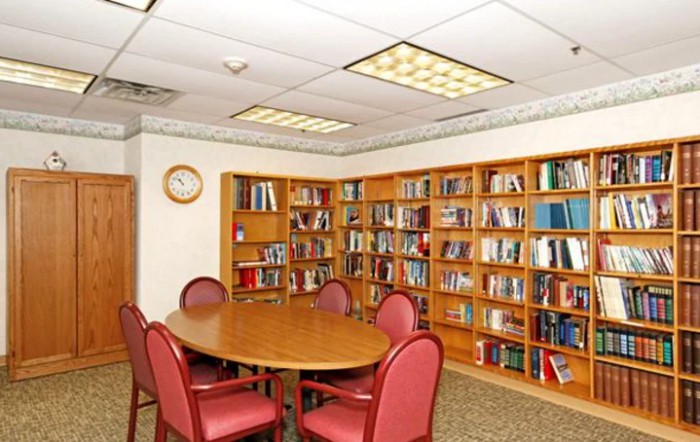
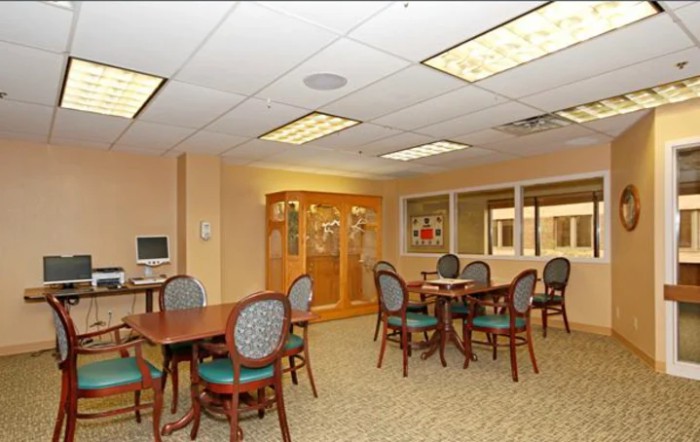
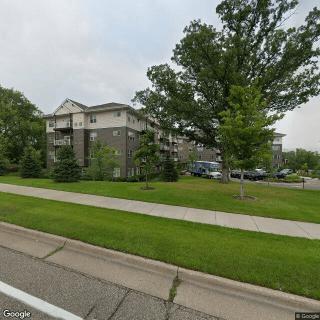
1900 West County Road D, Roseville, MN 55112
For more information about senior living options: (866) 208-4318
Overall Review of Langton Shores
Pros
 The mother felt like she was on vacation during her stay at Langton Shores TCU.
- The nurses and aides were kind and attentive.
- The food was very good, and she loved the ease of ordering meals.
- The staff were very attentive and caring and promptly addressed concerns.
- There were no cockroaches, and the food was as good as any institutional cuisine.
- The people at Presbyterian Homes of Roseville were wonderful and fantastic.
- The facility had cats upstairs, which delighted cat-loving visitors.
- The reviewer would definitely go back.
Cons
 The care deteriorated after the management change, turning for the worse.
- There was continual turnover in leadership.
- The last straw was cockroaches roaming the building everywhere.
- The administrator showed no compassion toward any of the residents.
- One aunt was there for 10 days and never received a shower or bath.
- Bed linens were never changed.
- She received the wrong diet and someone else’s medications.
- The reviewer would give no stars to the facility.
Review
Langton Shores in Roseville, Minnesota, is best suited for families seeking a warm, attentive care environment where long-term residents receive steady daily attention and meals that feel approachable rather than institutional. It leans toward a home-like atmosphere that supports recuperation and transition care, with staff praised for kindness and responsiveness. For seniors who want reliable bathing routines, timely attention to concerns, and an easy, user-friendly dining experience, Langton Shores offers a practical, welcoming option. The strongest signal is that daily life there tends to be smooth, with a focus on comfort and humane, person-centered care rather than high-acuity medical need.
Alternatives are worth considering for families that require unwavering leadership stability and a spotless track record on core safety and basic hygiene, or for residents with more complex medical or behavioral needs that demand highly specialized programming. A subset of reviewers points to management turnover over the past couple of years and a perceived drift in care quality that coincided with leadership changes, including allegations of missed showers, incorrect diets, and medication mix-ups. Pest concerns and a sense of compromised accountability have also surfaced in some accounts. For those who demand airtight infection control, unwavering consistency, and a history of dependable administrative responsiveness, exploring other facilities may be prudent.
On balance, the strongest positives, attentive staff, regular bathing, good-tasting meals, and a generally welcoming, low-friction environment, help the facility offset many common, everyday concerns in routine care. When the care team is consistent and responsive, families notice tangible benefits in resident comfort, dignity, and satisfaction with meals and daily routines. Yet these benefits do not fully neutralize the risk signals tied to leadership instability and past reports of lapses in basic care. The combination of a caring frontline and a troubled leadership narrative creates a tension: warmth and ease versus potential gaps in oversight that could reappear under new churn.
Langton Shores operates with a long-term nursing focus and a transitional care component, which can be advantageous for residents needing ongoing oversight with occasional rehab stays. The positive notes about baths and food imply dependable routines around daily living, while the sense of a “vacation-like” atmosphere during short stays can help a resident acclimate quickly. The occasional mention of pets in the past hints at a potentially more relaxed, homelike culture, an appealing factor for animal-friendly families, though animal policies can shift with ownership. Prospective families should verify current offerings, including staffing patterns, rehab services, activity programming, and any changes since ownership transitions.
Red flags require careful, current verification. Leadership stability, consistency of basic care (baths, linens, diet accuracy, medication administration), and pest control are pivotal. Potential residents should request recent state inspection results, review any open complaints, and speak with multiple frontline caregivers to gauge day-to-day reliability. It is essential to tour with a focus on shift dynamics, ask about staff turnover, and seek candid feedback from current residents and families. A trial period or closely monitored initial weeks can clarify whether the present administration and frontline team meet expectations and align with the resident’s goals.
Ultimately, Langton Shores offers a practical, compassionate option for families prioritizing warmth, meals, and dependable daily care in Roseville. It is not the only choice, especially for those who cannot tolerate leadership volatility or past care disruptions. For residents whose needs stay within the facility’s capabilities and whose families can tolerate occasional administrative uncertainty, Langton Shores warrants serious consideration and a thorough, data-informed evaluation. For others, particularly those with high medical complexity, demanding dementia care, or a low tolerance for any lapse in safety and oversight, it is prudent to compare with other communities boasting steadier leadership and stronger, demonstrable safety records before making a final commitment. The decision should hinge on recent performance data, a candid in-person assessment, and alignment with the resident’s care goals and daily living preferences.
 50 resident community capacity
 Skilled Nursing Facility
 Beauty salon
 Cable or satellite TV
 Dining room
 Fully furnished
 Garden
 Housekeeping services
 Kitchenette
 Move-in coordination
 Outdoor space
 Telephone
 Wi-Fi/high-speed internet available
 Minneapolis-St Paul International (11 miles away)
 24-hour call system
 Activities of daily living assistance
 Assistance with bathing
 Assistance with dressing
 Assistance with transfers
 Diabetes diet
 Meal preparation and service
 Medication management
 Mental wellness program
 Special dietary restrictions



 Navigating the Tax Landscape of Caregiving: Credits, Deductions, and Beyond
 Highly Beneficial Low-Impact Exercises for Senior Living Residents
 Is In-Home Healthcare Tax Deductible? Your Comprehensive Guide