
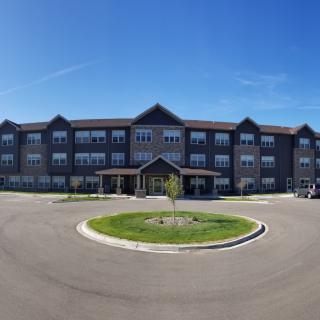
525 West Main Street, Melrose, MN 56352
For more information about senior living options: (866) 208-4318
Overall Review of Centracare Health System - Melrose Pine Villa C C
Pros
 The doctors, nurses, and staff are amazing.
- The care provided by the team is outstanding.
- The patient is very happy with the care they received.
Cons
 The clinic tells a woman who might have a blood clot that tests will be postponed until they confirm insurance coverage.
- The clinic's approach suggests insurance considerations take precedence over urgent medical evaluation.
Review
This Melrose facility is best suited for seniors who prioritize solid, hands-on medical oversight delivered by a longstanding, capable clinical team. Pine Villa C C within Centracare Health System is anchored by doctors, nurses, and staff who residents and families describe as compassionate, responsive, and dependable. It suits older adults who need steady daily care, clear communication, and continuity of care from a medical team that knows their history. For families seeking a reliable medical anchor in a smaller-city environment, where clinicians take time to listen and coordinate care, the center offers a practical, dependable option that emphasizes real-world outcomes over flashy branding.
Where this center may push families to explore alternatives is in the realm of access to diagnostic testing and the handling of insurance matters. One reviewer recounted a troubling moment where a woman with recent heart surgery and current chest pains was told there might be a blood clot, but that testing would be delayed until insurance coverage could be reviewed. That experience signals a vulnerability: administrative processes around tests and approvals can slow critical evaluation. For families who cannot tolerate any postponement of diagnostic steps, especially in situations that could indicate a serious cardiac event, alternatives with faster, more streamlined testing and fewer coverage hurdles may be preferable.
The strongest asset here is the clinical team’s demonstrated capability and bedside care. When care teams function well, the benefits are tangible: timely, compassionate attention, thorough monitoring, and clear explanations that help families understand what is happening and what comes next. These clinical strengths can offset some concerns about administration by delivering reliable routine care, proactive symptom management, and steady post-procedure or post-visit follow-up. Yet the counterweight remains salient: in urgent or potentially emergent scenarios, even a temporary delay in testing can have outsized consequences. The balance, then, hinges on the seriousness of the medical need and the reliability of the internal care-coordination process.
The mixed public feedback adds a sober note to the decision-making process. A single 5-star endorsement sits alongside a 1-star critique, within a small sample. That disparity is not merely statistical noise; it points to real variability in experience, likely driven by the specific department, clinician, or administrative liaison involved in a given case. Prospective residents should not assume uniform excellence or uniform friction; instead, they should engage directly with the care team, ask pointed questions about how testing is scheduled, and seek out current patients’ perspectives in the department most likely to handle needs. This isn’t a red flag so much as a call for thorough, situation-specific evaluation.
For families weighing this option, practical due-diligence steps matter. Inquire about how rapidly diagnostic tests can be arranged if symptoms suggest a potential clot or other acute issue, and who has final say on test authorization. Ask how the center coordinates with hospitals for urgent transfers and what the typical wait times look like when insurance pre-authorization is involved. Clarify the roles of care coordinators or social workers in expediting tests, billing questions, or the discharge process. Request a direct contact for the department most likely to manage acute symptoms, and verify whether there are alternative pathways for urgent evaluation outside potential insurance delays.
Ultimately, Pine Villa C C stands as a credible, capable option for seniors who value a reliable medical presence and compassionate daily care within a CentraCare framework. It excels when the need is steady, routine, and supervised by a skilled team that communicates clearly. However, for families prioritizing unimpeded access to diagnostics and minimal administrative friction, especially in time-sensitive or high-stakes situations, consideration should extend to other centers with a track record of rapid testing and more streamlined authorization processes. In the end, choosing this community means weighing a proven, person-centered clinical culture against the possibility of insurance-related delays; align the choice with the resident’s urgency level, risk tolerance, and the family’s capacity to navigate care logistics.
 75 resident community capacity
 Skilled Nursing Facility
 Air-conditioning
 Beauty salon
 Cable or satellite TV
 Computer center
 Dining room
 Fitness room
 Fully furnished
 Gaming room
 Garden
 Housekeeping services
 Kitchenette
 Move-in coordination
 Outdoor space
 Private bathrooms
 Restaurant-style dining
 Small library
 Telephone
 Wellness center
 Wi-Fi/high-speed internet available
 Community operated transportation
 12-16 hour nursing
 24-hour call system
 Activities of daily living assistance
 Assistance with bathing
 Assistance with dressing
 Assistance with transfers
 Diabetes diet
 Medication management
 Mental wellness program
 Special dietary restrictions
 Concierge services
 Planned day trips


 Caring for Those Who Care: Recognizing, Understanding, and Overcoming Caregiver Burnout
 Caregiver Exhaustion: Recognizing the Signs and Restoring Your Well-Being
 Understanding Hospice Care at Home: Comprehensive Services, Key Benefits, and Eligibility