
1451 Bronson Way, Kalamazoo, MI 49009
For more information about senior living options: (866) 208-4318
Overall Review of The Springs At The Fountains
Pros
 The staff care about residents.
- The staff were nice and courteous.
- The therapy team was great and outstanding at motivating her to get up and moving.
- The mother recovered fabulously and was able to return to her prior residence at walker level.
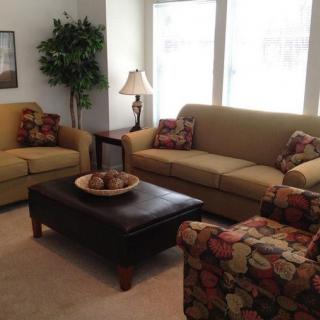
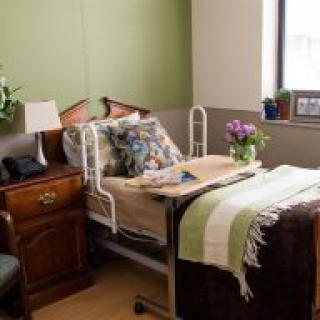
- The rooms at Bronson Place had an open and airy feel and were very clean.
- The staff were friendly and welcoming during the visit.
- Many of the residents seemed happy and engaged in activities.
- The rooms were large and tastefully decorated, with comfortable lighting.
- There were group activities offered and well attended.
- The dining area was well maintained with an almost 1-to-1 staff-to-resident ratio.
- The menu displayed a wide variety of choices for the residents.
- The facility was clean, welcoming, and pleasant.
Cons
 The staff's response to his outbursts was to automatically send him to the ER, implying inadequate handling.
- The facility did not seem to have a way to handle outbursts.
- It was unclear whether they had normal protocols or were equipped to handle patients who aren't perfectly behaved.
- The two-patients-per-room setup in a small space limited supervision and one-on-one interaction.
- The staff did not appear to be equipped to have someone sit with him.
Review
The Springs At The Fountains in Kalamazoo is best suited for families seeking a short-term rehabilitation focus where skilled therapy and a clean, orderly environment are the main draw. This community appears most appropriate for residents who enter after a hospital stay and need structured PT/OT to regain mobility, with staff who are courteous and engaged. It is less suitable for someone whose care requirements include ongoing behavioral management, intense supervision, or privacy-driven long-term residence. The experiences shared suggest a potential risk if an individual exhibits behavioral outbursts or agitation, since handling those situations has, in at least one case, led to ER transfers and placement in a geriatric psychiatric setting. That pattern signals a need to consider alternative paths for residents with behavioral or safety concerns.
What stands out as solid positives are the core caregiving elements that influence rehab outcomes. The staff are described as courteous and capable, creating a respectful, supportive atmosphere for families and residents. The therapy team is repeatedly highlighted as a strength, motivating movement, coordinating with family members, and driving meaningful progress. In a rehab-oriented stay, this emphasis on therapy quality and staff responsibility can translate into real gains, with a patient able to regain functional independence and return to a prior living arrangement. Cleanliness and a calm, manageable environment round out the favorable backdrop for recovery.
Yet significant cons must be weighed against those strengths. The facility operates with a small footprint and shared rooms, two residents per room, limiting privacy and personal space. More importantly, there is evidence of limited capacity to handle behavioral challenges on-site; when difficult moments arise, the current approach has involved transferring the resident to emergency services rather than deploying on-site de-escalation or sitter support. The combination of a compact layout and the lack of dedicated one-on-one supervision means that, for a resident who requires close monitoring or individualized interventions during agitation, the setting may fall short of expectations. These realities are not mere preferences; they directly affect safety, continuity of care, and overall experience.
The pros can offset the cons for the right candidate, but only to a point. For families prioritizing therapy effectiveness, staff kindness, and a straightforward rehab trajectory, The Springs At The Fountains can deliver tangible mobility gains in a supervised, respectful milieu. The clean environment and the evident dedication of the therapy team provide a solid foundation for recovery goals. However, the offset is incomplete when behavioral risk is present or privacy concerns loom large; in such cases, the compact design and on-site response limitations become meaningful barriers. The decision hinges on whether short-term rehab with robust therapy support aligns with a loved one’s needs and tolerance for limited privacy and potential off-site crisis moves.
Those facing a choice should explicitly consider alternatives if long-term residential goals or behavioral management are priorities. Families seeking extended stays with private rooms, richer social programming, or higher on-site readiness to handle agitation without ER involvement may find better alignment elsewhere. It is prudent to compare facilities with larger campuses, stronger on-site behavioral health capabilities, and higher staff-to-resident ratios, all of which can translate into safer, more continuous care for residents with complex needs. A targeted visit, checking how staff handle challenging moments, observing room arrangements, and confirming the exact rehab services available, will clarify whether The Springs At The Fountains fits the anticipated care path.
In the end, the practical choice comes down to match between need and capability. For short-term rehab where mobility recovery and therapy-driven progress are the priority, and where privacy is a secondary consideration, The Springs At The Fountains earns serious consideration. For families prioritizing long-term stability, privacy, and proactive management of behavioral issues on-site, exploring alternatives is essential. A candid tour plus direct questions about incident responses, room configurations, and therapy protocols will reveal whether this community can reliably deliver the blend of safety, progress, and comfort that the situation requires.
 38 resident community capacity
 Continuing Care Retirement Community (CCRC)
 Skilled Nursing Facility
 Beauty salon
 Cable or satellite TV
 Dining room
 Fully furnished
 Garden
 Housekeeping services
 Kitchenette
 Move-in coordination
 Outdoor space
 Restaurant-style dining
 Small library
 Telephone
 Wi-Fi/high-speed internet available
 Kalamazoo County (7 miles away)
 24-hour call system
 Activities of daily living assistance
 Assistance with bathing
 Assistance with dressing
 Assistance with transfers
 Diabetes diet
 Medication management
 Mental wellness program
 Special dietary restrictions



 Comprehensive Insights into Palliative Home Care: What It Is and What to Expect
 Skilled Nursing Facilities vs. Nursing Homes: Making Sense of the Differences
 A Detailed Examination of Nursing Home Costs Across the U.S.