The Oasis At Adrian Rehabilitation And Nursing Center
The Oasis At Adrian Rehabilitation And Nursing Center is a nursing home community in Adrian, MI.
Information last verified:
130 Sand Creek Highway, Adrian, MI 49221
For more information about senior living options: (866) 208-4318
3.5 from 70 reviews
5 stars
39
4 stars
3
3 stars
2
2 stars
4
1 stars
22
Overall Review of The Oasis At Adrian Rehabilitation And Nursing Center
differentiator4 reviews mention this
Rehab therapists are a high point
Residents and families repeatedly highlight strong PT and OT during rehab stays.
Several reviews tie better recovery moments to the rehab department, especially PT and OT support. One reviewer said their mother’s PT and OT were really good, while another described therapists as excellent and caring and noted major walking progress by discharge. Other residents’ experiences also praise rehab follow-through and the way staff helped people build strength again, including a review thanking staff for getting a loved one strong and back home.
caveat3 reviews mention this
Dining quality is mixed
Food reviews vary, with some calling meals delicious and others calling them awful.
Some residents and families praise the food as delicious, with variety day to day. Others describe dining as barely edible or outright awful, to the point that they relied on family to bring meals. This split lines up with the fact the community offers restaurant-style dining and room-service style options, but reviews don’t agree that the meal experience is consistently satisfying.
caveat6 reviews mention this
Care response and meds can slip
Some residents report delayed assistance and problems with medication timing.
A recurring complaint is that help is not always reached when needed, including missed call-light response or having to ring for assistance. Multiple reviews describe delayed or missed medications and concerns about basic needs like pain medicine not arriving on schedule. There are also accounts of inadequate follow-through after medical events, including one review about medication being withheld and another describing worsening outcomes they connected to care gaps.
caveat8 reviews mention this
Facility condition and upkeep vary
Reviews describe both a clean facility and serious disrepair concerns.
Some visitors explicitly mention cleanliness and being well kept. Others report peeling wallpaper or paint, dust, lingering odors, backed-up or dirty toilets, and linens that look aged. A few reviews also describe unsanitary conditions and the need for remodeling, with families tying the physical condition to the overall experience and comfort of care.
common2 reviews mention this
Hospice partnership is mentioned
Hospice coordination is described by at least some families.
At least a couple of reviews mention working with hospice as part of resident care. One review describes a hospice collaboration and compassionate staffing, and another says the facility works alongside hospice for end-of-life support. This matches the care model that includes hospice care as an available service.
How we summarize
Counts show how many written reviews mention each theme; a review can touch several themes, and only frequently mentioned themes are displayed.
Features
Housing
120 resident community capacity
Types of Care
Skilled Nursing Facility
Amenities
Air-conditioning
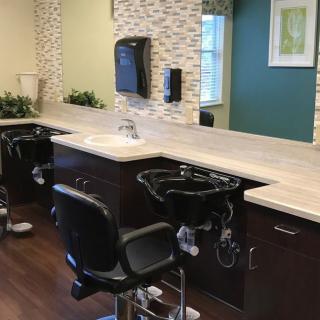
Beautician on-site
Beauty salon
Cable or satellite TV
Computer center
Dining room
Fitness room
Fully furnished
Gaming room
Garden
Guasts at mealtime
Guest parking
Housekeeping services
Kitchenette
Move-in coordination
Outdoor space
Overnight guests
Party space
Private bathrooms
Restaurant-style dining
Small library
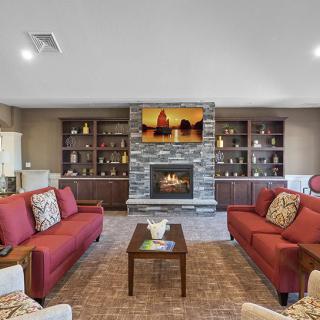
TV room
Telephone
VA Benefits Consultation
Wellness center
Wi-Fi/high-speed internet available
Transportation
Community operated transportation
Transportation arrangement
Transportation arrangement (non-medical)
Transportation to doctors appointments
Care Services
12-16 hour nursing
24-hour call system
24-hour supervision
Activities of daily living assistance
Assistance with bathing
Assistance with dressing
Assistance with transfers
Diabetes diet
Hospice care
Meal preparation and service
Medication management
Mental wellness program
Special dietary restrictions
Dining
Diabetes diet
Room service
Special dietary restrictions
Activities
Activities off-site
Arts and crafts
Book club
Community-sponsored activities
Concierge services
Cooking club
Educational speakers / life long learning
Fitness programs
Games
Gardening club
Live musical performances
Planned day trips
Religious services
Resident-run activities
Scheduled daily activities
Stories
Tai Chi
Yoga / chair yoga
Nearby Places of Interest
Places of Worship
Church of Jesus Christ of Latter Day Saints (0.1 miles)
Crossroads Community Church (0.2 miles)
Jesus Is Lord Ministries (1 miles)
Christ the Redeemer Lutheran Church (1.1 miles)
St Johns Lutheran Church - Pastors Office (2.6 miles)
Seniors benefit from ride-hailing services like Uber and Lyft, which provide convenient and accessible transportation options that promote independence and social engagement, while addressing mobility challenges. These platforms have adapted to meet senior needs with user-friendly features and safety measures, although costs can be a concern; community programs may help subsidize rides for older adults.
The guide outlines the eligibility criteria for home health care services, emphasizing clinical requirements, insurance options, and application processes. It distinguishes between Medicare's strict and Medicaid's flexible qualifications while addressing challenges families may face in securing necessary care at home.
Elder abuse affects many older adults worldwide and includes physical, emotional, neglectful, and financial harm, with about one in six individuals over 60 experiencing abuse annually. Prevention and intervention strategies focus on awareness, support for caregivers, and mandatory reporting, while recovery necessitates comprehensive support for both physical and emotional needs.
Get PricingAsk A QuestionSchedule A TourContact Senior Advisor
By clicking submit, you agree to our Partner's Terms of Use. You
also consent to receive calls and texts, which may be autodialed, from our Partner. Your consent is not a condition to
using our Partner's service. Please visit our Partner's Privacy Policy for information about their privacy practices.

 120 resident community capacity
 Skilled Nursing Facility
 Air-conditioning
 Beautician on-site
 Cable or satellite TV
 Computer center
 Dining room
 Fitness room
 Fully furnished
 Gaming room
 Garden
 Guest parking
 Housekeeping services
 Kitchenette
 Move-in coordination
 Outdoor space
 Overnight guests
 Party space
 Private bathrooms
 Restaurant-style dining
 Small library
 Telephone
 VA Benefits Consultation
 Wellness center
 Wi-Fi/high-speed internet available
 Community operated transportation
 12-16 hour nursing
 24-hour call system
 Activities of daily living assistance
 Assistance with bathing
 Assistance with dressing
 Assistance with transfers
 Diabetes diet
 Hospice care
 Medication management
 Mental wellness program
 Special dietary restrictions
 Arts and crafts
 Book club
 Concierge services
 Cooking club
 Educational speakers / life long learning
 Games
Games Live musical performances
 Planned day trips
 Religious services
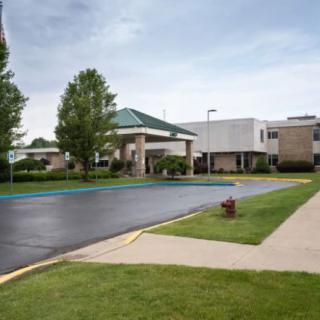
 Vibrant location with easy access to cafes, parks, healthcare, dining, and entertainment.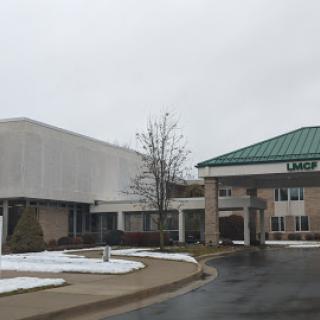


 Seniors and Modern Transportation: Exploring Uber, Lyft, and Other Ride-Hailing Options
 Comprehensive Guide to Qualifying for Home Health Care Services
 Powerful Realities of Elder Abuse and the Most Effective Ways to Report It