
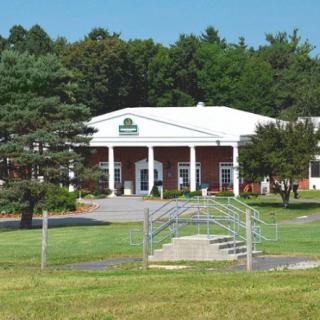
22 Hillside Avenue, Groton, MA 01450
For more information about senior living options: (866) 208-4318
Overall Review of Seven Hills Pediatric Center
Pros
 Seven Hills at Groton is an amazing facility.
- It provides a safe, clean, nurturing, and educationally centered environment for pediatric patients with severe disabilities who require 24/7 medical care.
- The days are filled with interaction and include a modified school day.
- They receive PT, OT, visual stimulation, music and art therapy, swimming, and more.
- The teachers, nurses, and CNAs are second to none.
- The facility turns fears into reassurance that the child receives the best possible services, care, and quality of life.
- There is no better facility on this Earth.
Review
Seven Hills Pediatric Center in Groton, MA is best suited for families whose child is medically fragile and requires around-the-clock medical support, a highly structured day, and a robust, interdisciplinary therapy program. The center presents itself as a safe, clean, nurturing environment with an education-centered approach that integrates therapy into every day. For children with complex needs, the program emphasizes continuous care, with a daily rhythm that includes physical therapy, occupational therapy, visual stimulation, music and art therapies, and swimming. The consistently high-caliber staff, teachers, nurses, and CNAs, adds a level of reliability that many families only dream of, translating fear into confidence about the child’s daily care and long-term development.
That said, there are clear alternatives families should consider. Those seeking a less intensive environment, where medical oversight isn’t around the clock, or where care feels more hands-off or home-like, may prefer smaller specialized centers or in-home care arrangements. Shorter-term stays, respite services, or plans that emphasize greater family-driven day-to-day involvement might align better with different budgeting realities or personal preferences. Geographic proximity and the ability to commit to a rigorous program are practical factors that will push some families toward other options, even if Seven Hills could be the strongest fit on paper for more demanding medical needs.
The center’s strengths powerfully offset the typical concerns tied to highly medicalized pediatric care. The 24/7 medical coverage eliminates fragmentation of services and reduces the burden on families to coordinate disparate therapies and appointments. A truly multidisciplinary team delivers an integrated care plan in real time, so progress in therapy can be built into the school-day schedule rather than introduced piecemeal. The education-centered design, with a modified school day, ensures that development is not sacrificed for medical stability; children continues to learn and engage, which is essential for long-term quality of life. While cost and accessibility are not spelled out in the data, the depth of services and staffing predictably justify the investment for families who can access it.
The practical edge of Seven Hills lies in the breadth and consistency of offerings. Therapy is not a supplementary add-on but a core, daily feature, with PT and OT paired alongside sensory stimulation and expressive therapies, all embedded within a structured routine. Visual stimulation and swimming expand options for engagement and movement that can be hard to replicate outside a specialized setting. The staff’s reputational strength, teachers, nurses, and CNAs described as second to none, translates into steady relationships, reliable care, and fewer disruptions for the child. In short, the center’s operational focus on safety, education, and continual therapy creates a meaningful, measurable path forward for children with complex needs.
Families deciding between this center and other paths should anchor their choice in concrete goals for the child and the household. If the priority is continuous medical supervision paired with a full spectrum of therapies within a formal, school-like framework, Seven Hills stands out as a leading option. If, however, the child’s needs are intense but not necessarily requiring round-the-clock coverage, or if the household cannot accommodate the logistics and financial commitment, alternatives that lean toward community-based services, home health supports, or smaller facilities may be more prudent. The best decision will align the child’s medical trajectory with a plan that preserves family capacity and minimizes disruption to daily life.
To move toward a well-founded choice, prospective families should pursue a focused intake and tour with clear questions. What are the staffing ratios at all times of day and night? How are therapies scheduled and coordinated with schooling and medical rounds? What does a typical day look like for a resident, and how are changes in medical status communicated to families? What are the processes for transition planning, family involvement, and exit or transfer if needs evolve? And crucially, what are the financial dynamics, covered services, insurance compatibility, anticipated out-of-pocket costs, and potential wait times, so the expectation landscape remains accurate before committing. Seven Hills is a compelling option for the right family, and the decision hinges on whether a highly coordinated, 24/7, therapy-rich environment best serves the child’s real-world needs and the household’s ability to sustain it.
 83 resident community capacity
 Skilled Nursing Facility
 Air-conditioning
 Beauty salon
 Cable or satellite TV
 Computer center
 Dining room
 Fitness room
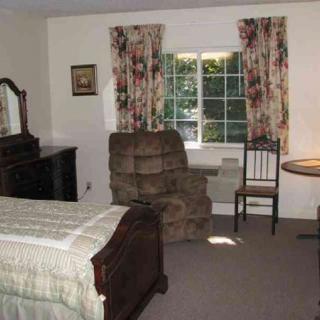
 Fully furnished
 Gaming room
 Garden
 Housekeeping services
 Kitchenette
 Move-in coordination
 Outdoor space
 Private bathrooms
 Restaurant-style dining
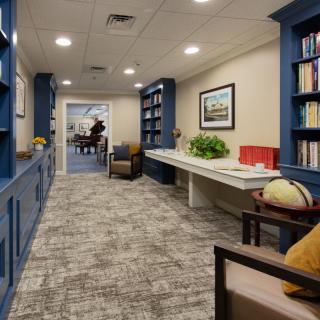
 Small library
 Telephone
 Wellness center
 Wi-Fi/high-speed internet available
 Manchester (23 miles away)
 Community operated transportation
 12-16 hour nursing
 24-hour call system
 Activities of daily living assistance
 Assistance with bathing
 Assistance with dressing
 Assistance with transfers
 Diabetes diet
 Medication management
 Mental wellness program
 Special dietary restrictions
 Concierge services
 Planned day trips



 Nurturing Our Elders: Linda's Journey of Supporting Her Mother
 A Comprehensive Exploration of Common Misunderstandings about Powers of Attorney
 Senior Move Management: Understanding the Role, Value, and Associated Costs