

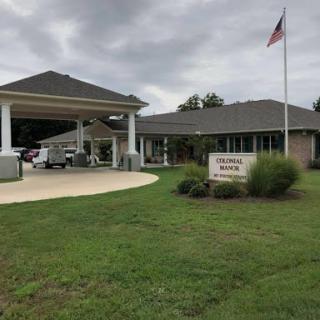
522 Main St, Delhi, LA 71232
To contact a resident: (318) 878-2417
For more information about senior living options: (866) 208-4318
Overall Review of Richland Manor Nursing Home
Pros
 The parents receive excellent care from all staff.
- They feel like family.
Cons
 Someone high up vetoed his father from going there.
- The staff are described as evil and denying him help.
- The review asserts that people with struggles in life will be punished and turned away.
- The food leaves a lot to be desired and is cold and not edible when delivered to the room.
- There are too many staff members who donā€™t seem to care for the residents.
- There have been several Covid outbreaks, and a nurse entered without a mask and handled medication with bare hands.
- Missing clothing is regularly reported by relatives.
Review
Richland Manor Nursing Home in Delhi, LA is best suited for families seeking a warm, person-centered environment where daily care can feel relational and attentive when the caregiving team is engaged. The strongest signal from the mixed feedback is that, with stable, compassionate staff, residents can experience meaningful, day-to-day support and even feel like part of a family. This community can work well for residents whose needs are moderate and predictable enough to be managed with routine assistance, provided the staff roster is consistent. However, the overall picture is uneven, and several accounts warn that care quality can deteriorate if staffing is lacking or if residents require more intensive, constant help. That variability makes this a choice that demands active oversight and clear expectations.
On the upside, when care teams are aligned, Richland Manor delivers genuine warmth and reliable attention. A positive account highlights excellent care by the staff and a sense of family for both parents over a six-month period, suggesting that there is a core group capable of building trust, continuity, and respectful engagement. For families prioritizing relationship-based care over purely transactional services, this potential can translate into dignified daily living, personal connection, and a sense of security during routine tasks. The takeaway is straightforward: quality care is possible here, but it hinges on staffing stability and personal rapport between residents and caregivers.
The flip side centers on persistent concerns about reliability and safety. Several critiques point to staffing gaps that undermine basic duties, from timely assistance with dressing and bathroom needs to keeping residents properly clothed and fed. Food quality emerges as a repeated grievance, with meals described as cold or unpalatable, undermining daily well-being and appetite. Additional red flags include unverified or unsafe medication handling and missing clothing, which collectively signal weaknesses in supervision and routine quality control. Taken together, these patterns create real risk for residents who depend on steady, dependable support across the day.
These contrasting experiences must be weighed against each other when forming a final judgment. The strong, compassionate care that appears in favorable reports demonstrates what is possible when the team is fully engaged and well-supported. Yet the darker reports remind that consistency is not reliably present and that operational gaps can override even the best intentions. For families, the decisive factor becomes whether reliable staffing and predictable daily rhythms can be secured on an ongoing basis, with an acceptable level of risk if deviations occur. Without that stability, the care experience risks feeling sporadic rather than dependable.
Given the mixed signals, alternatives should be considered for residents with high care needs or a low tolerance for inconsistency. Those requiring constant, hands-on help with transfers, dressing, toileting, or meticulous medication management may fare better in a community with documented, stable staffing ratios and stronger quality controls. Likewise, if meals, product handling, and personal-item accountability are non-negotiable, exploring other facilities with proven performance in these areas is prudent. In short, the decision hinges on how much weight is given to a genuine, steady caregiving bond versus the risks of uneven care and logistical gaps.
Practical next steps are clear. Arrange a face-to-face tour during a typical shift to observe staffing and care dynamics, and speak with multiple caregivers and residents about daily routines. Request recent state inspection reports and any quality-of-care metrics, and ask how staff coverage is scheduled on weekends and holidays. Inquire explicitly about procedures for medication handling, personal belongings, clothing loss, and response times for assistance with activities of daily living. If possible, obtain candid feedback from current residents about how problems are resolved and whether staff follow through. With thorough due diligence, families can determine whether Richland Manor meets safety and care expectations or if another option better protects comfort and dignity.
 Skilled Nursing Facility



 A Detailed Exploration of Living Wills and Advance Directives
 Comprehensive Guide to Medicare Coverage for Hospice Care
 Caring for Those Who Care: Recognizing, Understanding, and Overcoming Caregiver Burnout