
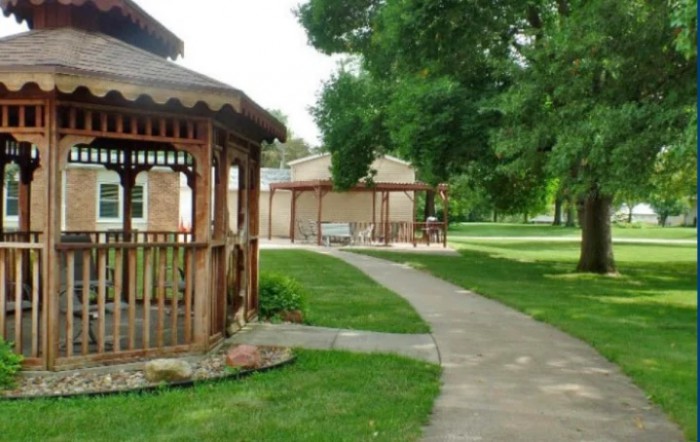
202 North Central Avenue, Villisca, IA 50864
For more information about senior living options: (866) 208-4318
Overall Review of Good Samaritan Society - Villisca
Pros
 The dad was very pleased with his care.
- It was a pretty good place to be.
- Everything was good.
- They had good care and good facilities.
- The rooms were very adequate.
Cons
 When she had a problem with an aid, it was NOT addressed properly.
Review
Good Samaritan Society - Villisca in Villisca, Iowa, is best suited for seniors who want reliable, everyday support within a compact, community-focused setting. It serves residents who prefer predictable routines, hands-on help with daily activities, and access to a broad care continuum without leaving town. Families looking for a practical balance of care and independence will find a stable match here, where staff interact closely with residents and the environment supports routine in a familiar way. The facility emphasizes complete care and solid physical standards, making it a prudent choice for those who do not require the most luxurious accommodations but do need dependable assistance with medications, mobility, and basic medical oversight.
Those who prioritize ultra-responsive service logistics should not assume flawless execution here. If rapid problem resolution and consistently consistent aid performance are non-negotiable, or if memory care, high-acuity nursing needs, or luxuries of a newer campus are top priorities, alternatives in the region merit comparison. The small-town setting offers warmth and continuity, but it also means assessing how quickly staff can respond to concerns and how well caregivers are supervised on busy shifts. In short, this community works well for families who value steady care and a predictable care plan over cutting-edge amenities or highly specialized programs.
On the positive side, reviews point to solid daily care and a practical, well-maintained environment. A family member described his father as pleased with the quality of care, underscoring that being there felt like a reasonable, workable option for someone who must reside in a care setting. Other observations highlight good facilities, adequate rooms, and a sense that the care package covers the essentials, medication management, mobility support, and routine nursing oversight, without sacrificing comfort. Taken together, these insights suggest a dependable operation where residents receive consistent help to meet their everyday needs and where the physical campus supports a dignified living arrangement.
However, a notable caution emerges from a single negative report about an aid issue not being addressed properly. That instance points to potential gaps in responsiveness or oversight when problems arise, particularly around staffing reliability and the effectiveness of issue escalation. In a smaller facility, such gaps can reflect shift-to-shift variability or differences in individual caregiversā€™ attentiveness. Families should probe into how concerns are tracked and resolved, what the escalation ladder looks like, and how staffing levels are maintained to prevent delays in assistance. This is not a universal indictment, but it is a meaningful prompt to verify robust supervision, clear accountability, and transparent resident complaint procedures before committing.
Overall, the pros, reliable care routines, solid facilities, and a comprehensive care continuum, tend to offset the cons for many prospective residents and their families. The operating model appears to favor steady, day-to-day support over flashy extras, a fit for those who want predictability and a comfortable environment without sacrificing essential medical and daily living services. To strengthen confidence, prospective movers should request concrete information about staffing ratios, turnover, and how care plans are monitored and updated. Arranging a resident-focused tour that includes interaction with front-line staff and a formal discussion with administration about care-coordination processes can reveal whether the facility runs as a well-oiled team or relies too heavily on individual staff members.
In the end, this community is a practical, well-suited option for seniors seeking dependable, comprehensive care in a modest, home-like setting, with families prepared to take an active role in oversight. It is a particularly good fit for those who prize continuity, reasonable rooms, and a broad service spectrum without the need for high-end amenities. For families prioritizing rapid problem resolution, very high-acuity needs, or newer, more upscale campuses, alternatives should be explored first. The right choice will hinge on whether the priority is consistent daily care and a stable routine, supported by attentive supervision and transparent processes, or the pursuit of different levels of sophistication and speed in problem-solving.
 46 resident community capacity
 Skilled Nursing Facility
 Beauty salon
 Cable or satellite TV
 Dining room
 Fully furnished
 Garden
 Housekeeping services
 Kitchenette
 Move-in coordination
 Outdoor space
 Restaurant-style dining
 Small library
 Telephone
 Wi-Fi/high-speed internet available
 24-hour call system
 Activities of daily living assistance
 Assistance with bathing
 Assistance with dressing
 Assistance with transfers
 Diabetes diet
 Medication management
 Mental wellness program
 Special dietary restrictions






 8 Essential Assistive Devices for Older Adults
 Navigating the Financial Road to Nursing Home Care: In-Depth Guidance and Resources
 Supportive Employee Benefits That Help Caregivers Attain Better Work-Life Harmony