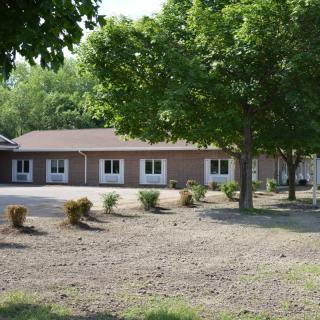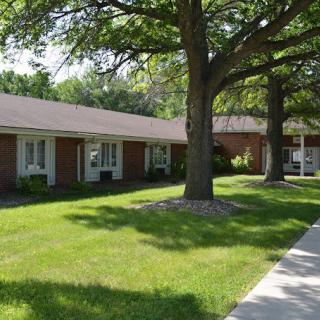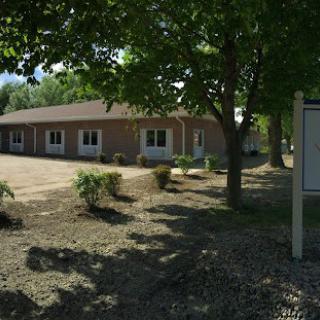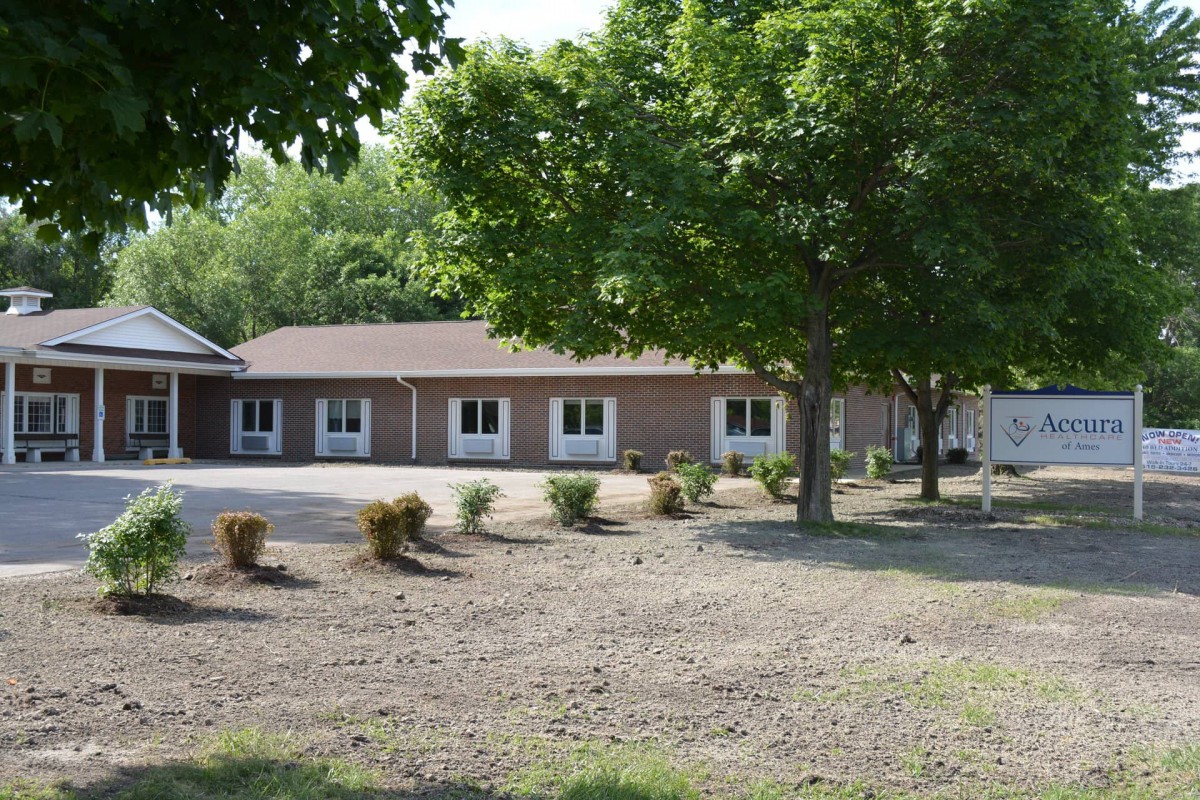
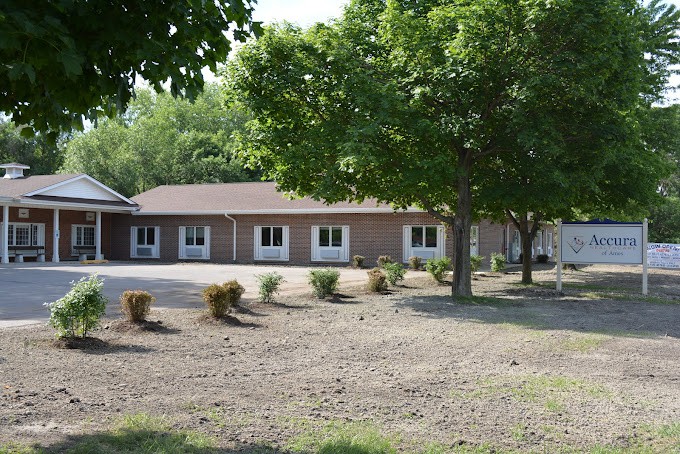
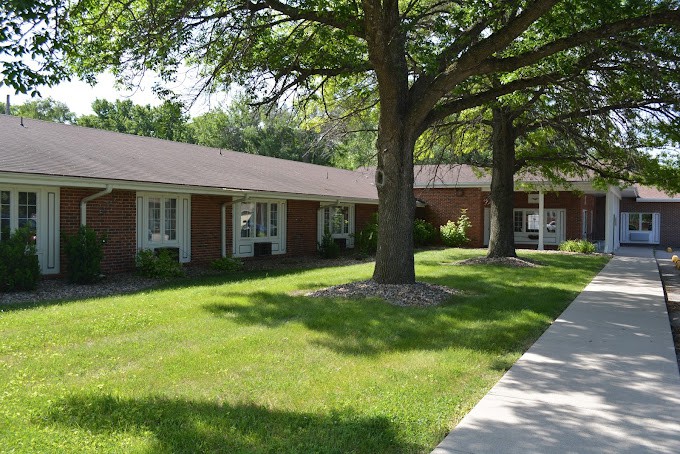
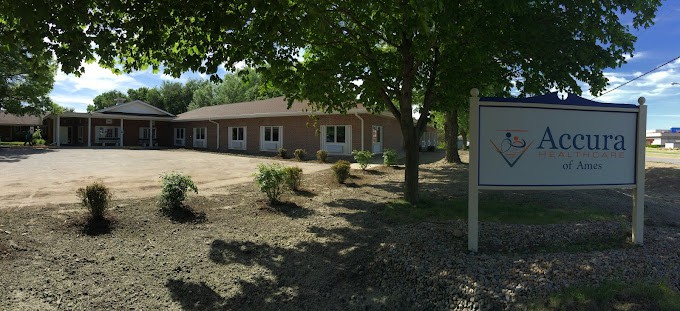
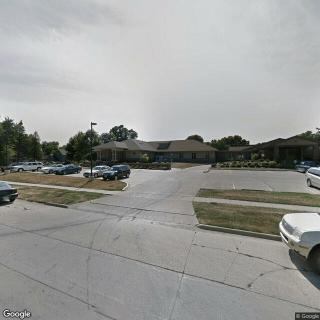
3440 Grand Avenue, Ames, IA 50010
For more information about senior living options: (866) 208-4318
Overall Review of Accura Healthcare Of Ames
Pros
 The care provided is very good.
- Every interaction with the staff is positive, reflecting their commitment to residents' dignity and compassion.
- The staff are professional yet personal.
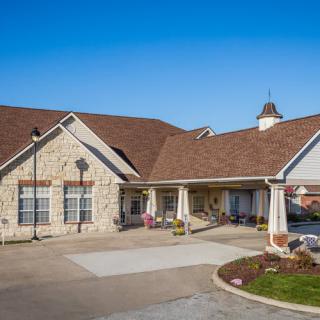
- The facility's age is offset by the high quality of the staff.
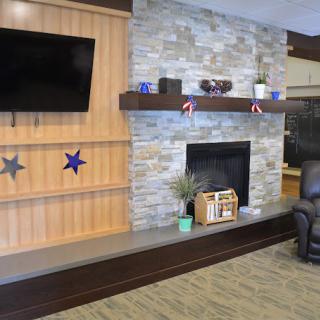
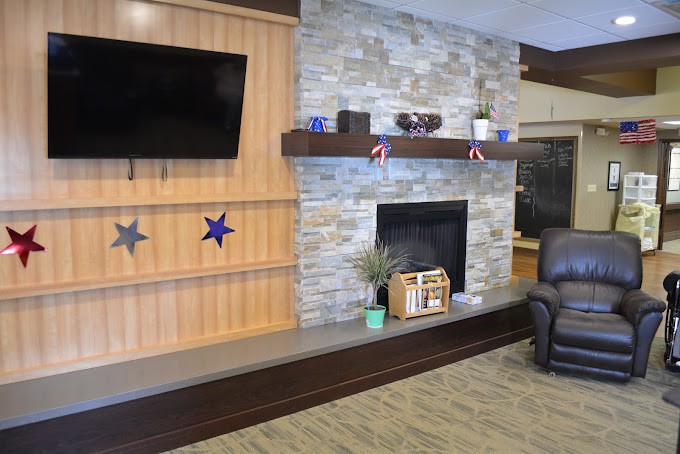
- There have been updates to the foyer and halls, and residents have many activities to choose from.
- The environment is clean, odor-free, and comfortable.
- Complaints are taken seriously and addressed promptly.
- The staff are kind and friendly.
- It is recommended for families needing to move a loved one into care.
Cons
 The staff were disrespectful to her loved one.
- The facility abused and neglected the patient for four days.
- They left the patient in bed for four days without care.
- They did not feed her and would not allow family to visit due to Covid.
- They severely overmedicated her and kept her in a catatonic state.
- The patient’s blood pressure plummeted and she was transferred to the ICU.
- The food was horrible and the room was small, lacking a TV.
- Medications were delivered late by hours every day.
Review
Accura Healthcare Of Ames is best suited for families seeking a care environment where staff relationships and day-to-day attentiveness carry real weight, even as the building shows its age. This community rewards residents who thrive on personal connections with caregivers, small but steady routines, and a tangible culture of dignity and respect. It is especially appropriate for loved ones transitioning from independent living into long-term care, or for those who require consistent supervision, meaningful activities, and a responsive, approachable management team. The tone you’ll encounter from CNAs, social workers, and the director is consistently patient and caring, and there is a clear emphasis on preserving resident autonomy within a structured setting. In short, this is a practical home for families prioritizing quality interpersonal care over slick aesthetics.
That said, serious consideration should be given to alternatives for families with firmer expectations on modern amenities, maximum privacy, and flawless day-to-day operations. The facility’s aging infrastructure and relatively small rooms are visible drawbacks, and some families will prefer a newer property with more generous square footage, better acoustics, or carpeted corridors to dampen noise. Rate of improvement can be uneven, so those who require a consistently pristine environment and uniformly flawless service may want to explore other options. Additionally, families who place the utmost priority on a flawless safety and incident history, given the troubling reports that surface about the skilled nursing unit, should take a hard look at competitors with verifiable, ongoing safety records.
The strongest, most consistent pro is the care people feel from the staff. Several accounts describe nurses as professional yet personally engaged, with care teams that treat residents with dignity and compassion. Family members consistently note that staff there are available, communicative, and willing to discuss concerns, which helps compensate for the building’s age. The community also earns credit for ongoing updates to common areas and rooms, signaling a willingness to invest in the resident experience even as the footprint remains modest. Residents participate in a broad slate of activities, bingo, outings, and various social events, and there is a sense that residents retain choice and individuality, rather than being herded into a fixed routine.
Another significant strength lies in the robust staff presence and a culture of accountability. Several reviews underscore that management and frontline teams monitor health needs closely, and complaints are reportedly taken seriously and addressed quickly. The facility’s willingness to facilitate family visits and to engage with relatives upon entry creates a transparent, welcoming vibe that is often missing in more impersonal settings. For families weighing rehab and long-term care, the facility’s capacity to provide ongoing nursing and occupational therapy, plus access to rehabilitation equipment, offers a practical continuity of care that can reduce the stress of transitions and support sustained improvement.
Yet the cons demand serious consideration. The most consequential red flag is the reported abuse and neglect tied to the skilled nursing unit in some accounts. Descriptions of four-day periods with no care, untreated bed sores, inadequate feeding, and overmedication that led to a catatonic state are catastrophic if accurate and underline the necessity of stringent on-site oversight, continuous staff training, and rigorous safety checks. Even when paired with favorable reviews about day-to-day kindness, these extreme allegations cannot be dismissed and should trigger immediate, thorough due diligence, independent conversations with administrators, a current tour of the nursing facilities, and a review of state inspection records. For families, this means that while many experiences are positive, a single high-risk issue can overshadow overall impressions.
There are also practical operational pains that recur in the reviews: occasional lapses with medication timing, late meals, and some residents feeling their needs are not met promptly. Some residents describe small, noisy living spaces without the comfort touches like carpeting or in-room amenities, which affects daily quality of life and sleep. Food quality receives mixed feedback, and a few families report distress that led to an incomplete stay. These issues are not universal, but they are real and impact daily satisfaction. The better the family’s appetite for a personalized, hands-on care approach, the more tolerable these frictions become; for others, they represent enough friction to sway toward a tighter, more modern option.
In the end, the prudent path is a disciplined, in-person evaluation combined with a candid risk assessment. If the loved one values intimate caregiver relationships, responsive staff, and a culture that strives to listen and adapt, Accura Healthcare Of Ames can be a good fit, provided there is vigilant monitoring of safety and ongoing quality improvements. Pros offset cons when families verify current conditions, observe caregiver interactions firsthand, and ask pointed questions about the skilled nursing unit, staffing ratios, and incident history. If, during a tour, these red flags resurface or the impression of consistent, safe care does not feel assured, pursuing alternatives with stronger safety continuity and a broader footprint may be the wiser course. The ultimate choice should hinge on the comfort level with daily care quality and the certainty that a loved one will be treated with unwavering dignity, every day.
 110 resident community capacity
 Skilled Nursing Facility
 Air-conditioning
 Beauty salon
 Cable or satellite TV
 Computer center
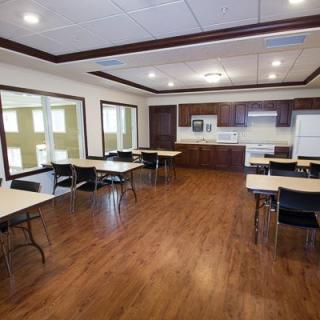
 Dining room
 Fitness room
 Fully furnished
 Gaming room
 Garden
 Housekeeping services
 Kitchenette
 Move-in coordination
 Outdoor space
 Private bathrooms
 Restaurant-style dining
 Small library
 Telephone
 Wellness center
 Wi-Fi/high-speed internet available
 Community operated transportation
 12-16 hour nursing
 24-hour call system
 Activities of daily living assistance
 Assistance with bathing
 Assistance with dressing
 Assistance with transfers
 Diabetes diet
 Medication management
 Mental wellness program
 Special dietary restrictions
 Concierge services
 Planned day trips


 Compassionate Conversations: How to Comfort Someone Who Is Grieving
 Home Health Care Aides: Understanding Their Role and Supporting Your Family
 Urinary Tract Infections in Older Adults: Comprehensive Insights on Symptoms, Treatment, and Prevention