1701 North Bowman, Danville, IL 61832
For more information about senior living options: (866) 208-4318
Overall Review of Danville Care Center
Pros
 The DON, A-DON and Paul are very friendly people.
- Change has been a good thing for the facility.
- Nurses and staff are being held accountable, which results in better care for the patients.
- The facility seems to be on the rise under the leadership of its current management.
Cons
 The smell was terrible.
- There was no air purifier in use.
- The reviewer questions why an air purifier wasn’t obtained.
Review
Danville Care Center is best suited for families who want to see a facility under active, hands-on leadership and who believe that accountable management will translate into better care over time. This community rewards proactive governance, with a leadership team that includes the DON, an administrator (A-DON), and other managers who are visible, accessible, and focused on tightening accountability for nurses and frontline staff. For families prioritizing a clear path of improvement and a culture that learns from shortfalls, Danville Care Center offers a promising trajectory.
The strongest upside lies in the leadership-driven improvements already visible in practice. The DON, A-DON, and Paul are described as genuinely friendly and committed to change, and the narrative suggests that staff accountability is now more consistently enforced. When accountability increases, residents tend to experience steadier care decisions, fewer delays in responses, and better follow-through on care plans. In short, the facility appears to be moving from a rough patch toward steadier operations, with sound signals that the leadership is in a position to sustain momentum.
However, the most vocal drawback centers on environmental comfort rather than clinical care alone. One reviewer cites a terrible odor and questions why an air purifier wasn’t in place, to the point of sourcing a personal unit to manage the smell. That single dimension, air quality and odor control, can color the overall experience for residents and families even if clinical care remains solid. The absence of a built-in environmental fix raises questions about maintenance priorities and ongoing comfort, and it is the factor most likely to push certain families toward alternatives, despite the progress in direct patient care.
These pros and cons don’t cancel each other out; they interact in a meaningful way. Strong leadership and a trend toward improved care can offset some environmental concerns if the staff’s reliability and responsiveness are consistently evident. Families who value accountability and want to see a concrete plan for enhancing care quality may feel confident that problems are being addressed and will continue to be addressed. Yet for households where a consistently fresh, odor-free environment is non-negotiable, the odor issue may remain a sticking point that weakens overall satisfaction, especially for residents who spend long hours in communal spaces or private rooms.
Who should consider alternatives? Those for whom ambience and comfort, specifically an odor-free living environment, take precedence over visible management changes should evaluate other options. If environmental quality is a decisive factor in quality of life, it may be prudent to compare Danville Care Center with facilities that demonstrate stronger investments in air filtration and odor control, or with communities renowned for their consistently high resident satisfaction. Prospective residents who require a more uniform, quickly measurable standard of livability alongside accountability may find other communities align more closely with their expectations.
For a decisive next step, approach Danville Care Center with a targeted, practical plan. Schedule a tour focused on care delivery dynamics: ask to observe nurse–resident interactions during routine tasks, request operational details on staffing levels and turnover, and probe the facility’s air-quality management, air-filtration systems, maintenance schedules, and recent odor-control improvements. Engage leadership in a candid discussion about how they intend to sustain the current gains, and request a concrete timeline for addressing odor-related concerns. If a short-term trial is feasible, use that period to gauge whether improved leadership translates into consistently reliable care while environmental comfort moves toward parity with clinical quality. In the end, this facility offers a clear upside for families prioritizing accountable leadership and measurable improvement, tempered by a real environmental caveat that is solvable but must be tracked.
 200 resident community capacity
 Skilled Nursing Facility
 Air-conditioning
 Beauty salon
 Cable or satellite TV
 Computer center
 Dining room
 Fitness room
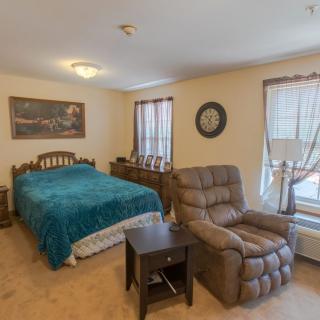
 Fully furnished
 Gaming room
 Garden
 Housekeeping services
 Kitchenette
 Move-in coordination
 Outdoor space
 Private bathrooms
 Restaurant-style dining
 Small library
 Telephone
 Wellness center
 Wi-Fi/high-speed internet available
 Community operated transportation
 12-16 hour nursing
 24-hour call system
 Activities of daily living assistance
 Assistance with bathing
 Assistance with dressing
 Assistance with transfers
 Diabetes diet
 Medication management
 Mental wellness program
 Special dietary restrictions
 Concierge services
 Planned day trips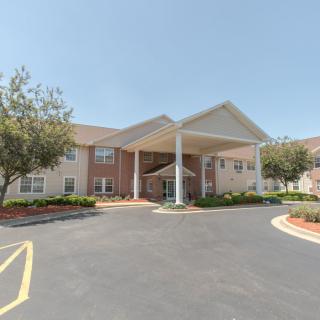







 A Detailed Exploration of Living Wills and Advance Directives
 Comprehensive Guide to Medicare Coverage for Hospice Care
 Caring for Those Who Care: Recognizing, Understanding, and Overcoming Caregiver Burnout