Consulate Health Care Of West Palm Beach is a nursing home community in West Palm Beach, FL.
Information last verified:
1626 Davis Road, West Palm Beach, FL 33406
For more information about senior living options: (866) 208-4318
3.2 from 59 reviews
5 stars
30
4 stars
2
3 stars
1
2 stars
4
1 stars
22
Overall Review of Consulate Health Care Of West Palm Beach
common13 reviews mention this
Compassionate staff stands out
Many residents and families describe staff as caring, patient, and respectful.
Across the reviews, residents and families repeatedly point to staff behavior—patience, kindness, and dignity in day-to-day care. Several specifically thank nurses and leadership for communication and for showing up during concerns. A number of reviewers also describe a clean, well-run environment that adds to their sense of reassurance.
caveat14 reviews mention this
Care response and staffing raise concerns
Some reviewers say call-bell response, staffing, and oversight were unreliable.
A recurring criticism is that residents were left waiting or not checked on when families needed help—ranging from delayed responses to reports of minimal staffing presence. Several reviews describe serious problems that families linked to gaps in attention, including falls, hygiene concerns, medication issues, and unmet needs. There are also mentions of phones not being answered and facilities feeling difficult to reach in moments of distress.
differentiator5 reviews mention this
Therapy support is a bright spot
Rehab therapy shows up as a consistent positive in the reviews.
Multiple reviews highlight therapy teams—especially occupational and physical therapy—as key to residents making progress. Families describe therapists who are knowledgeable and encouraging, and they also credit therapy for mobility and strength improvements. Even when other parts of the stay were criticized, at least some reviews still singled out therapy as better than expected.
caveat6 reviews mention this
Food and cleanliness get mixed feedback
Reviewers describe inconsistent experiences with meals and facility condition.
Some reviews praise food as decent and mention rooms being clean. Other reviews sharply criticize the facility condition, describing it as disgusting, along with problems around meals. Taken together, feedback suggests that experiences vary by stay and by what families observed in day-to-day routines.
How we summarize
Counts show how many written reviews mention each theme; a review can touch several themes, and only frequently mentioned themes are displayed.
Features
Housing
120 resident community capacity
Types of Care
Skilled Nursing Facility
Amenities
Air-conditioning
Beauty salon
Cable or satellite TV
Computer center
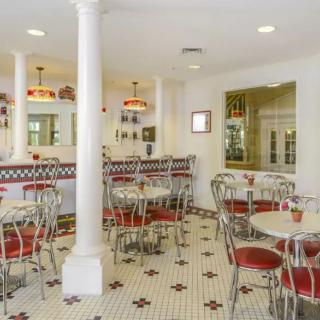
Dining room
Fitness room
Fully furnished
Gaming room
Garden
Housekeeping services
Kitchenette
Move-in coordination
Outdoor space
Private bathrooms
Restaurant-style dining
Small library
Telephone
Wellness center
Wi-Fi/high-speed internet available
Transportation
Palm Beach International (2 miles away)
Community operated transportation
Transportation arrangement
Transportation arrangement (non-medical)
Transportation to doctors appointments
Care Services
12-16 hour nursing
24-hour call system
24-hour supervision
Activities of daily living assistance
Assistance with bathing
Assistance with dressing
Assistance with transfers
Diabetes diet
Meal preparation and service
Medication management
Mental wellness program
Special dietary restrictions
Dining
Diabetes diet
Special dietary restrictions
Activities
Community-sponsored activities
Concierge services
Fitness programs
Planned day trips
Resident-run activities
Scheduled daily activities
Nearby Places of Interest
Physicians
Pbc Dermatology (0.2 miles)
Midtown Imaging (2.2 miles)
Lighthouse For the Blind of the Palm Beaches (2.4 miles)
South Florida Gastroenterology (3.7 miles)
JFK Medical Center (3.8 miles)
Medical Specialists of the Palm Beaches (3.9 miles)
Florida Allergy & Asthma Assoc (4 miles)
Restaurants
Palm Springs Pizza (0.3 miles)
Tarbouch Hookah Cafe (1.2 miles)
Enzo's Cafe And Bakery (1.7 miles)
Chili's Too (2.3 miles)
Havana Restaurant (2.4 miles)
Harry's Banana Farm (2.6 miles)
Tacos Al Carbon (2.7 miles)
Pharmacies
Walgreens (0.5 miles)
Walgreens (1.3 miles)
Walgreens (1.3 miles)
CVS Pharmacy (1.6 miles)
CVS Pharmacy (1.7 miles)
Walgreens (1.7 miles)
CVS Pharmacy (2.4 miles)
Transportation
Atlantic Aviation (1.8 miles)
Delta Sky Club (2.3 miles)
Concourse C (2.4 miles)
Meeter / Greeter Waiting Area (2.4 miles)
Baggage Claim (2.4 miles)
Palm Beach International Airport (PBI) (2.4 miles)
Avis Rent A Car (2.4 miles)
Places of Worship
First Congregational Church of Lake Worth (2.9 miles)
In-home care is increasingly sought after by older adults for maintaining independence, with average private home care rates in 2025 varying by state and service type, reflecting geographical and local labor market influences. As demand rises, families are considering funding options like Medicaid waivers and long-term care insurance to manage costs effectively while ensuring quality care.
Home health care has become essential for supporting independence among the aging population, offering diverse services such as skilled nursing and rehabilitation in familiar environments, while also incorporating technology for personalized care. Despite its benefits, including improved recovery rates and emotional well-being, challenges like safety, staff availability, and insurance navigation must be managed for effective implementation.
Home health care offers a range of clinical services provided in a patient's home, including nursing and therapy, tailored to individual needs, particularly for aging seniors with chronic conditions. This approach enhances patient independence, promotes better disease management, and utilizes technology for real-time monitoring while fostering collaboration among healthcare providers and family members.
Get PricingAsk A QuestionSchedule A TourContact Senior Advisor
By clicking submit, you agree to our Partner's Terms of Use. You
also consent to receive calls and texts, which may be autodialed, from our Partner. Your consent is not a condition to
using our Partner's service. Please visit our Partner's Privacy Policy for information about their privacy practices.

 120 resident community capacity
 Skilled Nursing Facility
 Air-conditioning
 Beauty salon
 Cable or satellite TV
 Computer center
 Dining room
 Fitness room
 Fully furnished
 Gaming room
 Garden
 Housekeeping services
 Kitchenette
 Move-in coordination
 Outdoor space
 Private bathrooms
 Restaurant-style dining
 Small library
 Telephone
 Wellness center
 Wi-Fi/high-speed internet available
 Palm Beach International (2 miles away)
 Community operated transportation
 12-16 hour nursing
 24-hour call system
 Activities of daily living assistance
 Assistance with bathing
 Assistance with dressing
 Assistance with transfers
 Diabetes diet
 Medication management
 Mental wellness program
 Special dietary restrictions
 Concierge services
 Planned day trips
 Small, intimate setting with comprehensive, high-touch care.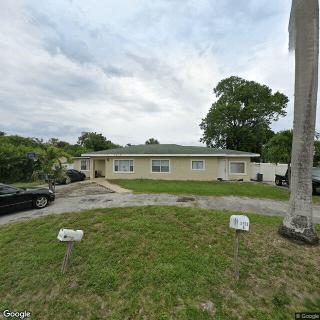
 In-Home Care Costs in 2025: A Detailed State-by-State Exploration
 Understanding Home Health Care: A Comprehensive Guide
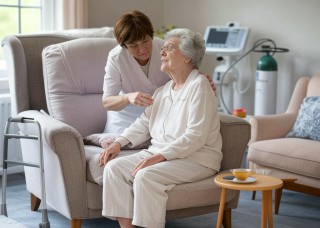 Home Health Care Demystified: A Comprehensive Guide for Families and Caregivers