

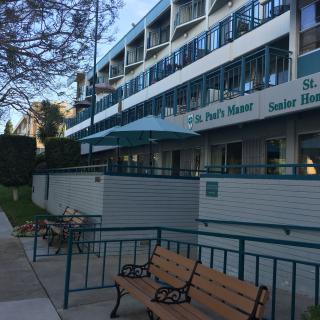
235 Nutmeg St, San Diego, CA 92103
To contact a resident: (619) 239-8687
For more information about senior living options: (866) 208-4318
Overall Review of St Paul's Mc Coll Health Ctr
Pros
 The care at St. Paul’s Skilled Nursing is extraordinary, with an incredible staff of caring, compassionate, kind, and lovely experts; the facility is wonderful, clean, and aesthetic.
- McColl’s compares favorably with a five-star hotel, and the staff are absolutely great and do what they are supposed to do.
- McColls is one of the best nursing homes, with Janette Godoy delivering hands-on care that lifts patients’ spirits and health.
- Lea provides excellent speech therapy and lifts patients’ spirits; Hugo is very nice and always has a smile on his face; the staff have amazing attitudes and top-tier physical therapy.
- The rehab place has a family-like atmosphere, with professional, super caring staff and accessible outdoor space for fresh air and sunshine.
- The facility is small and boutique-style, very family-oriented, with no smell of other SNFs, and the food is amazing.
- The staff genuinely care about their patients and the level of care is phenomenal.
Cons
 The staff were rude and unhelpful when he asked for help, and he waited over an hour and a half for a nurse.
 - The phone customer service was poor, with the representative cutting the conversation short instead of offering further help for his mom’s health.
- They sent his wife to hospitals she wasn’t insured at, claiming closer proximity, despite being told she wasn’t insured there.
- St. Paul’s provided incredibly poor treatment, mishandling his mother who ended up with a broken leg and failing to address the injury.
- The rehab facility had a postage-stamp-sized room with little equipment and insufficient food portions, and the kitchen support was not available.
- They moved his mom because she kept trying to go out the front door that opened automatically.
Review
St. Paul’s McColl Health Center in San Diego is best suited for families seeking a small, boutique-style skilled-nursing environment where rehab goals are pursued with hands-on attention from a devoted team and where daily life feels personal and home-like. The one-level footprint, intimate, family-oriented culture, and staff who know residents by name create a setting where care plans are followed with visible dedication. Proximity to Balboa Park and an accessible outdoor patio support mobility and social activity, making this a strong fit for seniors who value easy visitation, predictable routines, and a calmer atmosphere over the bustle of a large, hospital-like campus.
Those who should consider alternatives include families prioritizing flawless customer service, consistently rapid nurse response, and seamless medical coordination. Several reviewers describe frustrating phone communications and slow in-room assistance, and one serious incident recounts mishandling that led to a broken leg and hospital care elsewhere. The boutique, small-footprint model also yields smaller rooms and limited equipment, which can hinder longer stays or residents who require more therapy apparatus. For families depending on robust hospital-transfer logistics, broad meal options, or more extensive on-site resources, other options may prove more reliable.
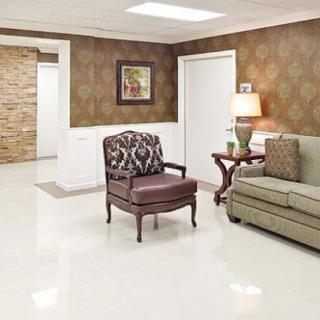
On the plus side, the care team frequently stands out for genuine warmth and competence. Multiple accounts highlight nurses and therapists who are hands-on, encouraging, and skilled, with physical therapy repeatedly cited as strong. The environment tends to be clean, well maintained, and aesthetically inviting, while the family-like vibe supports frequent visits and active engagement. The centralized layout reduces navigational confusion for visitors, and the outdoor space plus nearby parkland enable regular, restorative outings as part of rehabilitation. Food quality appears to vary but shows promise, with some reviewers noting notable attentiveness to resident preferences and improvements.
However, the negatives cannot be dismissed. A pattern of inconsistent customer service and abrupt or unhelpful phone interactions creates friction for families seeking dependable communication. A documented safety incident, mishandling leading to a fracture, casts a long shadow and has driven at least one family to relocate to a different facility. Reports of sending a resident to hospitals that weren’t insured via the family’s plan raise questions about care coordination and financial clarity. Cramped rooms and limited equipment, along with a dining area described as small and the kitchen being located offsite, contribute to a sense of resource constraints. Taken together, these issues illuminate real risks for those who prize safety and predictability above all.
When the strongest priorities are intimate oversight, personal engagement, and demonstrable rehab progress, the pros can offset the cons to a meaningful degree. The combination of compassionate staff, evident rehabilitation expertise, and a home-like atmosphere can drive real gains for residents who respond well to individualized attention and stable routines. Yet for families where safety incidents, consistent communication, and scalable resources are non-negotiable, the downsides may outweigh the advantages. The boutique model’s warmth and oversight are compelling, but they come with limitations that matter in crunch times or when complex medical needs arise.
For families seriously weighing this community, adopt a focused, decisive visit plan. Tour the rehab gyms and meet the therapy and nursing leads; ask for concrete examples of how calls are answered and how quickly staff respond to needs. Have an explicit discussion about incident follow-through, transfer protocols, and how care plans adapt if more equipment or specialty services are required. Inspect room sizes, storage, and common dining areas to gauge daily practicality, and confirm whether meals are prepared onsite or delivered, along with how portions are managed. Gather recent references and compare with nearby options that offer larger campuses or different risk-reward mixes to ensure the chosen path aligns with safety priorities, visitation expectations, and rehab goals.
 Skilled Nursing Facility
 San Diego International-Lindbergh (2 miles away)





 Comprehensive Insights and Practical Strategies to Help Older Adults Avoid Falls
 6 Crucial Ways an Elder Law Attorney Assists Families
 Navigating the Tax Landscape of Caregiving: Credits, Deductions, and Beyond