442 Sunset Boulevard, Hayward, CA 94541
For more information about senior living options: (866) 208-4318
Overall Review of Baypoint Healthcare Center
Pros
 The staff are good.
- The facility is a beautiful place.
- The facility aims to provide good customer service and quality care.
- Residents and families are friendly and pleasant, contributing to a close-knit community.
- The staff listen to residents' suggestions and are willing to improve.
- The new department managers are compassionate and prioritize safety, dignity, and residents' rights.
- The administration and management are rebuilding the facility and striving for better comfort and a thriving community.
Cons
 Rehab was never performed and the patient was overmedicated, with no doctors ever visiting.
 - The facility was plagued by loud, disruptive residents that kept others from sleeping.
- Meals were unsatisfactory, described as rubbery eggs, with some residents bringing their own cereal.
- The activity director was criticized for not doing her job and for being constantly on her cellphone.
- Chronic under-staffing and underpayment allegedly led to poor care, including no showers and residents left in soiled briefs for hours.
- There were reports of theft by management and neglectful workers, with belongings stolen and residents neglected.
- The administrator was described as rude, abusive, and not fit to run a facility, with unsanitary conditions and residents left in soiled diapers.
- Staff were reported as mean, disrespectful, and sometimes threatening toward patients.
Review
Baypoint Healthcare Center in Hayward is best suited for families that are ready to take an active supervisory role and are willing to give a developing facility time to stabilize under new management. This community can work for residents who need moderate nursing support and rehabilitation, provided there is a plan for vigilant oversight, frequent check-ins with clinicians, and a willingness to push for timely care. Those seeking a turnkey, consistently high-level rehabilitation and medical oversight should look elsewhere, as the reviews consistently flag gaps in care that require persistent advocacy.
On the upside, several accounts point to genuine, courteous staff and a friendly resident base, with administrators signaling a commitment to improving safety, dignity, and resident rights. The building’s appearance and the stated emphasis on customer service create a welcoming first impression, and management has publicly embraced resident feedback as a lever for change. For families willing to engage, the facility’s emphasis on listening to residents and implementing departmental changes can translate into meaningful, if incremental, improvements over time.
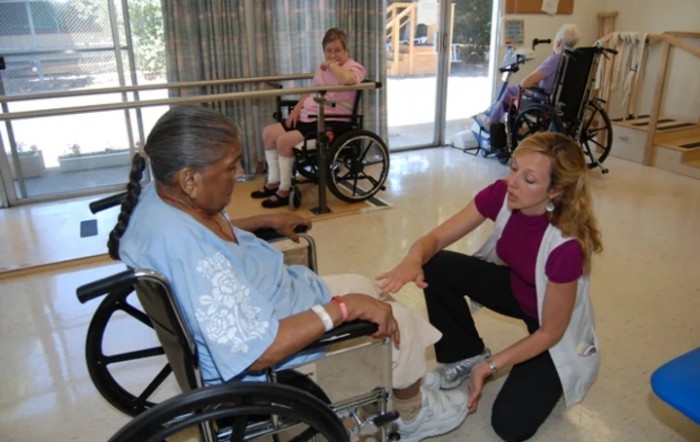
However, the major concerns are hard to overlook and tend to undermine the positives. Therapy and rehabilitation outcomes are repeatedly described as insufficient or inconsistent, with instances where post-acute work did not occur as expected. Discipline in daily care appears uneven, with reports of residents in soiled conditions for extended periods, limited showering and hygiene support, and a sense that medical oversight is uneven or delayed. Staffing challenges are pronounced: high nurse aide ratios, reliance on registries, and a belief among several families that salaries inadequately support staffing needs, leading to burnout and imperfect care delivery. These factors create real risk for skin issues, infections, falls, and delays in medical assessment.
The strongest counterweight to these risks is the persistent commitment of some staff and a clear management signal that improvements are underway. New leadership and departmental managers are described as more compassionate and safety-focused, with credible efforts to rebuild routines around resident dignity and rights. The caution here is that momentum may be gradual, and the gaps identified by families, especially around daily hygiene, timely physician involvement, and consistent rehabilitation, may not be fully closed without sustained staffing investments and proven workflows. In practical terms, progress will hinge on transparent staffing levels, predictable physician rounds, and a robust, hands-on activities program that actually engages residents rather than occupying administrative time.
For families navigating a decision, several concrete steps are essential. Schedule a candid tour focused on day-to-day care delivery: observe caregiver interactions, ask to see current staffing rosters, and request recent incident reports or quality metrics. Inquire about rehab protocols: who administers therapy, how often patients are reassessed, and what specific post-acute goals look like for stroke or fall-related injuries. Probe medical oversight: how often doctors visit, how pain management is managed, and how changes in condition are escalated. Finally, talk with current residents or families about hygiene routines, shower frequency, and response times to call bells. A well-formed plan and active family participation can substantially tilt the balance toward a safer, more reliable experience.
In summary, Baypoint Healthcare Center represents a cautious choice for families willing to invest time and energy into driving change. It is not a fit for those demanding consistent, high-grade rehab outcomes and flawless daily care without ongoing advocacy. The facility may fulfill a needs-based, temporary solution if paired with a clear oversight plan and a commitment to monitor progress as management completes its reconstruction. For others, especially those prioritizing steady staffing, prompt medical oversight, and dependable daily care, exploring alternatives with stronger immediate outcomes remains the prudent course.
 99 resident community capacity
 Skilled Nursing Facility
 Air-conditioning
 Beauty salon
 Cable or satellite TV
 Computer center
 Dining room
 Fitness room
 Fully furnished
 Gaming room
 Garden
 Housekeeping services
 Kitchenette
 Move-in coordination
 Outdoor space
 Private bathrooms
 Restaurant-style dining
 Small library
 Telephone
 Wellness center
 Wi-Fi/high-speed internet available
 Metropolitan Oakland International (7 miles away)
 Community operated transportation
 12-16 hour nursing
 24-hour call system
 Activities of daily living assistance
 Assistance with bathing
 Assistance with dressing
 Assistance with transfers
 Diabetes diet
 Medication management
 Mental wellness program
 Special dietary restrictions
 Concierge services
 Planned day trips






 Is a Geriatric Care Manager the Right Choice for Your Family?
 Compassionate Conversations: How to Comfort Someone Who Is Grieving
 Home Health Care Aides: Understanding Their Role and Supporting Your Family