For more information about senior living options: (866) 208-4318
5 from 1 review
Northwest Home Care Costs & Pricing
Northwest Home Care offers competitive pricing compared to both King County and the broader state of Washington. With a monthly cost of $2,000 for a semi-private room, it stands in stark contrast to the average rates in King County at $4,430 and the statewide average of $4,267. Similarly, private rooms at Northwest Home Care are priced at $3,500, significantly lower than King County's $5,034 and Washington's $4,772. The same trend is observed with one-bedroom accommodations; Northwest Home Care maintains its rate at $3,500 while both King County and the state reflect higher averages of $5,127 and $4,632 respectively. This makes Northwest Home Care an appealing option for those seeking quality care at more accessible monthly fees.
Floor plans
Northwest Home Care
King County
Washington
Semi-Private
$2,000
$4,430
$4,272
Private
$3,500
$5,034
$4,774
1 Bedroom
$3,500
$5,127
$4,634
Memory care communities with a similar price nearby
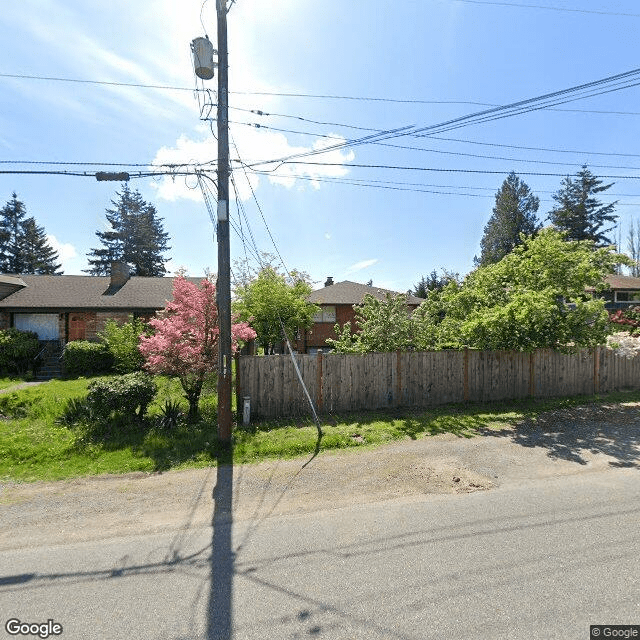
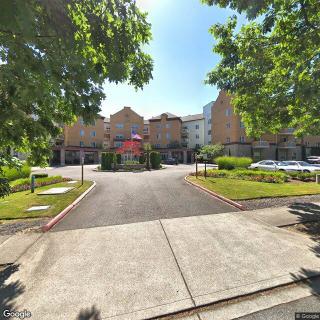
Northwest Home Care in Seattle, WA is an assisted living community that specializes in Memory Care. Our dedicated staff provides high acuity care for individuals with memory impairments, ensuring their safety and well-being at all times. We offer specialized services such as incontinence care and medication management to meet the unique needs of our residents.
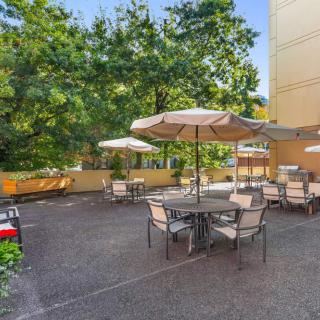
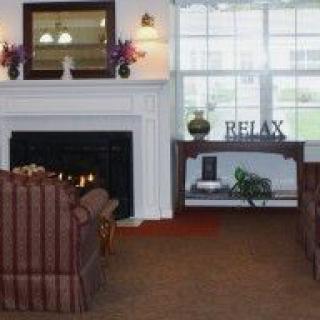
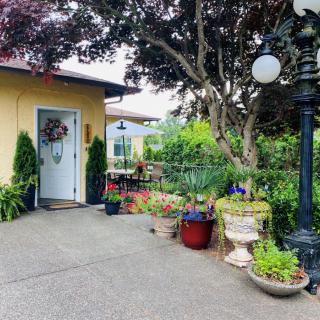
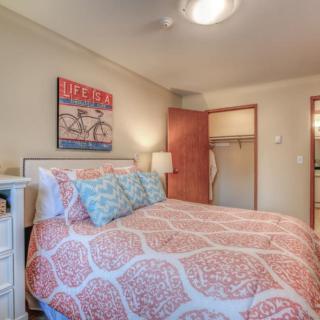
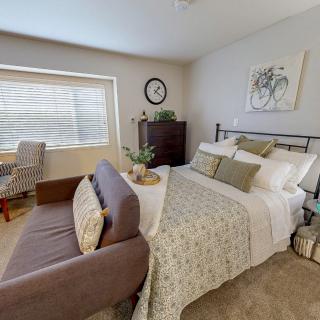
At Northwest Home Care, we believe in providing a comfortable and enriching environment for our residents. Our community features indoor and outdoor common areas where residents can socialize and engage in activities of their choice. We also have activities on-site and devotional services off-site to cater to the spiritual and recreational needs of our residents.
We understand the importance of maintaining a healthy lifestyle, which is why we offer vegetarian dining options to our residents. Our meals are prepared with nutritious ingredients to promote overall well-being.
In addition to our excellent care services and amenities, Northwest Home Care is conveniently located near various amenities within the Seattle area. With 11 cafes, 14 parks, 29 pharmacies, 3 physicians' offices, 17 restaurants, and 5 transportation options nearby, our residents can easily access the resources they need.
For any medical emergencies or routine healthcare needs, there are also 3 hospitals located nearby. Our community strives to provide a supportive and secure environment where residents can receive the care they require while enjoying a fulfilling lifestyle.
Nearby Places of Interest
This part of Seattle, Washington offers a convenient and diverse array of amenities for senior living. With multiple hospitals nearby such as Northwest Hospital and Seattle Children's Hospital, residents have access to quality healthcare facilities. Additionally, the abundance of cafes like Starbucks and Jake's Coffee provide opportunities for socializing and enjoying a leisurely cup of coffee. Transportation options are easily accessible with Northgate Station Seattle and Roosevelt Station Seattle in close proximity, making it convenient for seniors to get around the city. The presence of pharmacies like Walgreens and QFC Pharmacy ensures easy access to medications. There are also numerous restaurants offering a variety of dining choices, as well as parks such as Greenwood Park and Carkeek Park for outdoor recreation. Overall, this part of Seattle provides a well-rounded environment for seniors looking for a vibrant community with essential services nearby.
Hospitals
Northwest Hospital (0.2 miles)
Seattle Children's Hospital (4.2 miles)
Uw Medical Center Cafeteria (4.4 miles)
Cafes
Starbucks (0.3 miles)
Diva Espresso (1.1 miles)
Starbucks (1.7 miles)
Jake's Coffee (3.5 miles)
Starbucks (3.5 miles)
Starbucks (3.7 miles)
Lighthouse Roasters (3.8 miles)
Transportation
Northgate Station Seattle (0.7 miles)
Northgate Transit Center (0.7 miles)
Roosevelt Station Seattle (2.6 miles)
U District Station (3.7 miles)
University of Washington LINK Station (4.5 miles)
Pharmacies
Walgreens (0.7 miles)
QFC Pharmacy (0.8 miles)
Northgate Pharmacy (0.9 miles)
Walgreens (1.7 miles)
Bartell Drugs (1.8 miles)
Fred Meyer Pharmacy (1.8 miles)
Fred Meyer Pharmacy (2.1 miles)
Restaurants
Chick-Fil-A (0.9 miles)
Dick's Drive-In (1.7 miles)
McDonald's (1.9 miles)
Autumn (2.5 miles)
Bongos (2.5 miles)
RidgeWood Bottle & Tap (2.6 miles)
Tin Hat Bar & Grill (2.8 miles)
Parks
Greenwood Park (1.6 miles)
Carkeek Park (1.7 miles)
Maple Leaf Park (1.7 miles)
Woodland Park Off Leash Area (2.9 miles)
Woodland Park (3.4 miles)
O.O. Denny Park (3.7 miles)
Ballard Playfield (3.8 miles)
Physicians
Ballard Pediatric Clinic PS (2.8 miles)
Warby Parker (3.7 miles)
Seattle Gastroenterology Associates (4.4 miles)
Queen Anne Eye Clinic (5.2 miles)
Fred Hutchinson Cancer Research Center (5.8 miles)
Northwest Home Care offers competitive pricing compared to both King County and the broader state of Washington. With a monthly cost of $2,000 for a semi-private room, it stands in stark contrast to the average rates in King County at $4,430 and the statewide average of $4,267. Similarly, private rooms at Northwest Home Care are priced at $3,500, significantly lower than King County's $5,034 and Washington's $4,772. The same trend is observed with one-bedroom accommodations; Northwest Home Care maintains its rate at $3,500 while both King County and the state reflect higher averages of $5,127 and $4,632 respectively. This makes Northwest Home Care an appealing option for those seeking quality care at more accessible monthly fees.
Medication management is essential in memory care, particularly for individuals with dementia or Alzheimer's disease, as it ensures that residents receive the correct medications at the appropriate times. This careful oversight minimizes the risk of adverse effects and enhances overall health outcomes, allowing residents to maintain a better quality of life. Incontinence care is equally important as it addresses a common challenge faced by those with cognitive impairments. Providing compassionate and respectful assistance not only helps maintain dignity but also contributes to emotional well-being. Together, these features create a supportive environment that enables residents to thrive despite the challenges posed by their conditions.
The article discusses the late stages of dementia, detailing the progression from mild to severe impairment and highlighting key characteristics such as profound cognitive decline and dependency in daily activities. It emphasizes care strategies focused on comfort and dignity, the importance of advance directives, and the emotional support needed for family caregivers facing this challenging journey.
The article examines the link between certain medications and increased dementia risk, particularly in older adults, emphasizing that long-term or high-dose use of anticholinergics, benzodiazepines, and other drug classes can exacerbate cognitive impairment. It calls for careful medication evaluation and shared decision-making to mitigate these risks while managing treatment efficacy.
The article emphasizes the significance of establishing a power of attorney for elderly parents to enable an agent to make decisions on their behalf regarding health and finances, especially during cognitive or physical decline. It outlines various types of power of attorney, the importance of consulting legal professionals, and the responsibilities and challenges faced by agents, while also discussing alternatives and common misconceptions.
Get PricingAsk A QuestionSchedule A TourContact Senior Advisor
By clicking submit, you agree to our Partner's Terms of Use. You
also consent to receive calls and texts, which may be autodialed, from our Partner. Your consent is not a condition to
using our Partner's service. Please visit our Partner's Privacy Policy for information about their privacy practices.

 Board and Care Home
 Memory Care
 Cats allowed
 Dogs allowed
 Activities off-site
 Bath tubs
 Beautician on-site
 Devotional services off-site
 Indoor common areas
 Outdoor common areas
 Private
 Respite or short term stays offered
 Seattle-Tacoma International (18 miles away)
 Diabetic care
 High acuity care
 Incontinence care
 Medication management
 Meals provided
 Christian services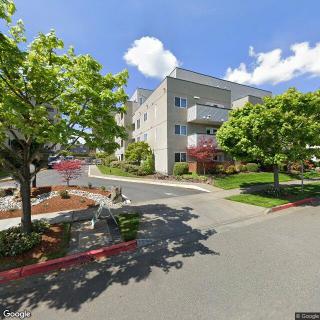
 In-unit washer/dryer and a wide range of on-site amenities support independent living.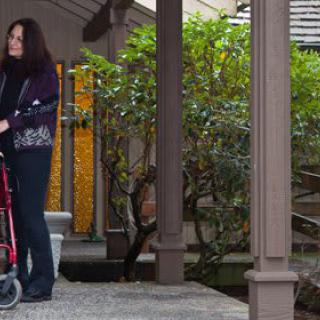

 Comprehensive Insights on the Late Stages of Dementia: What to Expect and How to Provide Care
 Medications Associated with Dementia Risk: A Comprehensive Overview
 Guiding Your Journey: Understanding Power of Attorney for Elderly Parents