
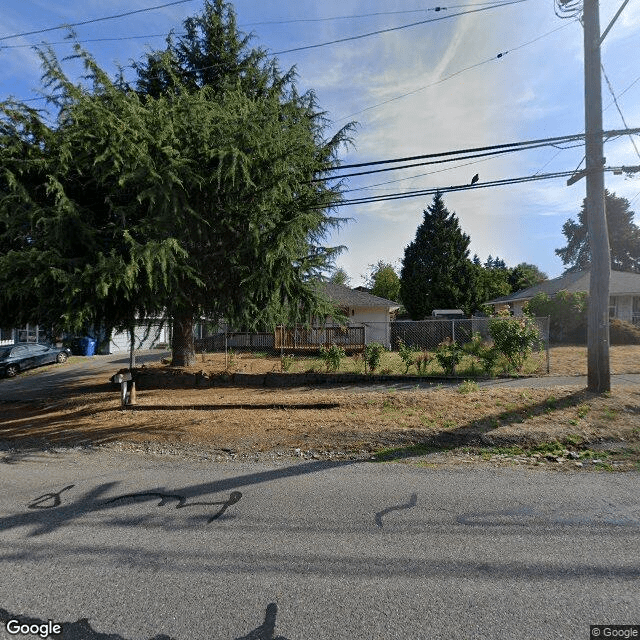
11180 Beacon Ave S, Seattle, WA 98178
To contact a resident: (206) 725-9470
For more information about senior living options: (866) 208-4318
Belicina's AFH Costs & Pricing
Belicina's Adult Family Home (AFH) offers competitive pricing in comparison to the regional standards of King County and the broader state of Washington. For semi-private rooms, Belicina's monthly rate is $2,500, significantly lower than the average of $4,430 in King County and $4,267 statewide. Similarly, for private rooms, Belicina's rate of $3,000 stands in stark contrast to the higher costs of $5,034 in King County and $4,772 across Washington. This pricing structure not only highlights Belicina's commitment to affordability but also positions it as a more accessible option for families seeking quality care without compromising on service.
| Floor plans | Belicina's AFH | King County | Washington |
|---|---|---|---|
| Semi-Private | $2,500 | $4,430 | $4,272 |
| Private | $3,000 | $5,034 | $4,774 |
Memory care communities with a similar price nearby
-
About the same
Freedom Care
$2,500 to $3,000 / month4.4 miles away -
from -$163 / mo
Marine Courte Memory Care
$2,337 to $3,228 / month19.3 miles away -
About the same
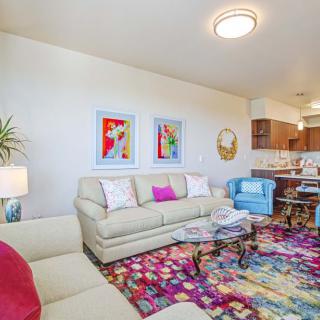
Merrill Gardens at Renton Centre
$2,495 to $5,475 / month3.0 miles away -
About the same
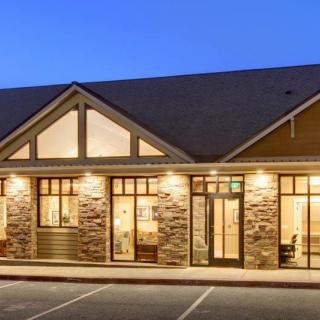
Merrill Gardens at Tacoma
$2,500 to $5,400 / month21.7 miles away -
from -$230 / mo

Franke Tobey Jones - Retirement Estates
$2,270 to $6,270 / month18.3 miles away
Overall Review of Belicina's AFH
Pros
 They have a private room.
- They are comfortable staying in.
Cons
 They would rather stay home than go out.
- They find outings unappealing and prefer staying in.
Review
Belicina's AFH in Seattle is best suited for seniors who prize privacy and a home-like atmosphere, delivered in a smaller, caregiver-supported setting. The standout feature is a private room, offering dignity, personal space, and the ability to maintain familiar routines without the friction of sharing a room. This arrangement appeals to residents who want control over daily patterns, who value quiet and predictability, and who can tolerate limited, but real, opportunities to venture out. The presence of occasional outings demonstrates a light touch of community engagement without turning life into a rigid activity calendar. For those who want discretion and autonomy in a calm environment, this is a natural fit.
Still, a clear caveat emerges for families weighing alternatives. Those seeking robust social programming, frequent organized activities, or intensive, round-the-clock medical oversight may find Belicina's AFH lacking. Washington state AFHs typically vary in staffing depth and program breadth, and in this case the limited outward engagement signals that the community prioritizes a low-stimulation vibe over a bustling day program. If a loved one benefits from a strong social scene, regular excursions, or highly structured care, exploring larger assisted living options or specialized memory-care environments would be prudent.
The main pros, privacy, a homey setting, and the option for occasional outings, interact with the principal drawback in a straightforward way. The private room carries meaningful value: fewer inputs from roommates, less conflict, and the ability to tailor the living space to personal taste. The chance to participate in some outings is better than nothing, offering essential social contact and fresh experiences at a manageable pace. Yet the reality that staying home is not discouraged suggests activity depth is limited. For residents who thrive on consistent interaction, the potential for isolation is a real consideration, even if privacy remains intact.
From a decision-making perspective, the pros offset the cons most strongly for those who value autonomy and a serene routine over a high-energy social calendar. Families should push for clarity on staffing coverage, safety protocols, and how care tasks are delivered in a private-room setting. Concrete due-diligence items include confirmation of medication management practices, nursing oversight levels, meal quality and flexibility, and the process for arranging transportation to any outings. Understanding how frequently caregivers are present, how quickly help is available, and how emergencies are managed will determine whether the setting can meet ongoing care needs.
Practical next steps sharpen the comparison with nearby options. Arrange a daytime and evening visit to observe resident-staff interactions and workflow. Request a current sample weekly activities calendar to gauge the cadence of outings versus at-home time. Probe for transportation arrangements, accessibility features, and dietary accommodations. Consider a short-term trial stay to assess mood, appetite, sleep, and safety in a real-life rhythm. Finally, perform a transparent cost comparison against similarly sized AFHs and against traditional assisted living communities, ensuring that the value reflects both privacy and the level of day-to-day support offered.
Overall, Belicina's AFH serves a specific niche well: a private room, a quiet, home-like ambiance, and light, selective outings that preserve independence while still delivering essential caregiver support. This is a deliberate fit for seniors who want dignity, personal space, and a predictable pace, with the option to step out occasionally without surrendering the comfort of a private sanctuary. For loved ones who require more social engagement, more frequent or structured activities, or higher medical acuity, consider alternative communities in Seattle that foreground activity programs and deeper care coverage. In the right circumstances, this AFH can be a practical, value-aligned choice that avoids the fatigue of a larger, more impersonal setting while still offering reliable, person-centered attention.
 Board and Care Home
 Memory Care
 Cats allowed
 Dogs allowed
 Activities off-site
 Bath tubs
 Devotional services off-site
 Indoor common areas
 Private
 Private bathrooms
 Wheelchair accessible showers
 Seattle-Tacoma International (4 miles away)
 Ambulatory care
 Diabetic care
 High acuity care
 Incontinence care
 Medication management
 Meals provided

 Understanding Dementia Through Its Seven Stages: A Comprehensive Look at Progression and Expectations
 A Holistic Dementia Care Guide: Effective Strategies for Memory Support
 Comprehensive Insights into Activities of Daily Living (ADLs) and Their Assessment