
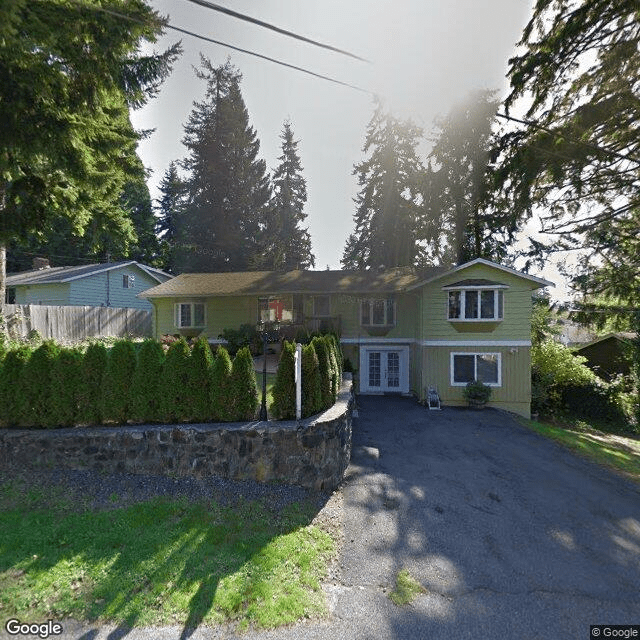
5520 Firwood Dr, Lynnwood, WA 98036
To contact a resident: (425) 673-0168
For more information about senior living options: (866) 208-4318
Shangri-La Home Care LLC Costs & Pricing
Shangri-La Home Care LLC offers competitive pricing for its services, with both private rooms and studio accommodations available at a monthly cost of $3,500. This is significantly lower than the average costs found in Snohomish County, where private rooms are priced at approximately $4,834 and studios at about $4,443. Similarly, when we consider the broader state averages in Washington, which are around $4,772 for private rooms and $4,126 for studios, Shangri-La stands out as a more affordable option. This pricing strategy not only makes quality home care services accessible to a wider range of families but also reflects Shangri-La's commitment to providing value without compromising on care standards.
| Floor plans | Shangri-La Home Care LLC | Snohomish County | Washington |
|---|---|---|---|
| Private | $3,500 | $4,834 | $4,774 |
| Studio | $3,500 | $4,443 | $4,128 |
Memory care communities with a similar price nearby
-
About the same
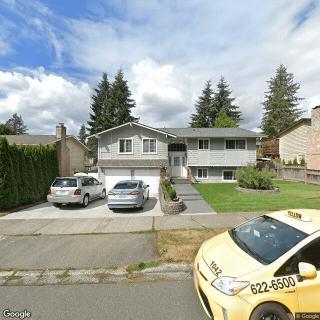
Dignity Life
$3,500 / month5.1 miles away -
from -$125 / mo
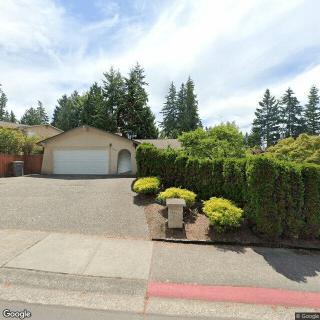
Evergreen Manor Senior Care Inc
$3,375 to $7,500 / month10.7 miles away -
from -$500 / mo
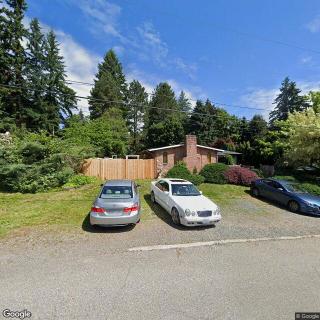
Caring Adult Family Home #1
$3,000 / month6.4 miles away -
from +$500 / mo

Riverton Home Care
$4,000 to $5,000 / month23.7 miles away -
from +$500 / mo

Raena Adult Family Home
$4,000 to $5,000 / month22.7 miles away
Overall Review of Shangri-La Home Care LLC
Pros
 The staff provides amazing care for both mom and dad.
- Shangrila specializes in dementia and Alzheimer's care.
- She receives personalized care with attention to every detail.
- Cathy, the owner, is very nice and on top of every medical need.
- The staff is truly dedicated, caring, and friendly.
- The facility is clean, accessible, and roomy with many amenities.
- It is an affordable alternative to other home care facilities.
- They highly recommend Shangrila.
Review
Shangri-La Home Care LLC in Lynnwood is best suited for families confronting dementia and Alzheimer’s care decisions who want a small, homelike setting where care feels highly personalized. The reviews highlight a facility that specializes in memory care, capable of supporting advanced cognitive impairment alongside mobility challenges, parents with dementia and a stroke history are described as receiving meticulous, detail-oriented attention. The owner, Cathy, appears to be deeply involved, coordinating medical needs and daily routines in a way that reassures families during stressful transitions. For caregivers weighing cost against outcomes, Shangri-La offers a practical, less institutional alternative that still prioritizes specialized memory care without sacrificing a home environment.
Core strengths center on dementia-focused care delivered in a clean, well-kept home that feels accessible and spacious. Staff are portrayed as genuinely dedicated, caring, and friendly, with Cathy actively managing medical needs. The setting supports mobility aids and daily activities, and the facility provides amenities that contribute to comfort and engagement. The care model shows flexibility enough to accommodate a wheelchair-bound resident and to adapt routines to individual cognitive and physical requirements. When paired with an affordable price point relative to other home-care options, these attributes create a compelling value proposition for families seeking focused memory support in a non-clinical environment.
Nevertheless, the intimate scale of Shangri-La brings trade-offs that warrant clear-eyed consideration. As a smaller, owner-led operation, the location may rely on a leaner administrative and clinical footprint than larger memory-care campuses, potentially affecting the breadth of on-site resources and crisis response capacity. Families should proactively inquire about 24/7 nursing coverage, medical oversight after hours, and access to therapies beyond basic daily care. While affordability is a clear plus, the overall value depends on whether the resident’s needs align with the available medical coordination, activity programming, and transportation options.
When care demands extend beyond dementia-specific routines or when a larger, more medically resourced environment is desired, alternatives become worth evaluating. Larger memory-care communities or assisted-living campuses with on-site physicians, round-the-clock nursing, and robust rehabilitation services may better suit residents with complex medical schedules, frequent hospitalizations, or the need for intensive physical or occupational therapy. In such settings, the breadth of clinical staff and specialty programs can translate into heightened peace of mind for families seeking comprehensive medical oversight and predictable, scalable care plans.
The two five-star reviews signal a level of satisfaction that prospective residents can reasonably expect, particularly around specialized dementia care and the sense of personal attention. Still, due diligence remains essential. Prospective families should verify the current staffing patterns, caregiver-to-resident ratios, daily schedules, dementia programming discipline, meal quality, safety measures, and how care plans are reviewed and updated in partnership with families. In-person tours should probe how crises are managed, how medical needs are coordinated with external providers, and what a typical day looks like for a resident with mobility and communication challenges.
In the end, Shangri-La stands as a practical, compassionate option for families prioritizing dementia-focused, home-like care at an affordable price point. It excels for residents who benefit from a smaller, intimate setting where staff know each person’s story and routines can be tailored to cognitive and physical needs. Those whose loved ones require more extensive medical infrastructure, broader social programming, or institutional-level resources may want to explore larger memory-care communities or facilities with on-site full-time physicians. The decision should hinge on matching the care ecosystem to the resident’s medical complexity, activity needs, and the family’s tolerance for relying on a smaller operation led by a dedicated owner. If the fit aligns, Shangri-La offers genuine value and reassuring, attentive care. If not, a broader network of options awaits.
 Board and Care Home
 Memory Care
 Private
 Ambulatory care
 Diabetic care
 Incontinence care
 A Thorough Discussion of Medications Potentially Linked to Dementia Risk
 Why Do Dementia Patients Sleep So Much? Understanding Oversleeping, Stages, and Care Approaches
 8 Key Indicators That Suggest It May Be Time to Transition from Assisted Living to Skilled Nursing Care