

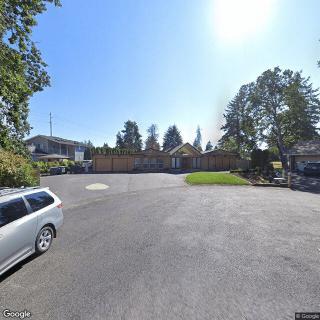
7409 Coral Lane SW, Lakewood, WA 98498
To contact a resident: (253) 324-0397
For more information about senior living options: (866) 208-4318
Grace and Hope Adult Family Home LLC Costs & Pricing
Grace and Hope Adult Family Home LLC offers competitive monthly rates for its residents, reflecting a commitment to providing quality care while remaining mindful of affordability in comparison to broader market trends. For a semi-private room, the cost is set at $4,000, which is notably lower than both the Pierce County average of $4,264 and the state average of $4,267. The private room option is priced at $4,500, comfortably under the regional average of $4,623 and the statewide figure of $4,772. For those seeking a one-bedroom accommodation, Grace and Hope's rate stands at $5,000 - slightly above Pierce County's average of $4,456 but still favorable when viewed against Washington's overall average of $4,632. This pricing strategy positions Grace and Hope as an appealing choice for families looking for quality adult family home services without straining their budgets.
| Floor plans | Grace and Hope Adult Family Home LLC | Pierce County | Washington |
|---|---|---|---|
| Semi-Private | $4,000 | $4,264 | $4,272 |
| Private | $4,500 | $4,623 | $4,774 |
| 1 Bedroom | $5,000 | $4,456 | $4,634 |
Memory care communities with a similar price nearby
-
About the same

Riverton Home Care
$4,000 to $5,000 / month23.1 miles away -
About the same

Canterwoods Estate AFH
$4,000 to $5,500 / month18.6 miles away -
from -$500 / mo

Twin Lakes Haven Adult Family Home
$3,500 to $8,000 / month12.3 miles away -
from -$500 / mo
Ahadi Care Adult Family Home
$3,500 to $4,000 / month13.6 miles away -
from +$305 / mo

Penrose Harbor at Heron's Key
$4,305 to $7,332 / month10.4 miles away
Overall Review of Grace and Hope Adult Family Home LLC
Pros
 The staff were patient and caring with the mother.
- The hospice nurses were eager to learn.
- She passed away peacefully in a clean and safe place.
Cons
 The reviewer expressed uncertainty about how much experience the hospice staff initially had with hospice care.
Review
Grace and Hope Adult Family Home in Lakewood, WA is best suited for families seeking a small, intimate setting where end-of-life care can be delivered with personal attention and warmth. The clearest strength lies in the ability to provide a home-like environment during hospice, with staff who exhibit patience and a genuine willingness to engage with evolving needs. In the observed scenario, a loved one could pass away peacefully in a clean, safe space, underscoring the facility’s capacity to sustain dignity and comfort at the final stage of life.
Yet, this option is not without caveats. The available account notes that the facility’s initial depth of hospice experience was not fully clear, suggesting a potential gap for families that require highly seasoned, readily deployed medical oversight. The staff’s openness to learning, an evident asset, marks a positive trajectory, but it also signals that families may encounter periods of adjustment as the team expands its hospice competencies. For families needing an already-proven, highly specialized hospice program, alternatives with more explicitly documented expertise may be more appropriate.
The main positives, patient, caring staff; a proven willingness to learn; and a clean, safe home environment, work together to offset the potential limits in formal hospice experience. Small, home-based settings often permit closer observation, quicker communication, and more consistent caregiver presence, which can translate into a calmer day-to-day experience for a resident and meaningful reassurance for family members. The ability to coordinate care with hospice professionals on site or nearby further strengthens the care trajectory, increasing the likelihood of comfort-focused outcomes rather than crisis-driven transfers.
These strengths do not erase the concern about clinical depth entirely, but they do balance it in a practical way. A family considering Grace and Hope should weigh the comfort of a familiar, low-stress atmosphere against the need for ongoing refinements in medical oversight. The documented peaceful passing suggests that, when aligned, the team can uphold the essential goals of hospice care: symptom management, dignity, and family involvement. The “eager to learn” attitude should be seen as an opportunity for continuous improvement rather than a warning sign, provided there is transparent communication about progress and expectations.
For due diligence, inquiries should focus on how hospice coordination is handled in practice. Prospective residents deserve clarity about staffing patterns, qualifications, and supervision levels, especially during off-hours. Questions to ask include how care plans are developed and updated, how pain and symptom control are managed, what equipment is available on-site, and how family input is integrated into daily routines. It is also prudent to confirm licensing specifics, safety standards, and any partnerships with external hospice providers to ensure consistency of care across shifts and emergencies.
In the end, Grace and Hope presents a compelling option for families prioritizing a serene, homelike end-of-life environment with caregivers who demonstrate patience and a genuine readiness to grow in hospice proficiency. The model is particularly well-suited for residents who benefit from close, compassionate attention and a peaceful setting that supports dignity in the final days. If the priority is an established, extensive clinical program with a long track record of hospice outcomes, exploring other options may be warranted; if, however, the emphasis is on intimate, personalized care where staff commitment and a clean, safe atmosphere can make the difference for a loved one, Grace and Hope is worth considering.
 Board and Care Home
 Memory Care
 Activities off-site
 Beautician on-site
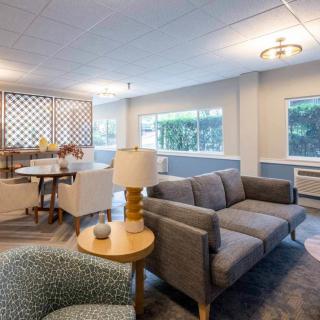
 Indoor common areas
 Outdoor common areas
 Private
 Private bathrooms
 Respite or short term stays offered
 Wheelchair accessible showers
 Seattle-Tacoma International (21 miles away)
 Ambulatory care
 Diabetic care
 High acuity care
 Incontinence care
 Medication management
 Kosher




 Illuminating Insights About Alzheimer's Disease: Ten Crucial Realities
 A Thorough Discussion of Medications Potentially Linked to Dementia Risk
 Why Do Dementia Patients Sleep So Much? Understanding Oversleeping, Stages, and Care Approaches