

8113 Oakbrook Ln SW, Lakewood, WA 98498
To contact a resident: (253) 267-5955
For more information about senior living options: (866) 208-4318
Aiko Adult Family Home Costs & Pricing
Aiko Adult Family Home offers remarkably competitive rates for its residents when compared to the average costs in Pierce County and the broader state of Washington. Specifically, the monthly fee for a semi-private room at Aiko is just $2,000, significantly lower than the county's average of $4,264 and the state's average of $4,267. This cost difference highlights Aiko's commitment to providing affordable care without compromising quality. For those seeking privacy, Aiko also provides private rooms at $2,500, which again stands in stark contrast to the higher averages of $4,623 in Pierce County and $4,772 statewide. Overall, Aiko Adult Family Home emerges as an attractive option for individuals looking for cost-effective living arrangements while maintaining a high standard of care.
| Floor plans | Aiko Adult Family Home | Pierce County | Washington |
|---|---|---|---|
| Semi-Private | $2,000 | $4,264 | $4,272 |
| Private | $2,500 | $4,623 | $4,774 |
Senior living communities with a similar price nearby
-
from +$270 / mo

Franke Tobey Jones - Retirement Estates
$2,270 to $6,270 / month7.9 miles away -
from -$300 / mo

Affinity at Puyallup
$1,700 to $3,195 / month13.5 miles away -
from +$70 / mo

Marvelle at Southcenter
$2,070 to $3,119 / month22.1 miles away -
About the same

Chateau at Valley Center
$1,945 to $5,090 / month23.4 miles away -
from -$300 / mo

Gibson Gardens
$1,700 to $1,900 / month5.6 miles away
Overall Review of Aiko Adult Family Home
Pros
 The owner was wonderful.
- His home is perfect.
Cons
 The home did not meet the reviewer's mother's needs.
- The home did not meet the reviewer's mother's needs.
Review
Aiko Adult Family Home in Lakewood, WA is best suited for seniors who want a warm, home-like setting with highly personalized attention provided by a single owner-operator. This community fits a profile of residents who are mainly independent or receive light assistance with daily activities, and who prefer a small, intimate environment over a larger campus. The emphasis is on living as a family-like household where routines can be flexible and meals, safety checks, and daily support feel immediately responsive. For families seeking a true house atmosphere, with a caregiver who can tailor day-to-day living to individual rhythms, this setting offers a compelling match.
That said, this option may not be right for everyone. Families facing higher medical needs or requiring structured memory care will want to consider alternatives. The two reviews signal a key limitation: while the owner’s warmth and the home atmosphere are strong positives, the level of care may not align with more demanding conditions. Seniors who require continuous nursing oversight, complex medication regimens, or specialized dementia programming could find the arrangement insufficient. In short, when care needs exceed what a small, owner-led home can reliably provide, looking elsewhere becomes a prudent choice.
The principal strengths lie in the human and environmental dimensions: a dedicated owner who creates a welcoming household, and a setting that feels almost like a private residence rather than a traditional facility. Residents benefit from immediate access to a caregiver who knows their routines and preferences, which translates into smoother mealtime experiences, timely reminders for medications, and a sense of security born from constant, visible supervision. The home atmosphere also reduces the clinical cues often associated with larger communities, which can ease anxiety and improve day-to-day comfort for those who prize familiarity and continuity.
Yet the most salient drawback is the gap between those strengths and the care needs of some residents. The deliberate focus on a small-scale, person-centered approach may inadvertently limit resources available for more intensive support. For seniors with mobility challenges, complex wound care, or the need for frequent skilled interventions, the absence of on-site medical staff or formal care coordination can become a meaningful obstacle. In essence, the charm and attentiveness of the owner must be weighed against whether necessary medical and therapeutic services can be reliably delivered within this home’s operating model.
The way the positives interact with the drawbacks offers clear guidance for decision-making. If a senior’s needs align with daily living support, friendly routines, and a reassuring, intimate environment, the pros can substantially offset concerns about limited medical capacity. The immediate availability of the owner’s attention and the comfort of a homelike setting can deliver a level of satisfaction and safety that larger facilities sometimes struggle to match. However, when medical complexity or specialized memory care is anticipated, those same strengths become insufficient counterweights, and the risk of unmet needs grows.
In sum, Aiko Adult Family Home represents a pragmatic choice for families prioritizing a genuine home atmosphere and tight, personal oversight. It is a particularly strong fit for residents who are largely independent or require light assistance and who value daily warmth, flexibility, and direct access to a single, deeply engaged caregiver. Prospective residents should enter with a clear understanding of the care boundaries and verify the availability of essential supports, including medication management, emergency response, and any needed therapies. For those whose loved ones demand more comprehensive medical services, specialized memory care, or a larger care team, exploring nearby assisted living options or small-scale facilities with stronger on-site medical capabilities is a wise move.
 Board and Care Home
 Activities off-site
 Beautician on-site
 Devotional services off-site
 Indoor common areas
 Outdoor common areas
 Private
 Private bathrooms
 Respite or short term stays offered
 Wheelchair accessible showers
 Seattle-Tacoma International (21 miles away)
 Diabetic care
 High acuity care
 Incontinence care
 Medication management
 Kosher
 Christian services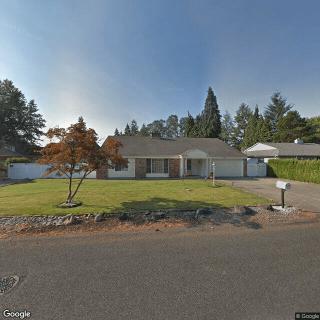



 Navigating Medicare Coverage for In-Home Care Services
 In-Home Care Costs in 2025: A Detailed State-by-State Exploration
 Understanding Home Health Care: A Comprehensive Guide