

304 Hazel Ave North, Kent, WA 98030
To contact a resident: (206) 696-9928
For more information about senior living options: (866) 208-4318
Horizon Gardens Adult Family Home Costs & Pricing
Horizon Gardens Adult Family Home offers competitive pricing for its residential care services, particularly when compared to the broader market in King County and the state of Washington. For semi-private rooms, Horizon Gardens charges $4,000 per month, which is notably lower than the county average of $4,430 and the state average of $4,267. Private rooms at Horizon Gardens are priced at $5,000; while this aligns closely with King County's rate of $5,034, it remains slightly above the statewide average of $4,772. Similarly, their one-bedroom accommodations also start at $5,000 per month, offering a competitive edge against both King County's $5,127 and Washington's $4,632 averages. These rates reflect Horizon Gardens' commitment to providing quality care at accessible prices within its community context.
| Floor plans | Horizon Gardens Adult Family Home | King County | Washington |
|---|---|---|---|
| Semi-Private | $4,000 | $4,430 | $4,272 |
| Private | $5,000 | $5,034 | $4,774 |
| 1 Bedroom | $5,000 | $5,127 | $4,634 |
Memory care communities with a similar price nearby
-
from -$625 / mo
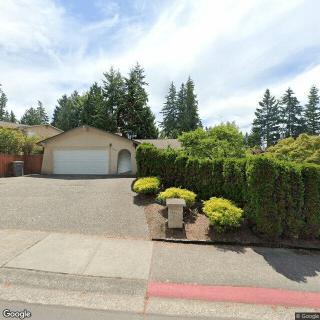
Evergreen Manor Senior Care Inc
$3,375 to $7,500 / month21.7 miles away -
About the same

Riverton Home Care
$4,000 to $5,000 / month7.2 miles away -
About the same
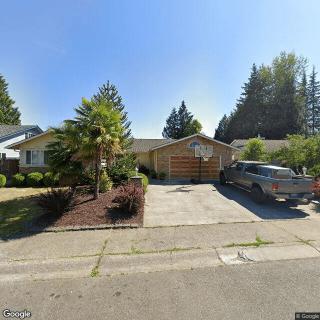
Gentle Care Home
$4,000 to $5,500 / month6.4 miles away -
from -$500 / mo

Twin Lakes Haven Adult Family Home
$3,500 to $8,000 / month8.0 miles away -
from -$500 / mo
Ahadi Care Adult Family Home
$3,500 to $4,000 / month16.8 miles away
Overall Review of Horizon Gardens Adult Family Home
Pros
 The staff treated her as if she were part of their own family.
- The care provided was patient and loving, which impressed the reviewers.
- The team handles difficult cases with grace.
- Horizon Gardens 1 is described as a home, not an institution.
- The reviewers highly recommend visiting to meet the residents and staff.
Cons
 She had dementia and was paranoid, sometimes violent.
Review
Horizon Gardens Adult Family Home in Kent, WA is best suited for families seeking a noticeably intimate, home-like environment where an elderly relative, especially one with dementia or memory-related challenges, receives patient, compassionate, individualized care. The setting is clearly designed around personal attention rather than institutional formality, making it a compelling choice for seniors who thrive on warmth, steady routine, and caregivers who treat residents as family members. This community excels when the priority is dignity and familiarity over formal programs, and when caregivers are trusted to manage fluctuating behaviors with patience and grace.
Those evaluating alternatives should consider situations where Horizon Gardens may not be the best fit. If the priority centers on strong clinical oversight, 24/7 nursing coverage, a formal memory-care unit with secured dementia programming, or a wider array of on-site medical services and amenities, larger assisted living centers or nursing facilities may be more appropriate. Families facing high-acuity needs, complex medication regimens, or the requirement for robust, structured activity schedules may want to compare options that emphasize clinical resources and comprehensive care teams. In short, Horizon Gardens shines in a homelike, person-centered approach, but it may fall short for families demanding a high level of medical infrastructure.
The principal strengths lie in the staff’s one-on-one, familial approach. The resident described in the only available account was treated with extraordinary patience and love, with staff who met her paranoia and agitation not as problems to control but as conditions to comfort and de-escalate. This kind of care translates into meaningful outcomes: residents feel secure, are less likely to experience distress, and can maintain a sense of identity and belonging. The report emphasizes that difficult cases are met with grace, suggesting a team capable of adapting to unpredictable needs without collapsing into rigidity or punitive responses. For families weighing risk versus reward, these are powerful benefits that improve day-to-day quality of life and reduce the emotional burden on loved ones.
Another meaningful pro is the explicit sense of “home” conveyed by the facility. The difference between a residence that merely houses seniors and one that feels like a family’s home is not cosmetic; it changes how residents engage with staff, peers, and their own routines. In practice, that translates into more cooperative mornings, calmer evenings, and a greater willingness to participate in gentle activities that support cognitive and emotional well-being. The heartfelt, patient care described provides a stabilizing influence for someone navigating dementia-related symptoms, which can be as valuable as more tangible services in preventing crises and maintaining continuity of care.
Where potential gaps might exist, the review does not detail the level of on-site medical staffing, securing for memory care, or the breadth of daily programming. Those are legitimate questions for prospective families to pursue: what are nurse-to-resident ratios, what is the on-call structure for medications and emergencies, and how are individualized care plans developed and updated? Yet the positive proof point, staff who treat residents as cherished family members and take on challenging cases with composure, offers a strong counterbalance. When a family’s top priority is a caregiver team that embodies patience, personal regard for residents, and a truly homelike atmosphere, Horizon Gardens’ strengths counterbalance these uncertainties.
In practical terms, Horizon Gardens should be a leading consideration for families prioritizing warmth, consistency, and dementia-capable compassion in a small, residential setting. Prospective residents and their families should visit to observe interactions, ask pointed questions about medical oversight and emergency protocols, and assess how the daily routine aligns with the resident’s needs and preferences. If the aim is to maximize safety through robust clinical infrastructure or to access a wider network of services, alternatives with larger staffs and formal memory-care units merit comparison. For those who value a real home environment where staff treat every resident as family, Horizon Gardens stands out as a sound, confident choice.
 Board and Care Home
 Memory Care
 Activities off-site
 Bath tubs
 Cable or satellite TV
 Devotional services off-site
 Indoor common areas
 Outdoor common areas
 Private
 Private bathrooms
 Respite or short term stays offered
 Wi-Fi/high-speed internet available
 Seattle-Tacoma International (6 miles away)
 Diabetic care
 High acuity care
 Incontinence care
 Medication management
 Anytime dining
 BBQs or picnics
 Birthday parties
 Comprehensive Insights on the Late Stages of Dementia: What to Expect and How to Provide Care
 Medications Associated with Dementia Risk: A Comprehensive Overview
 Guiding Your Journey: Understanding Power of Attorney for Elderly Parents