
32104 Benbow Drive East, Graham, WA 98338
To contact a resident: (253) 970-9523
For more information about senior living options: (866) 208-4318
Agape AFH Costs & Pricing
Agape AFH offers competitive pricing for its accommodations compared to the broader market in Pierce County and the state of Washington. For both private and semi-private rooms, Agape AFH sets its monthly rate at $3,500, which is significantly lower than the county average of $4,623 for private rooms and $4,264 for semi-private options. Additionally, their one-bedroom unit is priced at $4,500 - still comfortably below the county's average of $4,456. This positioning not only highlights Agape AFH's commitment to affordability but also reinforces its value proposition in providing quality care without compromising on comfort or service.
| Floor plans | Agape AFH | Pierce County | Washington |
|---|---|---|---|
| Private | $3,500 | $4,623 | $4,774 |
| Semi-Private | $3,500 | $4,264 | $4,272 |
| 1 Bedroom | $4,500 | $4,456 | $4,634 |
Memory care communities with a similar price nearby
-
from -$500 / mo
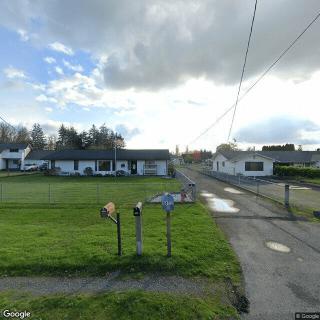
Hummingbird Homecare
$3,000 / month20.5 miles away -
About the same

Twin Lakes Haven Adult Family Home
$3,500 to $8,000 / month24.9 miles away -
About the same
Ahadi Care Adult Family Home
$3,500 to $4,000 / month12.3 miles away -
from -$500 / mo
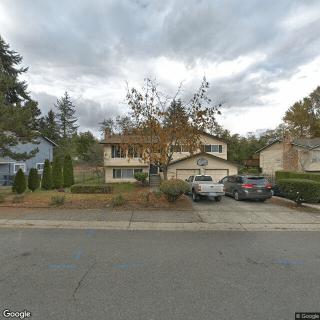
Meridian AFH II
$3,000 to $3,500 / month24.8 miles away -
from -$405 / mo

The Young House
$3,095 to $6,000 / month19.9 miles away
Overall Review of Agape AFH
Pros
 They found the setting inviting and appealing.
- They described the staff as friendly and the environment as clean.
- It was a place they would be happy to stay themselves.
- They felt good about leaving their mom there.
- The location was nice and close to family.
- They felt lucky to have found Agape House.
Review
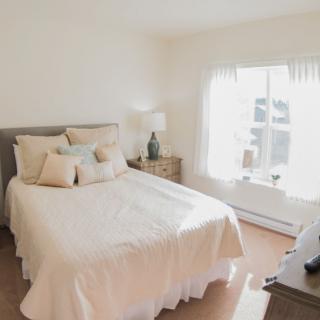
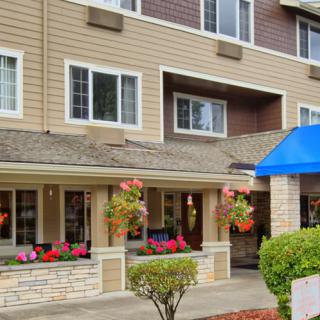
Agape AFH in Graham, WA is best suited for families seeking a small, home-like living option where a loved one can receive attentive, everyday support close to family. The reviews make the setting the first and most persuasive edge: a clean, comfortable environment that feels more like a place you’d pick for yourself than a sterile institution. The people run toward being friendly, approachable, and easy to work with, and the overall vibe is one of calm practicality rather than showroom polish. Proximity to relatives is repeatedly highlighted as a practical, stress-reducing benefit, meaning visits and involvement can be frequent and uncomplicated. This is the kind of setting where a kinship feel between caregivers and families translates into steady reassurance.
Those who may want to consider alternatives are typically those with higher medical needs or a demand for a broader array of on-site services. If a loved one requires substantial 24/7 medical supervision, complex wound care, immediate access to advanced clinical resources, or a robust memory-care program with structured therapeutic activities, a larger assisted living community or a skilled-nursing facility may deliver the level of care and the continuity of medical oversight that such needs demand. Similarly, families seeking a wide spectrum of campus amenities, extensive social programming, or highly formalized care coordination might find a bigger operation more aligned with their expectations.
The strongest positives at Agape AFH center on the environment and the relational dynamic between staff, residents, and families. The setting is described as clean and welcoming, with a vibe that makes visitors feel confident leaving a loved one in care. Staff are depicted as friendly and collaborative, willing to address concerns and work with families to resolve issues, not just perform routine tasks. This level of perceived attentiveness translates into peace of mind: when questions arise, there is a sense that the care team will engage rather than deflect. The small, intimate scale also supports regular, direct communication, which many families value as a practical cornerstone of daily care.
Even so, the downsides that naturally accompany a smaller, home-based model should be acknowledged. A home-like arrangement typically means fewer on-site medical resources, less formal activity scheduling, and a tighter limit on how quickly care can scale if health needs worsen. In other words, the same warmth that fosters trust can come with fewer built-in contingencies for high-acuity situations or for residents who demand a broader menu of therapeutic offerings. These potential limits are not dismissed but are offset by the strength of the personal connection, the ease of family engagement, and the near-term practicality of a location that minimizes travel burdens.
To navigate a visit productively, prospective families should verify several key details. Inquire about staff-to-resident ratios and caregiver coverage across typical wake and night hours, and confirm who supervises medical needs and how medications are managed and reconciled. Ask about emergency response protocols, transfer arrangements if a shift in care level becomes necessary, and the process for coordinating with outside healthcare providers. Clarify meal planning, dietary accommodations, and everyday activities or outings, along with visitation policies and private room options. Understanding the financial structure, what's included, what costs may rise, and how respite or transition care are handled, prevents surprises and supports a clearer decision.
Overall, Agape AFH represents a pragmatic choice for families prioritizing a warm, home-like setting, strong staff accessibility, and convenient proximity to loved ones. It is a particularly compelling option for seniors who thrive on personal attention, consistent communication, and a familiar, neighborly atmosphere. The absence of formal, campus-scale amenities is outweighed by the tangible benefits of cleanliness, approachability, and a caring framework that treats families as partners. For those whose criteria emphasize high-acuity care or a wide array of on-site services, alternatives should be explored, but for a good number of cases the combination of environment, staff rapport, and location makes Agape AFH a sound, low-stress choice.
 Board and Care Home
 Memory Care
 Dogs allowed
 Activities on-site
 Air-conditioning
 Cable or satellite TV
 Devotional services on-site
 Handicap accessible
 Indoor common areas
 Outdoor common areas
 Private
 Private bathrooms
 Wheelchair accessible showers
 Wi-Fi/high-speed internet available
 Diabetic care
 High acuity care
 Incontinence care
 Medication management
 Anytime dining
 BBQs or picnics
 Bible study group
 Birthday parties
 Forever fit
 Gardening club
 Intergenerational programs
 Live well programs
 Trivia games
 Wine tasting

 Understanding the Distinctions: Assisted Living and Memory Care Explained
 How to Communicate with a Loved One Living with Dementia: 10 Supportive Strategies
 Comprehensive Guide to VA Nursing Homes: A Crucial Long-Term Care Resource for Veterans