
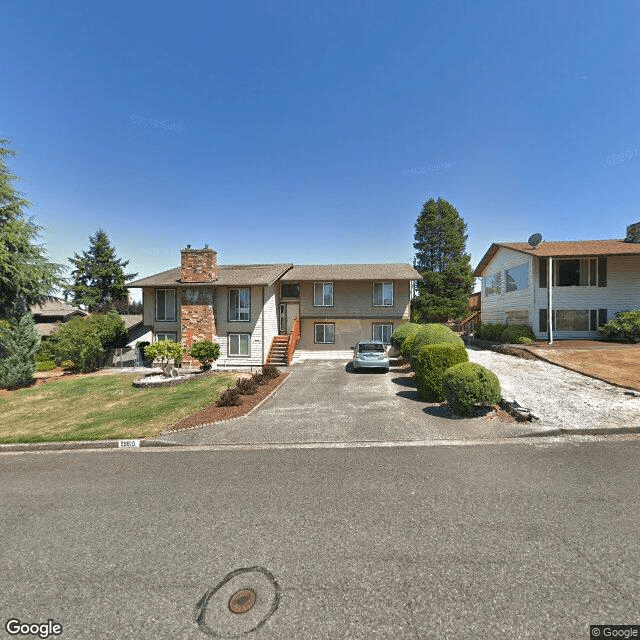
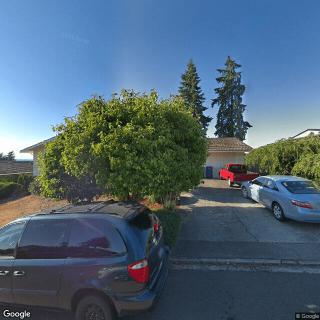
29810 4th Ave SW, Federal Way, WA 98023
To contact a resident: (253) 449-1818
For more information about senior living options: (866) 208-4318
Esther AFH I Costs & Pricing
Esther AFH I offers competitive pricing for its residents, especially when compared to the average costs in Pierce County and across Washington state. For a semi-private room, Esther AFH I charges $3,500 per month, which is significantly lower than the county's average of $4,264 and the state average of $4,267. The facility also provides private rooms and one-bedroom accommodations at a rate of $6,000 per month. While this rate surpasses the county's average for private rooms at $4,623 and one-bedrooms at $4,456, it remains competitive against the state's averages of $4,772 for private rooms and $4,632 for one-bedrooms. Overall, Esther AFH I presents an appealing option for those seeking quality care at a more affordable price point within the local market.
| Floor plans | Esther AFH I | Pierce County | Washington |
|---|---|---|---|
| Semi-Private | $3,500 | $4,264 | $4,272 |
| Private | $6,000 | $4,623 | $4,774 |
| 1 Bedroom | $6,000 | $4,456 | $4,634 |
Memory care communities with a similar price nearby
-
from -$500 / mo
Hummingbird Homecare
$3,000 / month6.9 miles away -
from +$500 / mo

Riverton Home Care
$4,000 to $5,000 / month10.0 miles away -
from -$500 / mo
Home Care in Kent Inc.
$3,000 to $3,500 / month7.2 miles away -
from +$500 / mo
Gentle Care Home
$4,000 to $5,500 / month12.7 miles away -
About the same

Twin Lakes Haven Adult Family Home
$3,500 to $8,000 / month1.6 miles away
Overall Review of Esther AFH I
Cons
 The facility wasn't able to care for a person until they passed.
- The reviewer was looking for a place that could care for a person until they passed without having to move them.
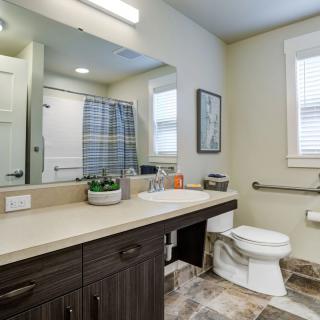
- There was no private bathroom.
Review
Esther AFH I in Federal Way is best suited for seniors who want a compact, home-like setting with hands-on daily living assistance delivered in a personal, low-crew environment. The arrangement tends to work for residents who can get by with shared facilities and routine support, without expecting sustained, end-of-life medical care on site. Families seeking privacy and medical continuity should note that this home cannot provide care through the final stages of life and does not offer private bathrooms, which immediately narrows its suitability for many households.
Those weighing alternatives should deliberate early if the resident’s needs include long-term prognosis or private accommodations. If private bathroom access, private rooms, and a capacity to sustain hospice-like care at the facility are non-negotiable, other options, larger assisted living communities or residential care homes with dedicated end-of-life support, will likely serve better. For families prioritizing a strict end-of-life plan and greater privacy in daily routines, alternatives that promise seamless progression through advanced age and palliative needs are more reliable.
The setting’s potential strengths can help, in theory, offsetting some frustrations. A smaller, home-style environment commonly enables closer daily interactions with caregivers, more individualized attention, and a sense of familiarity that larger campuses struggle to replicate. For residents who do not require complex medical interventions, this can translate to steadier daily rhythms and a calmer living space. However, these perceived benefits falter when a resident’s trajectory moves toward greater medical reliance or when privacy becomes a fundamental expectation.
The central drawbacks are explicit and meaningful: the facility cannot provide end-of-life care, so families must plan for a transition if a resident’s condition deteriorates. The absence of private bathrooms compounds privacy concerns and can complicate daily routines, particularly for those who value dignity and personal autonomy in personal care. These limitations also raise practical questions about infection control, scheduling, and the comfort of guests or family members in private moments. In short, the main cons directly challenge stability and comfort during late-stage aging, and they are not easily mitigated by a friendly staff or home-like ambiance.
When evaluating Esther AFH I, there are concrete steps to take. Confirm the facility’s exact policy on end-of-life care and hospice coordination, including how much medical oversight is available on-site and how transfers are handled if care needs intensify. Verify room configurations and bathroom access for future residents; if a private bathroom is essential, identify nearby options that offer private accommodations. Request a detailed breakdown of services, staffing ratios, and caregiver qualifications so the level of assistance matches anticipated needs. Finally, compare total costs, including any hospice-related charges, and seek references from families with residents in similar care trajectories to gauge consistency of support over time.
The verdict is clear: Esther AFH I is not suitable for anyone expecting to navigate advanced aging with ongoing end-of-life support and private bathroom access under one roof. For families with flexible privacy requirements and a willingness to relocate if needs surge, the home-like setting can provide comforting day-to-day companionship and manageable assistance. Yet for those whose priorities include sustained, on-site palliative care and private facilities, alternatives that deliver both long-term care stability and private accommodations will deliver far more practical value in the long run. Make this a non-negotiable filter in the decision-making process, and proceed with options that align with the resident’s trajectory, privacy preferences, and medical care expectations.
 Board and Care Home
 Memory Care
 Activities off-site
 Air-conditioning
 Bath tubs
 Devotional services off-site
 Full kitchen
 Indoor common areas
 Outdoor common areas
 Private
 Respite or short term stays offered
 Wheelchair accessible showers
 Seattle-Tacoma International (8 miles away)
 Diabetic care
 High acuity care
 Incontinence care
 Medication management
 Anytime dining
 BBQs or picnics
 Birthday parties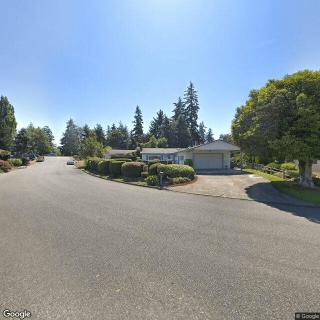
 Affordable pricing with private rooms and private baths, plus wheelchair access and on-site care services.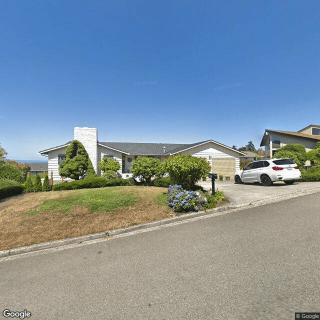

 Comprehending Evening Confusion in Dementia: Causes, Manifestations, and Support
 Delirium and Dementia: Unraveling the Key Differences
 Are Dementia and Alzheimer's Disease Lethal? A Comprehensive Exploration