
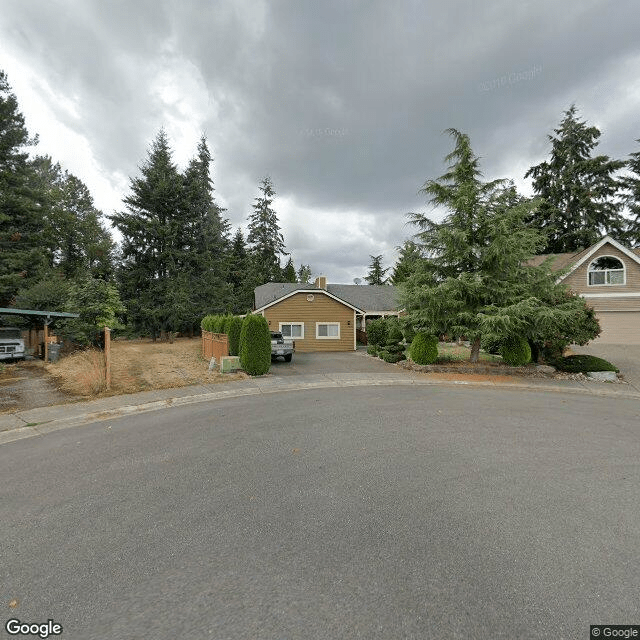
2507 167th Place Maria cousin,Pusa caregiver, Bothell, WA 98012
To contact a resident: (425) 489-8201
For more information about senior living options: (866) 208-4318
Elisabeta's Loving Care Costs & Pricing
Elisabeta's Loving Care offers competitive pricing for its accommodations, significantly lower than both Snohomish County and the broader state of Washington. For a semi-private room, residents pay $3,000 per month, a notable savings compared to the county's average of $4,320 and the state average of $4,267. Studio and one-bedroom options are offered at $3,400 each, again undercutting local and state averages that stand at $4,443 and $5,080 for studios and $4,632 for one-bedroom units respectively. Additionally, private rooms at Elisabeta's also maintain a cost advantage at $3,400 compared to the county's rate of $4,834 and the state's rate of $4,772. Overall, Elisabeta's Loving Care provides an appealing option for those seeking quality care without the exorbitant price tag often associated with similar facilities in the area.
| Floor plans | Elisabeta's Loving Care | Snohomish County | Washington |
|---|---|---|---|
| Semi-Private | $3,000 | $4,320 | $4,272 |
| Studio | $3,400 | $4,443 | $4,128 |
| 1 Bedroom | $3,400 | $5,080 | $4,634 |
| Private | $3,400 | $4,834 | $4,774 |
Memory care communities with a similar price nearby
-
from +$500 / mo
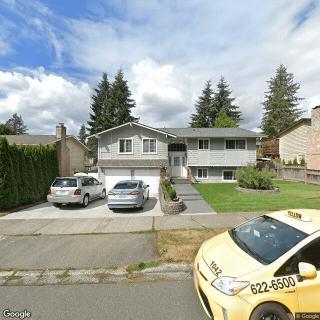
Dignity Life
$3,500 / month0.6 miles away -
from +$375 / mo
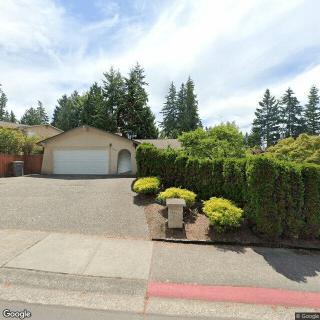
Evergreen Manor Senior Care Inc
$3,375 to $7,500 / month10.5 miles away -
About the same
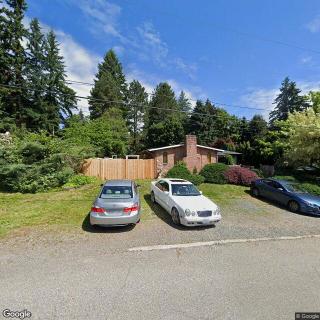
Caring Adult Family Home #1
$3,000 / month5.7 miles away -
from -$500 / mo
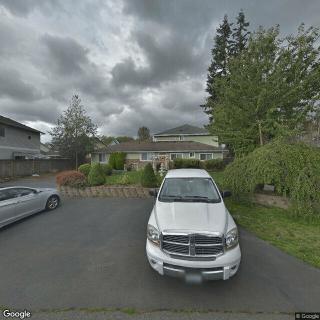
Silver Pond AFH
$2,500 to $3,500 / month3.9 miles away -
from +$500 / mo
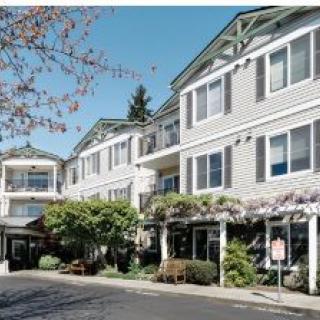
Wyatt House Retirement Center
$3,500 to $5,600 / month21.3 miles away
Overall Review of Elisabeta's Loving Care
Pros
 The home is very well run.
- The owner appears knowledgeable.
- The home is clean.
- Multiple staff members were present during the visit.
Cons
 The shared room situation was a drawback.
- The location was a bit farther from their home than was ideal.
Review
Elisabeta's Loving Care in Bothell is best suited for families that value a well-run, clean, home-like environment with hands-on oversight from an engaged owner and consistent staffing. The two recent tours paint a picture of a tightly operated residence: the home is kept orderly, and multiple staff members were on site during visits. For residents who are comfortable in a small-scale setting and don’t insist on private rooms, this community offers the reassurance of daily routines, responsive supervision, and a familiar, neighborly atmosphere. The combination of attentiveness and cleanliness makes it a solid fit for seniors who prioritize dependable care over a larger, more impersonal campus experience.
Those who may want to consider alternatives are explicitly those who require private accommodations or who place a premium on proximity to family or a specific neighborhood. The reviews repeatedly flag the shared-room arrangement as a notable drawback, meaning private rooms are unlikely or limited. Additionally, the location being described as a bit farther from the family’s home matters in practical terms, visiting logistics, spontaneous drop-ins, and coordination with care teams can be more challenging when distance is a factor. For families prioritizing privacy or a shorter commute, exploration of other options is prudent.
Where the pros clearly offset the main drawbacks is in the care culture created by strong leadership and reliable staffing. An owner who appears knowledgeable, combined with on-site staff during visits, tends to translate into consistent daily care, steady routines, and prompt attention to resident needs. Cleanliness and a well-run operation reduce the likelihood of missed details in meals, meds, and activities, while the intimate, home setting supports relationships between residents and caregivers. In this context, the joint value of safety, predictable scheduling, and visible accountability can outweigh the frustration of sharing a room for families who prize stability and personal attention.
A practical read on the shared-room issue is that it directly intersects with personal comfort and budget expectations. For some residents, a shared room is an acceptable compromise when it comes with strong supervision, order, and the sense of community that comes from living in a small home with an attentive staff. For others, privacy and individualized space are non-negotiable, making private rooms a decisive factor. The distance from home compounds this calculus: if frequent family visits are important, the extra drive or commute may erode the everyday convenience that families rely on for ongoing care management.
From a decision-making standpoint, prospective residents should verify several practical details during tours. Confirm whether private rooms are available and at what cost, and inquire about the staff-to-resident ratio across shifts to gauge responsiveness. Ask about daily activities, meals, and how care plans are developed and updated, as these elements often differentiate a well-run home from a merely clean residence. It’s also wise to clarify visitation policies and whether the location’s distance would meaningfully affect coordination with medical appointments, pharmacy pickup, and emergency access.
In summary, Elisabeta's Loving Care stands out for families who prize a disciplined, clean, and professionally managed environment with ample caregiver presence. The key caveat remains the shared-room arrangement, coupled with the somewhat longer distance from some families’ homes. If private space and proximity are non-negotiable, alternatives should be explored. If, instead, the priority is a trustworthy atmosphere, consistent staffing, and a small-home feel, this community warrants serious consideration and a scheduled visit to confirm alignment with care goals.
 Board and Care Home
 Memory Care
 Activities off-site
 Beautician on-site
 Indoor common areas
 Outdoor common areas
 Private
 Private bathrooms
 Respite or short term stays offered
 Wheelchair accessible showers
 Diabetic care
 High acuity care
 Incontinence care
 Medication management
 Meals provided




 Understanding the Distinctions: Assisted Living and Memory Care Explained
 How to Communicate with a Loved One Living with Dementia: 10 Supportive Strategies
 Comprehensive Guide to VA Nursing Homes: A Crucial Long-Term Care Resource for Veterans