
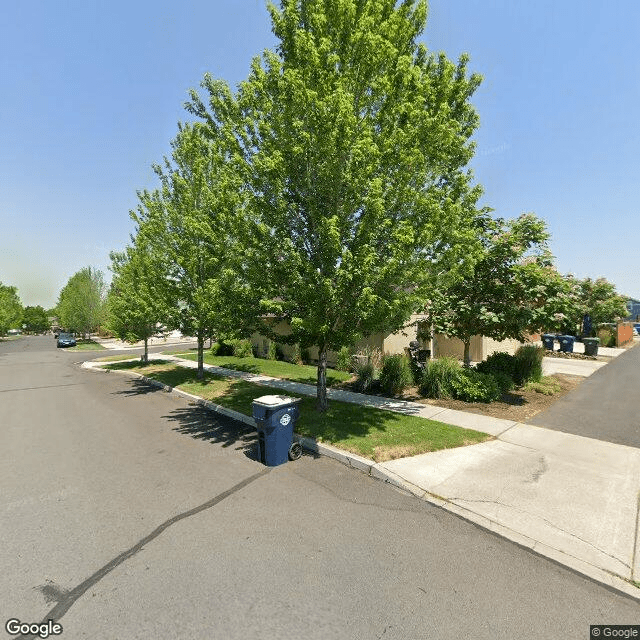
2813 NE Great Horned Place, Bend, OR 97701
To contact a resident: (541) 330-4083
For more information about senior living options: (866) 208-4318
Moonstone Inn Costs & Pricing
At Moonstone Inn, the monthly lodging costs are notably competitive when compared to both Deschutes County and the broader state of Oregon. For a private room, guests can expect to pay $2,500, significantly lower than the county average of $3,868 and the state average of $3,424. Similarly, for a one-bedroom suite, the cost is set at $3,000, which again positions it favorably against Deschutes County's average of $4,059 and Oregon's average of $3,904. This pricing strategy not only makes Moonstone Inn an attractive option for potential residents but also reflects a commitment to providing accessible accommodations without compromising on quality or comfort.
| Floor plans | Moonstone Inn | Deschutes County | Oregon |
|---|---|---|---|
| Private | $2,500 | $3,868 | $3,424 |
| 1 Bedroom | $3,000 | $4,059 | $3,904 |
Memory care communities with a similar price nearby
-
About the same

Touchmark at Mount Bachelor Village
$2,500 to $3,775 / month4.6 miles away -
About the same
Awbrey Place Assisted Living and Memory Care
$2,522 to $4,360 / month0.9 miles away -
About the same
Gemstone Inn
$2,500 to $3,000 / month1.2 miles away
Overall Review of Moonstone Inn
Pros
 The suite was very cozy, and guests really enjoyed the complimentary Christmas light show.
- The stay was wonderful.
- The environment was wonderful and close to the ocean.
- The staff treated guests like family, were amazing, and kept the place spotless.
- The staff provided extensive one-on-one care for a guest's mother and offered transportation.
- A Place For Mom was very helpful and made moving their mother easier.
- They would recommend Moonstone to anyone.
Cons
 The reviewer describes a terrifying breach of safety and sanitation during the stay.
- A friend's bed reportedly had multiple bites.
- Two staff members entered the room unannounced and without identifying themselves, startling the guest.
- The experience was frightening, violating, and deeply unsafe for the reviewer as a Black woman traveler.
- The corporate office allegedly ignored the reviewer for over two weeks, showing a lack of accountability.
- The reviewer cannot recommend staying at Moonstone Hotels properties.
Review
Moonstone Inn in Bend, Oregon is best suited for families seeking a warm, home-like caregiving culture where staff pursue meaningful, one-on-one time with residents, including those navigating advanced memory challenges. This community earns trust through a tangible sense of connection: a clean, cozy environment, attentive front-line staff, and an open atmosphere that invites family involvement and frequent contact with caregivers. For families prioritizing pervasive warmth, individualized attention, and practical support to arrange transportation and outings, Moonstone Inn delivers a reassuring, lived-in feel rather than a clinical, impersonal setting.
Those evaluating Moonstone Inn should also consider alternatives if a higher bar for privacy, security, and corporate accountability is essential. The combination of strong personal care with a notable safety concern creates a counterweight that may tilt decision-making for families who cannot tolerate even isolated lapses in security or sluggish corporate responsiveness. Communities with explicit, verifiable safety protocols, rapid incident reporting, and transparent governance may be preferable for households with heightened risk awareness or past experiences emphasizing accountability.
On the positive side, the strongest recurring theme is the staff’s dedication to residents. Multiple accounts describe staff treating loved ones like family members, with frequent visits, individualized attention, and a level of accessibility that makes families feel welcome rather than sidelined. The environment is described as spotless and approachable, reinforcing a sense that daily life remains dignified and comfortable. Transportation support, when needed, is highlighted as a practical, no-hussle feature that helps families maintain continuity, an important factor when coordinating medical appointments, errands, and social engagement for seniors.
Yet the most limiting and consequential flaw surfaces in a single, highly concerning incident: an early-morning entry into a room by two staff members without identification, followed by a broader sense of distrust and questions about accountability. That breach underscores a fundamental risk: even with exemplary bedside care, a lapse in security and an opaque response from corporate leadership can erode confidence and raise genuine safety concerns for residents and their families. The episode is not merely an isolated glitch; it points to potential gaps in procedures, supervision, and communication that would matter greatly during a crisis or when privacy is paramount.
Given these tensions, the value of Moonstone Inn rests on how well the positives can be sustained while the risks are addressed. The pros, compassionate caregiving, a family-friendly approach, cleanliness, and practical support, provide meaningful upside for families seeking in-home-style care that respects autonomy and dignity. However, the cons carry lasting weight: safety vulnerabilities and uncertain corporate accountability can overshadow daily comfort and the genuine bonds developed between staff and residents. The decision hinges on whether the environment can be trusted to maintain rigorous security standards without compromising the intimate, caring culture that defines the community.
For families moving through the decision, the practical path is clear: seek unequivocal assurances about security protocols, staff background checks, entry procedures, and the channel for reporting and resolving concerns with corporate leadership. Urgently request a detailed tour focused on safety, incident history, staff training, and supervision levels. Obtain written commitments about privacy safeguards, regular audits, and transparent incident follow-up. If those assurances cannot be documented to a comfort level, or if a history of slow corporate responsiveness persists, it is prudent to explore other communities with a proven track record of safety, clear governance, and equally strong caregiving, without compromising the warmth and attentiveness that Moonstone Inn already demonstrates.
 Board and Care Home
 Memory Care
 Cats allowed
 Dogs allowed
 Activities off-site
 Beautician on-site
 Devotional services off-site
 Indoor common areas
 Outdoor common areas
 Private
 Wheelchair accessible showers
 Roberts (13 miles away)
 Diabetic care
 High acuity care
 Incontinence care
 Medication management
 Kosher




 Understanding Dementia Through Its Seven Stages: A Comprehensive Look at Progression and Expectations
 A Holistic Dementia Care Guide: Effective Strategies for Memory Support
 Comprehensive Insights into Activities of Daily Living (ADLs) and Their Assessment