
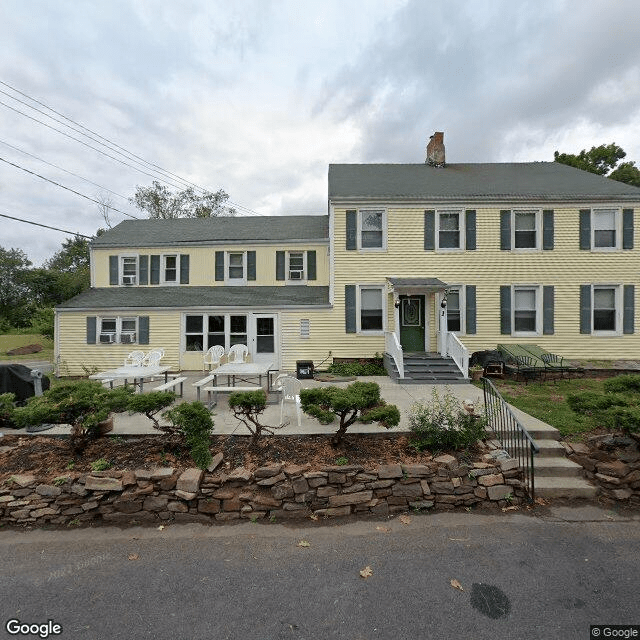
1 Amwell Road, Flemington, NJ 08822
To contact a resident: (732) 259-3047
For more information about senior living options: (866) 208-4318
Traditions Residential Health Care Costs & Pricing
Traditions Residential Health Care offers competitive pricing for its services compared to the broader market in Hunterdon County and the state of New Jersey. With a monthly cost of $2,200 for both private rooms and studios, Traditions stands out as a more affordable option when contrasted with the average costs in Hunterdon County, where private room rates reach $2,350 and studio apartments average $4,400. Additionally, when looking at state-level averages in New Jersey, where private rooms can command as much as $5,799 and studios average around $5,286, Traditions provides significant savings without compromising on care quality. This positioning makes it an attractive choice for individuals seeking residential health care solutions that balance affordability and comfort.
| Floor plans | Traditions Residential Health Care | Hunterdon County | New Jersey |
|---|---|---|---|
| Private | $2,200 | $2,350 | $5,799 |
| Studio | $2,200 | $4,400 | $5,286 |
Memory care communities with a similar price nearby
-
from +$300 / mo
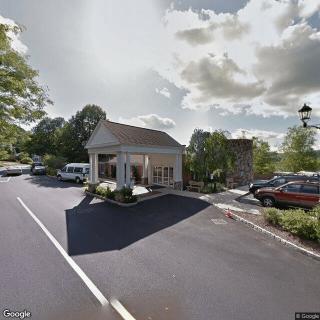
Heath Village
$2,500 to $4,600 / month23.8 miles away -
from +$300 / mo
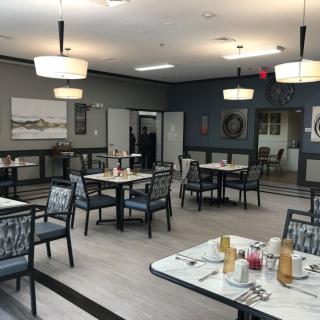
Allegria at The Oaks
$2,500 to $3,500 / month23.8 miles away -
from +$160 / mo
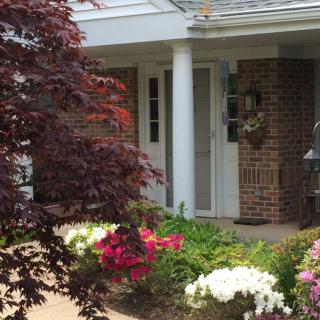
Laurel Circle
$2,360 to $3,464 / month13.6 miles away -
About the same
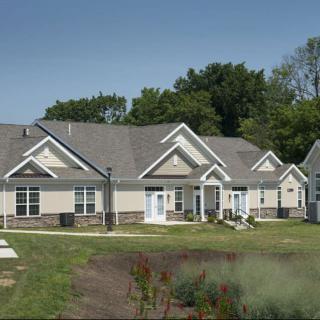
Holland Village, a CCRC
$2,225 to $6,235 / month20.3 miles away -
from -$205 / mo
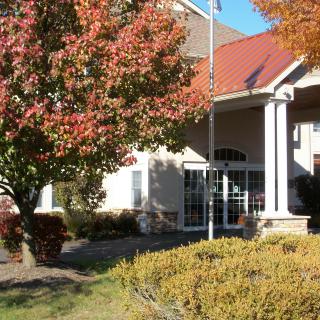
Chandler Hall
$1,995 to $6,600 / month19.0 miles away
Overall Review of Traditions Residential Health Care
Cons
 The place was a dump.
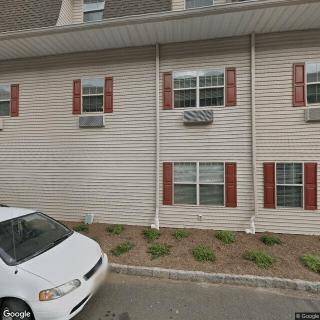
- The building is old and needs repair.
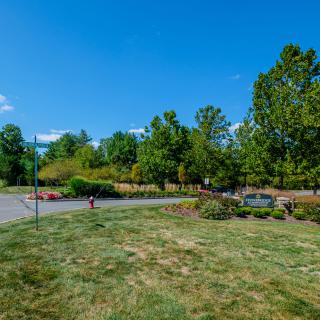
- Residents sit smoking in the tiny front garden or walk into the busy street intersection.
- It is on a T-junction with busy traffic, and it’s remarkable a resident hasn’t been hit.
- They were rudely responded to when they called for information.
- They were told they would not receive any information about the facility unless they were staying there.
- The people sounded very sketchy, and caution would be advised when dealing with them.
- The situation was unnerving, suggesting there might be a legal dispute.
Review
Traditions Residential Health Care in Flemington, NJ is best suited for very few families, and only when options are severely constrained. The accounts available depict a facility whose challenges far outstrip any potential upside, placing it outside the circle of recommended choices for most seniors needing assisted living. In practical terms, it would be considered only by households facing no viable alternatives and prepared to accept pronounced safety risks, limited maintenance, and opaque communications as the price of access.
Those considering alternatives should look for communities that prioritize safety, upkeep, and transparent operations. If a senior’s care plan hinges on responsive staff, clear information sharing, and a calm, well-maintained environment, Traditions Residential Health Care should not be the default pick. Competent, respectful administrative conduct and a facility that prevents hazards, such as traffic-adjacent street exposure and clearly aging infrastructure, are nonnegotiables in sound decision-making. In short, almost every other nearby option is likely to deliver greater reassurance about daily life, safety, and long-term stability.
The central drawbacks are concrete and systemic. The building’s condition, described as old and in need of repair, directly undermines comfort and safety, and there is little in the way of positive context to offset that. The location compounds risk: a T-junction with heavy traffic creates a real vulnerability for residents who may wander or momentarily lose awareness. The front garden scene, residents sitting and smoking in a small outdoor space, highlights a care culture that may not align with expectations for mobility, supervision, or smoke-free environments. These factors collectively erode confidence that basic daily needs, nutrition, hygiene, safety oversight, are consistently met.
The negative experiences extend beyond physical plant and location. The accounts include a dismissive, unhelpful approach to information requests, with staff indicating information would only be shared if a person were staying there. Such gatekeeping and the sense of sketchiness about operations undermine trust in the facility’s governance and its ability to coordinate care, coordinate with families, or address concerns promptly. A perception of legal disputes or other unresolved issues further erodes the perceived stability of administration, making it difficult to forecast reliability, consistency in staffing, or accountability.
There are no evident compensating strengths highlighted in the accounts. No notable staff credentials, care successes, or resident-focused amenities are described, and the combinations of aging infrastructure, safety ambiguities, and poor communication leave little to balance the scale in favor of Traditions Residential Health Care. When a community presents as this consistently problematic in basic safety and transparency, the burden falls squarely on the facility to demonstrate otherwise through tangible improvements and a clear, resident-centered culture. Until such evidence exists, the drawbacks are not just persistent, they are defining.
For families evaluating options, a disciplined due diligence plan is essential: tour during different times of day to observe staff responsiveness and resident interaction; inspect common areas for maintenance and cleanliness; request a written outline of available services, staffing ratios, and activity schedules; ask for recent state licensing documents and inspection results; speak with multiple staff members about daily routines and emergency procedures; and, if possible, talk with current residents or family members about ongoing concerns. Investigate proximity to hospitals and emergency services, reliability of essential repairs, and the facility’s process for handling complaints. If any red flags echo the ones described, prioritize alternatives. The prudent choice is a community that demonstrates consistent safety, clear communication, and a well-maintained environment, traits that Traditions Residential Health Care has not clearly shown in the available feedback.
 Board and Care Home
 Memory Care
 Private
 Respite or short term stays offered
 Trenton-Mercer County (14 miles away)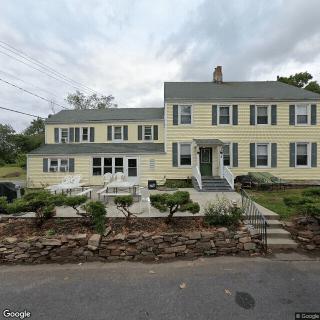
 Convenient access to dining, healthcare, worship, and parks.
 A Thorough Discussion of Medications Potentially Linked to Dementia Risk
 Why Do Dementia Patients Sleep So Much? Understanding Oversleeping, Stages, and Care Approaches
 8 Key Indicators That Suggest It May Be Time to Transition from Assisted Living to Skilled Nursing Care