
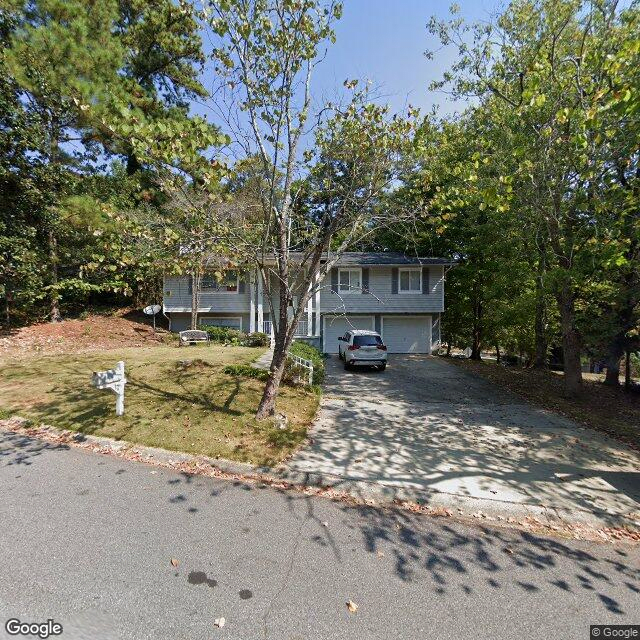
2502 Northbrook Road, Snellville, GA 30039
To contact a resident: (770) 881-7778
For more information about senior living options: (866) 208-4318
A Home Sweet Home Costs & Pricing
At A Home Sweet Home, the monthly costs for accommodations reflect both a competitive pricing structure and an emphasis on value. For a private room, residents pay $1,790, which is significantly lower than the averages for Rockdale County at $2,363 and even more so compared to the state average of $2,864. Similarly, for a one-bedroom unit at A Home Sweet Home priced at $2,350, it remains an attractive option when juxtaposed against the Rockdale County average of $2,735 and Georgia's statewide figure of $3,412. This positioning not only highlights A Home Sweet Home's commitment to affordability but also ensures that residents can enjoy quality living without straining their budgets.
| Floor plans | A Home Sweet Home | Rockdale County | Georgia |
|---|---|---|---|
| Private | $1,790 | $2,363 | $2,864 |
| 1 Bedroom | $2,350 | $2,735 | $3,412 |
Memory care communities with a similar price nearby
-
from +$310 / mo
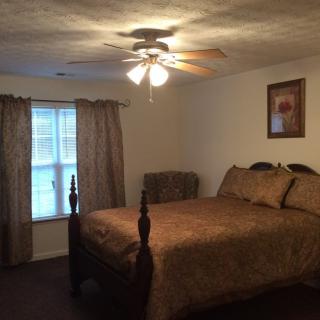
Abiding Care Home
$2,100 / month15.3 miles away -
from +$210 / mo

Omni Adult Day Care
$2,000 to $3,000 / month14.3 miles away -
from -$290 / mo
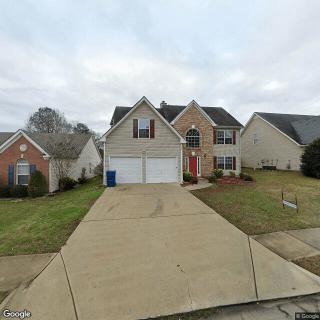
Harmony Home Care
$1,500 to $2,100 / month8.7 miles away -
from +$311 / mo
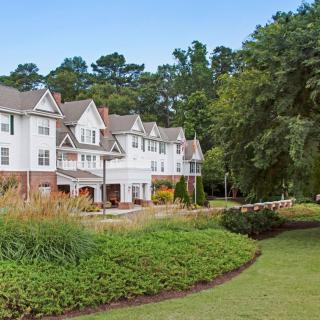
Brighton Gardens of Buckhead
$2,101 to $5,370 / month16.9 miles away -
About the same
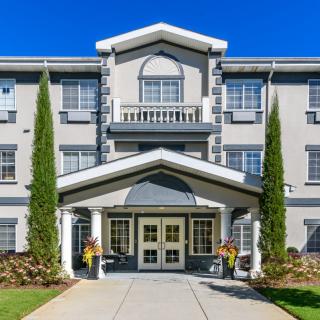
Villa Palazzo Senior Living Community
$1,800 to $3,850 / month19.6 miles away
Overall Review of A Home Sweet Home
Pros
 The property is described as pretty nice.
- The GA home is described as a truly sweet home, with Blessing as a wonderful, caring host.
- The vacation rental is awesome, with guests loving their stay, and it is clean, affordable, and in a great neighborhood.
- Marie is described as top notch—lovely, competent, and compassionate.
- Marie’s TLC fosters a sense of community among residents and staff who respect and care for one another and socialize well.
- The onsite treadmill helps residents stay fit enough to handle stairs.
Cons
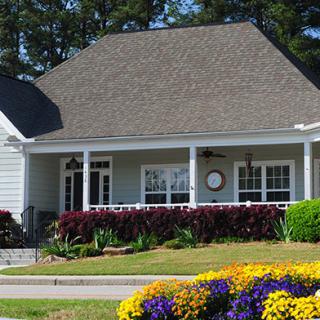
 A split-level design requires stairs, which is noted as a drawback.
- The upstairs doctor’s bedroom availability prompts a search for a ranch-style, single-story home.
Review
A Home Sweet Home in Snellville is best suited for families seeking a warm, intimate, home-like assisted living arrangement where personal attention and social connectedness are the anchor of daily life. It works well for seniors who value a small, neighborly feel over a clinical footprint, and who can manage a two-story layout with stairs or who are comfortable leveraging simple in-house supports (like a treadmill) to stay mobile. The setting, a quiet, accessible subdivision with a caretaker-driven vibe, appears to foster meaningful relationships between residents and staff, anchored by a consistently caring leadership that many families highlight as the standout asset.
That said, certain residents should actively consider alternatives. Anyone needing high-level medical oversight or 24/7 nursing coverage will likely want a larger, more resource-rich facility with formal medical programs. Individuals who require single-story living due to significant mobility limitations may find the split-level design impractical, even with stabilizing routines. Programs with robust daily schedules, expansive activity calendars, and more intensive supervision may be preferable for those who crave a wider range of on-site services or who value a more institutional setting for safety or oversight reasons. In short, this community shines where a homelike atmosphere and personal touch matter most; it is less compelling for those chasing extensive clinical resources under one roof.
On balance, the strongest positives are the people and the vibe. Marie, repeatedly singled out as top-notch, compassionate, and deeply engaged, anchors the operation with genuine TLC. The sense of community among residents and staff, built on mutual respect and social engagement, translates into a welcoming daily rhythm that many families notice as a meaningful contrast to more transactional care environments. The home itself, described as quiet and well located, supports relaxed living and close interactions, while practical details like cleanliness and affordability appear consistently favorable in reviews. This combination often translates into fewer daily stressors for families, who can feel confident that their loved one is in a kind, attentive environment.
Even with those strengths, the tangible drawbacks pull in the other direction. The most explicit constraint is the architectural reality: a split-level home inevitably means stairs, which can be a barrier for residents with mobility limits or those whose safety depends on avoiding stair navigation. Although an onsite treadmill is mentioned as a practical countermeasure, stairs remain a structural limitation that can constrain independence and raise concerns during medical or daily living transitions. A referenced upstairs bedroom arrangement underscores this concern, family members have encountered scenarios where access to a bedroom or care space is upstairs, complicating care logistics for residents who need easier downstairs access. A few reviews also signal variability in experiences, hinting at moments when care or programming didn’t fully meet expectations. Taken together, these underside issues remind that the charm of a small, homey setting does not automatically guarantee uniform service levels or accessibility for every need.
From a decision-making perspective, what to scrutinize during visits becomes clear. First, verify the resident’s mobility and safety plan against the floorplan. If stairs remain unavoidable, confirm how the staff manage transitions, emergency egress, and daily routines for someone who may fatigue or require assistance. Inquire about the availability of main-level accommodations or whether a ranch-style option is ever feasible for future needs. Explore the depth of programming and whether activities scale to varying energy levels, not just the “sweet” or social moments. Request a candid example of a typical day, including meal times, exercise options, and social events, to gauge whether the cadence matches the resident’s preferences. Importantly, assess the consistency of care across shifts by speaking with several staff members during a tour and observing how quietly the residence operates on an ordinary day.
The decision verdict is practical and pragmatic: for families prioritizing a heartfelt, small-scale environment with deeply engaged caregivers, A Home Sweet Home represents a compelling option in Snellville. Its pros, compassionate leadership, a tight-knit community, a clean and affordable setting, and a persona of genuine care, tend to offset concerns when the person is reasonably mobile and does not demand extensive medical oversight. The cons, the architectural constraint of stairs, potential variability in experiences, and the mismatch with those requiring single-story accessibility or more formal care levels, are not insurmountable, but they are decisive. If safety around stairs, mobility, and the need for episodic, higher-acuity support are non-negotiables, then alternatives with single-story layouts and broader clinical services should be pursued.
In the end, this community excels as a nurturing, resident-centered choice for seniors who prize a home-like feel and intimate staff connections, and who can navigate the realities of stairs and evolving mobility. Families are advised to balance the warmth and personalized attention against the architectural realities and potential variability in service. If those trade-offs align with the senior’s current and anticipated needs, a tour will likely reinforce confidence in a decision that prioritizes companionship, dignity, and a softer, more personal pace of life. If not, consider nearby options that foreground one-story living, more expansive programming, and a higher level of clinical support to ensure the long arc of care remains seamless and secure.
 Board and Care Home
 Memory Care
 Activities off-site
 Bath tubs
 Devotional services off-site
 Indoor common areas
 Outdoor common areas
 Private
 Private bathrooms
 Respite or short term stays offered
 William B Hartsfield-Atlanta International (25 miles away)
 Diabetic care
 High acuity care
 Medication management
 Meals provided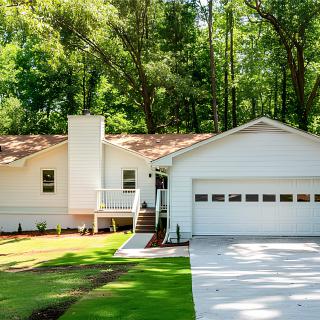

 A Detailed Exploration of Assisted Living Medicaid Waivers Across the United States
 Exploring the Contrasts Between Assisted Living and Skilled Nursing
 Vibrant Senior Living: A Comprehensive Guide for Active Older Adults