
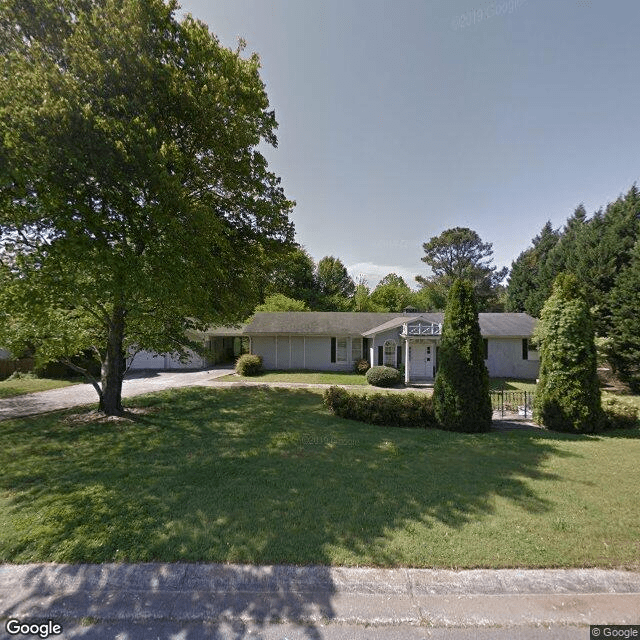
1780 Macby Dr, Marietta, GA 30066
To contact a resident: (770) 971-6262
For more information about senior living options: (866) 208-4318
Brittany House at Macby Costs & Pricing
Brittany House at Macby offers a competitive pricing structure for its one-bedroom units, with monthly costs set at $2,500. This is notably lower than the average rates in Cobb County, which stand at approximately $3,303, and even more attractive compared to the statewide average of $3,412 in Georgia. By providing quality accommodations at this price point, Brittany House positions itself as an appealing option for residents seeking affordability without compromising on value in a market where costs can significantly exceed theirs.
| Floor plans | Brittany House at Macby | Cobb County | Georgia |
|---|---|---|---|
| 1 Bedroom | $2,500 | $3,303 | $3,412 |
Memory care communities with a similar price nearby
-
from -$400 / mo
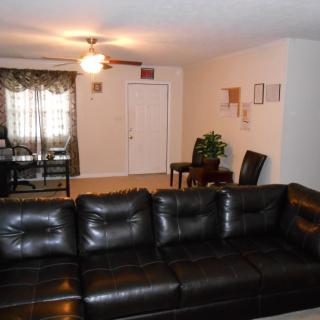
Premium Personal Care Home
$2,100 to $2,850 / month11.4 miles away -
About the same

Serenity Living Personal Care Home
$2,500 to $4,050 / month21.2 miles away -
About the same
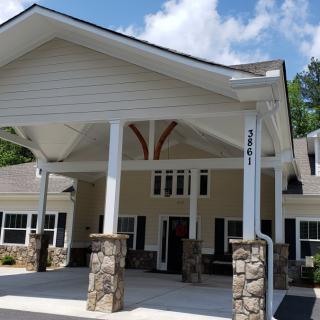
Green Park at Kennesaw
$2,500 to $5,500 / month5.0 miles away -
from +$310 / mo
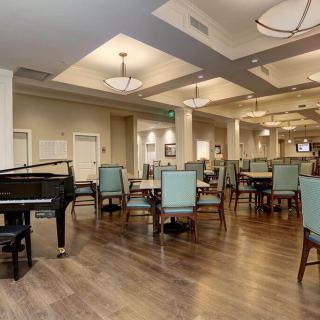
Vitality Living Milton
$2,810 to $5,515 / month14.0 miles away -
from -$150 / mo

Waldrop Residences
$2,350 to $3,200 / month24.0 miles away
Overall Review of Brittany House at Macby
Pros
 Beth is content and stable in her life right now.
- The caregiver is a pure delight.
- The caregiver cares sincerely for the residents, and it shows in her joy to be at Brittany House.
- They appreciate a safe home for Beth.
- The caregiver is immensely liked.
Cons
 Available room had no attached bath and is too far for timely arrival with mom's slow gait.
- Mom is not agreeable to having a portapotty in room.
- She spends a good deal of time in the bathroom.
Review
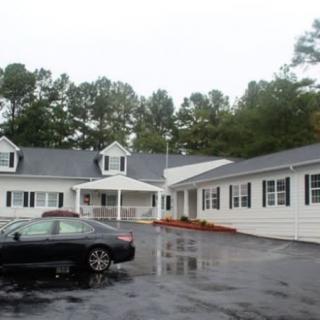
Brittany House at Macby in Marietta is best suited for seniors who want a small, home-like setting where a deeply devoted caregiver can deliver consistent, personal attention and a safe, stable daily routine. The strongest asset is the staff relationship: caregivers described as sincere and genuinely caring drive a sense of contentment and security for residents, creating a quiet, predictable atmosphere that can be a lifeline for those who value familiarity over clinical intensity. Families comfortable with a homier, low-key environment, where the human touch of caregiving is the centerpiece, will likely find this community meets its core priority: a safe harbor.
Yet there are clear reasons to consider alternatives. The available room lacked an attached bathroom, a detail that matters for anyone with mobility limits or a preference for private in-room facilities. The distance from the caregiver to the resident, emphasized by concerns about timely arrival for a slow walker, underscores a structural reality: this is not a campus built around rapid, on-demand assistance. The resident’s reluctance toward a in-room port-a-potty reinforces that some solutions used to bridge gaps may be unacceptable for certain families, making private bath access and direct cercare proximity non-negotiable for some. For those who require frequent, swift assistance or a strong emphasis on in-room privacy, other communities will likely feel more responsive and convenient.
The core advantages, the caregiver’s quality, the evident care ethic, and the sense of safety, do offset several drawbacks, but only to a point. When a resident thrives on daily warmth, steady routines, and a provider who treats them like a family member, Brittany House delivers a level of personal attention that larger facilities often struggle to replicate. This human-centric approach can counterbalance limited room configurations and slower internal logistics, especially for residents who are largely independent beyond routine companionship and basic monitoring. In short, the environment shines in the relational domain, which can reduce anxiety, improve mood, and stabilize daily life.
However, the practical gaps cannot be ignored. The absence of an in-room bath is a meaningful constraint for many seniors, particularly those who spend considerable time in the bathroom or who need easier access to hygiene support. The reported distance and potential delays in assistance for a slow-mobility resident amplify the risk of frustration and discomfort during moments of need. These factors can quickly overwhelm the otherwise serene, homey vibe, turning what should be a simple daily rhythm into a source of stress. The real trade-off is clear: the warmth and safety of a dedicated caregiver versus the convenience and immediacy of more fully equipped, larger facilities.
Families weighing options should come away with a practical checklist. Inquire about room layouts and bathroom access across all available units; demand clarity on response times and caregiver availability, especially for residents with mobility or assistance needs. Tour with a concrete list: is there an attached bath in the room? Can the facility guarantee timely help if a walker-bound resident needs assistance in the middle of the night or early morning? Assess the resident’s tolerance for smaller-scale settings versus the benefits of a bigger community offering more amenities and a broader staffing model. Finally, consider how central the caregiver culture is to the resident’s well-being and whether the emotional benefits justify the trade-offs in privacy and convenience.
Overall, Brittany House at Macby emerges as a compelling choice for families prioritizing intimate, caregiver-led care and a genuinely safe-feeling home. It suits residents who can live with non-attached baths and a layout that may require some planning for mobility challenges, provided the caregiver relationship remains consistently strong. For those who must have immediate, private in-room facilities or who require frequent, rapid assistance, alternatives that emphasize larger scale operations, denser staffing, and private bathroom access will likely serve better. In the end, this community earns its place for the right resident, one who values the human touch and a calm, home-like day-to-day over high-end amenities and ultra-fast response logistics.
 Board and Care Home
 Memory Care
 Respite or short term stays offered
 Ambulatory care
 Diabetic care





 Are Dementia and Alzheimer's Disease Lethal? A Comprehensive Exploration
 Exploring the Power of Reminiscence Therapy for Individuals With Dementia
 An In-Depth Look at Reminiscence Therapy in Dementia Care