
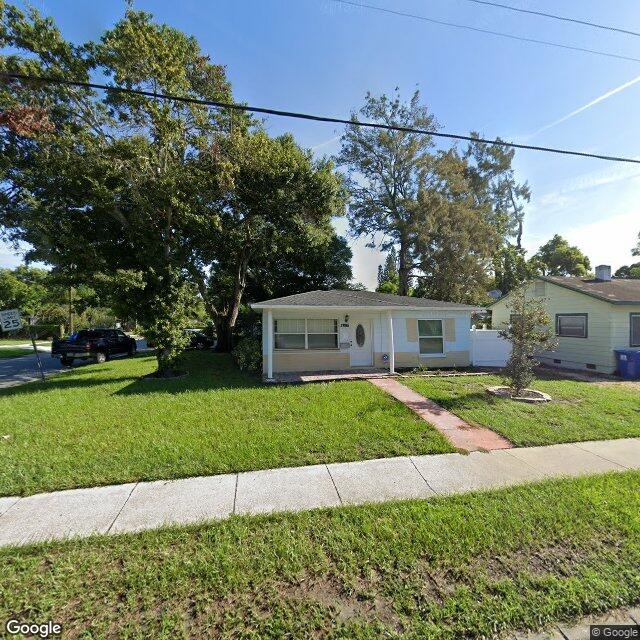
2895 38TH Ave North, St. Petersburg, FL 33713
To contact a resident: (727) 873-7126
For more information about senior living options: (866) 208-4318
Access Adult Family Care Home Costs & Pricing
Access Adult Family Care Home offers competitive pricing for its services compared to both Pinellas County and the broader state of Florida. For a semi-private room, residents can expect to pay $2,000 per month, which is significantly lower than the county average of $2,765 and the state average of $3,009. Similarly, for those seeking more privacy in a private room setting, Access Adult Family Care Home charges $3,000, again undercutting both local and state averages - $3,602 in Pinellas County and $3,699 across Florida. This makes Access Adult Family Care Home an attractive option for families looking for quality adult care without the financial strain often associated with similar facilities.
| Floor plans | Access Adult Family Care Home | Pinellas County | Florida |
|---|---|---|---|
| Semi-Private | $2,000 | $2,765 | $3,009 |
| Private | $3,000 | $3,602 | $3,699 |
Memory care communities with a similar price nearby
-
About the same
Caregivers Touch ALF
$2,000 to $3,000 / month16.3 miles away -
from +$200 / mo
Dorothy Cares Assisted Living Facility
$2,200 to $3,300 / month22.9 miles away -
About the same
Assisted Living Facility Morning Dew
$2,000 to $2,500 / month20.8 miles away -
About the same
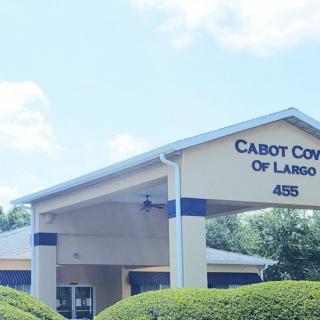
Cabot Cove of Largo Assisted Living & Memory Care
$1,990 to $3,145 / month8.6 miles away -
from +$200 / mo
Mary Dunbar Assisted Living Facility
$2,200 to $2,800 / month20.9 miles away
Overall Review of Access Adult Family Care Home
Pros
 The facility has a very caring and loving atmosphere.
- It is exceptionally clean.
- The staff is very caring toward the clientele.
- It is presented as a Spanish-speaking facility, aiding communication for Spanish-speaking clients.
Cons
 The reviewer has difficulty understanding the owner and the workers because the staff do not speak fluent Spanish.
- The reviewer felt misled by being told the facility was Spanish-speaking.
Review
Access Adult Family Care Home in St. Petersburg, FL is best suited for families seeking an intimate, home-like assisted living experience where culture and language play a central role. The atmosphere is described as very caring and loving, with a level of cleanliness that stands out. The defining feature is a Spanish-speaking team that communicates effectively with residents who speak Spanish, reducing everyday friction and helping residents maintain routines and personal preferences. This setting works exceptionally well for seniors who thrive in small, tightly knit caregiving environments and for families that prize warm, attentive daily care over institutional formality.
This community may not fit every family's needs. Those who do not require or highly value Spanish-language communication may prefer options with English-speaking staff, broader clinical oversight, or larger, more diversified activity calendars. Families seeking English-only coordination for care planning or those needing more formal medical on-site capabilities might look elsewhere. Given the emphasis in the feedback on language alignment, it is essential for potential residents to verify language access and caregiver communication styles before making a commitment.
The strongest positives, the constant caring, the evident warmth from staff, and the spotless cleanliness, translate into meaningful, everyday benefits for residents. A caring, loving atmosphere provides reassurance for families juggling medical appointments, dietary needs, and safety concerns. The Spanish-speaking orientation is especially beneficial for residents who feel more comfortable and engaged when language matches daily interactions, meals, and routine cues. When these elements align, the intimate setting often yields higher caregiver responsiveness, quicker identification of changes in health or mood, and a sense of belonging that larger campuses struggle to replicate.
The primary drawback centers on language friction for non-Spanish-speaking family members. Difficulty understanding the owner and staff can complicate care planning, updates, and ongoing communication about medical or dietary requirements. The reviews acknowledge this tension, highlighting a real bifurcation: what works smoothly for Spanish-speaking families may require extra steps for others. Additionally, the home-style model may limit access to on-site specialists, formal programming, and the comprehensive policies that larger assisted living communities routinely offer. These trade-offs matter when care needs extend beyond routine daily living into more complex medical management.
To navigate these dynamics effectively, prospective residents should enter with a concrete plan for language needs. Confirm whether key caregivers are bilingual, whether translation resources exist, and how care plans are communicated in practice. A thorough tour should include conversations with caregivers to observe how day-to-day tasks are explained and implemented, and to verify reliability in routine care. Clarify the extent of medical oversight on-site, how emergencies are handled, and whether any English-language documents or portals are available. If English-language coordination is essential, arranging an interpreter or assigning a bilingual liaison can bridge gaps and prevent miscommunication from undermining care.
Overall, Access Adult Family Care Home offers a compelling option for families prioritizing warmth, cleanliness, and language-aligned care in a compact, home-like setting. The staff’s evident dedication and the pristine environment create a reassuring daily living foundation. This choice resonates most for Spanish-speaking residents who value immediate rapport with caregivers and a setting that feels like home rather than a clinical facility. For families requiring English-only communication or more extensive clinical services and programming, exploring alternatives is prudent. With clear language expectations and a proactive care plan, this community can deliver high satisfaction when the language dynamic and care priorities align.
 Board and Care Home
 Day Program
 Memory Care
 Private
 St. Petersburg-Clearwater International (7 miles away)
 Ambulatory care
 Diabetic care
 High acuity care
 Incontinence care
 Medication management


 Memory Care Pathways: A Holistic Guide to Dementia Support
 Comprehending Evening Confusion in Dementia: Causes, Manifestations, and Support
 Delirium and Dementia: Unraveling the Key Differences