
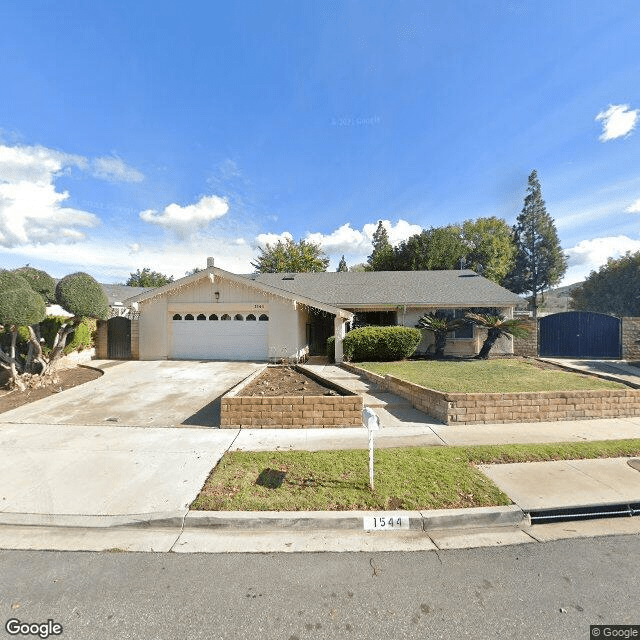
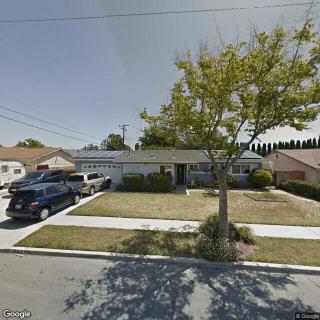
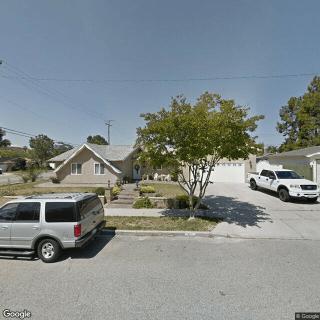
1544 Darrah Avenue, Simi Valley, CA 93063
To contact a resident: (805) 285-0356
For more information about senior living options: (866) 208-4318
Carmen's Care Manor Costs & Pricing
Carmen's Care Manor offers competitive pricing for its room types compared to the broader market in Ventura County and California as a whole. For instance, their semi-private rooms are available at $2,000 per month, significantly lower than the county average of $3,438 and the state average of $3,333. Similarly, their private rooms are priced at $2,700, which is more affordable than both the county's rate of $4,082 and California's average of $3,939. Even the studio apartments at Carmen's Care Manor come in under market rates at $3,200 compared to Ventura County's $4,021 and California's statewide average of $4,145. This pricing structure not only highlights Carmen's Care Manor as an economical choice for residents but also underscores its commitment to providing quality care without compromising on affordability.
| Floor plans | Carmen's Care Manor | Ventura County | California |
|---|---|---|---|
| Semi-Private | $2,000 | $3,438 | $3,333 |
| Private | $2,700 | $4,082 | $3,939 |
| Studio | $3,200 | $4,021 | $4,145 |
Memory care communities with a similar price nearby
-
from -$200 / mo
Green Valley Home Care
$1,800 to $2,000 / month2.3 miles away -
from +$200 / mo
Granada Hills Gardens
$2,200 to $3,500 / month12.5 miles away -
from -$200 / mo
Masa Comfort Living Inc.
$1,800 to $3,200 / month18.2 miles away -
from -$250 / mo
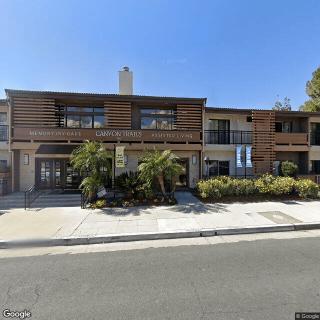
Oakdale Heights of Woodland Hills
$1,750 to $3,462 / month7.6 miles away -
from +$200 / mo
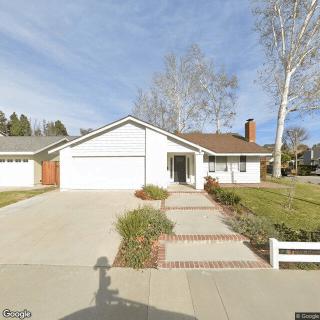
Victoria's Place #1
$2,200 to $3,600 / month13.2 miles away
Overall Review of Carmen's Care Manor
Cons
 The facility would not accept clients with dementia or Alzheimer's.
- The aunt was not accepted there because of her dementia and Alzheimer's.
- They had to place her elsewhere in a home designed for Alzheimer's patients.
- There would be no credible rating without having lived there.
Review
Carmen’s Care Manor in Simi Valley is best suited for seniors who do not have dementia or Alzheimer's and who need standard assisted-living support rather than memory-care programming. The facility’s admission stance is clear: residents with cognitive impairments are not accepted. That up-front policy should shape every family’s decision, because it means the community is designed for a non-dementia population and will not serve as a memory-care option if cognitive decline emerges. For families seeking predictable routines, straightforward assistance with daily activities, and a non-memory-care environment, this community can be a practical match, provided the incoming resident fits that cognitive profile from day one.
Those who should consider alternatives are primarily families with loved ones who have dementia or Alzheimer's, or who anticipate requiring memory-care specialized services. If memory care is part of the care plan or becomes necessary, this community will not be able to meet that need. Additionally, the available feedback is limited, so prospective residents who value strong, experiential endorsements may want to explore other facilities with more substantial resident or family testimonials, particularly those with active memory-care programs and longer track records.
On the plus side, the limited review data yields a cautiously favorable signal: a 4-star rating from two sources suggests satisfactory performance on the basic metrics that matter to non-dementia residents, safety, routine, and general comfort. That rating, while small in sample size, implies the community likely delivers a dependable, uncomplicated assisted-living experience for residents who do not require memory-support services. The absence of memory-care demands can translate into a calmer milieu and more predictable staffing needs, which can be a meaningful advantage for families prioritizing steadiness and straightforward activities.
The primary, non-negotiable con is the dementia admission policy. For any family facing cognitive impairment in a loved one, this is a decisive deal-breaker: the option simply isn’t available here. It also complicates future planning, because a resident’s cognitive trajectory could change, potentially requiring a transition to a memory-care setting that Carmen’s Care Manor cannot provide. The dual reality of a strict policy and scant independent validation in the reviews means vigilance is essential: verify current admission rules, and probe how they handle residents who show signs of cognitive decline after moving in.
Still, the pros and cons do not exist in isolation; they intersect meaningfully for decision-making. For families with cognitively stable seniors who want straightforward, non-memory-focused care, the favorable rating hints at reliable day-to-day operation and satisfaction with essential services. That said, the policy limitation dwarfs these positives for anyone whose loved one may develop memory challenges or who seeks a facility that can accommodate such needs. The prudent path is to pursue a tour, ask direct questions about current dementia policies, and compare with memory-care options in the area to determine which model aligns with long-term expectations.
In practical terms, the bottom-line recommendation is clear. If memory care is not anticipated, Carmen’s Care Manor could be a reasonable option to consider, provided the admissions policy is fully understood and aligned with current needs. Families should not rely on the limited reviews to gauge fit; instead, request a thorough tour, ask about staff training for non-memory-care residents, daily routines, activity programming, and emergency capabilities. Crucially, confirm whether there is any flexibility if cognitive status changes, and establish a plan for transitions to memory-care settings if needed. For those who anticipate memory support at any stage, actively compare this community with dedicated memory-care options in Simi Valley or nearby, focusing on caregiver ratios, security features, and the availability of dementia-specific programs. The choice should rest on whether the resident’s cognitive status now and likely trajectory over the coming years warrant a non-memory-care environment or a dedicated memory-care setting.
 Board and Care Home
 Memory Care
 Cats allowed
 Dogs allowed
 Activities off-site
 Bath tubs
 Beautician on-site
 Devotional services off-site
 Indoor common areas
 Outdoor common areas
 Private
 Private bathrooms
 Respite or short term stays offered
 Wheelchair accessible showers
 Burbank-Glendale-Pasadena (21 miles away)
 Ambulatory care
 High acuity care
 Incontinence care
 Medication management
 Kosher
 Caring, family-like staff with personalized attention.


 An In-Depth Look at Reminiscence Therapy in Dementia Care
 Dementia-Related Hallucinations: Causes, Experiences, and Practical Approaches
 Illuminating Insights About Alzheimer's Disease: Ten Crucial Realities