

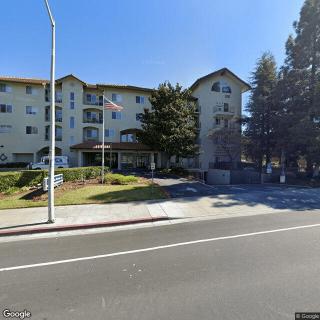
1938 Ensign Way, San Jose, CA 95133
To contact a resident: (408) 923-1160
For more information about senior living options: (866) 208-4318
Green Oaks Care Center Costs & Pricing
Green Oaks Care Center offers competitive pricing for its services compared to the broader market in Santa Clara County and across California. For a semi-private room, residents at Green Oaks pay $2,500 per month, significantly lower than the county average of $3,943 and the state figure of $3,333. Similarly, the cost for a private room at Green Oaks is set at $3,500, which remains below both the county's average of $4,096 and the statewide rate of $3,939. This positioning not only highlights Green Oaks as an economical option for potential residents but also reflects its commitment to providing quality care while maintaining affordability in comparison to regional standards.
| Floor plans | Green Oaks Care Center | Santa Clara County | California |
|---|---|---|---|
| Semi-Private | $2,500 | $3,943 | $3,333 |
| Private | $3,500 | $4,096 | $3,939 |
Memory care communities with a similar price nearby
-
About the same

San Carlos Elms
$2,500 to $5,880 / month23.3 miles away -
from -$278 / mo
The Forum At Rancho San Antonio
$2,222 / month12.3 miles away -
About the same
Isherwood Care III
$2,500 to $3,500 / month14.4 miles away -
from +$450 / mo

Sunnyside Gardens
$2,950 to $4,450 / month9.8 miles away -
from +$300 / mo

Sweet Little Home
$2,800 to $2,970 / month13.9 miles away
Overall Review of Green Oaks Care Center
Pros
 They were nice people.
- They tried hard.
Cons
 They were understaffed and overworked.
- They were possibly underpaid because turnover was frequent.
- They didn’t have enough staff to take care of the residents’ needs.
- The caregivers were also washing clothes and making dinner, leaving them spread too thin.
Review
Green Oaks Care Center in San Jose is best suited for seniors who are relatively autonomous but need occasional assistance and are seeking a budget-conscious option. The community operates with a lean staff, a factor that becomes the defining constraint on daily life. Prospective residents should understand that caregivers are frequently juggling multiple tasks beyond direct care, with laundry and meal preparation often layering on top of core caregiving duties. In short, Green Oaks can offer warmth and attentiveness, but only within the limits of a small-team model. Those who require constant, hands-on monitoring, rapid response to every need, or specialized services should consider alternatives with stronger staffing ratios and more defined roles for staff.
The primary downside is chronic understaffing that leads to delayed responses and inconsistent coverage. Staff who are kind and dedicated are stretched thin, increasing the risk that needs, from personal care to routine laundry, do not receive prompt attention. Frequent turnover compounds the problem, undermining continuity of care and making it harder to build relationships with caregivers. If pay levels contribute to instability, this further erodes reliability over time. The result is a care experience that can feel emotionally supportive but practically uneven, with residents potentially experiencing shifting levels of attention and responsiveness.
On the upside, the caregivers are described as nice and they try hard. That goodwill matters and can translate into warmer interactions, better communication, and a more comfortable atmosphere despite operational constraints. Family members often notice the staff’s effort and appreciate when compassion remains intact under pressure. Still, kindness cannot substitute for consistent staffing or the predictable execution of daily routines. The value proposition hinges on whether the resident can tolerate some inconsistency while still receiving essential care in a timely fashion, and whether that warmth can compensate for gaps in coverage.
Residents will likely experience a mix of strengths and compromises in daily life. Mealtimes and laundry are sometimes handled by the same caregivers responsible for personal care, which can dilute attention to each task. This multi-hatted workload increases the potential for mistakes, slower service, and missed cues for preventive or responsive care. Communication, follow-through, and personal attention may vary by shift, making it critical to establish clear expectations and robust oversight. Prospective families should probe whether the current staffing levels meet the resident’s specific care plan and whether a dedicated caregiver for evenings or weekends is realistic.
To make an informed decision, ask direct questions before committing: What is the current staff-to-resident ratio across day and night shifts? How stable is the caregiving team, and what is the turnover rate? Who oversees quality of care, and how quickly are concerns addressed? Is there a separate housekeeping staff, and how is laundry managed? Request to meet a few frontline caregivers and observe how emergencies or routine requests are handled. If possible, arrange a trial period or a detailed transfer plan that outlines how ongoing care and medical needs will be managed, including medications, nutrition, and mobility assistance.
Bottom line: Green Oaks Care Center offers warmth and a responsive attitude within a lean operation. For residents who can tolerate occasional delays and are comfortable with a less predictable routine, the cost savings and personal approach may be compelling. However, families with high needs for consistent assistance, reliable response times, and specialized services should actively compare alternatives with stronger staffing, predictable coverage, and clearer accountability. In the San Jose market, careful due diligence is essential to verify current staffing realities and ensure alignment with the resident’s care goals.
 Board and Care Home
 Memory Care
 Private
 San Jose International (4 miles away)
 Diabetic care
 Incontinence care
 Medication management


 Medications Associated with Dementia Risk: A Comprehensive Overview
 Guiding Your Journey: Understanding Power of Attorney for Elderly Parents
 22 Remarkable Caregiver Support Groups Available Online and In-Person