
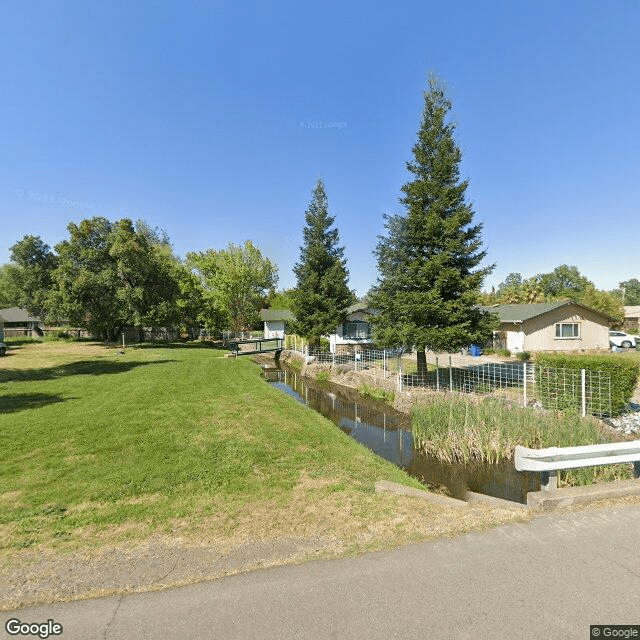
1258 Mistletoe Lane, Redding, CA 96002
To contact a resident: (530) 223-3097
For more information about senior living options: (866) 208-4318
Creekside Manor Costs & Pricing
Creekside Manor offers competitive pricing for its residential accommodations, particularly when compared to both Shasta County and the broader California market. The monthly cost for a semi-private room at Creekside Manor is set at $3,300, which not only undercuts the county average of $3,611 but also presents a more attractive option than the state average of $3,333. For those seeking private accommodations, Creekside Manor maintains a price of $3,400, again demonstrating value by remaining significantly lower than the average costs in Shasta County at $4,126 and California as a whole at $3,939. This positioning reflects Creekside Manor's commitment to providing affordable care while ensuring quality service in a comfortable environment.
| Floor plans | Creekside Manor | Shasta County | California |
|---|---|---|---|
| Semi-Private | $3,300 | $3,611 | $3,333 |
| Private | $3,400 | $4,126 | $3,939 |
Memory care communities with a similar price nearby
-
from -$305 / mo
The Vistas Assisted Living and Memory Care
$2,995 to $3,995 / month1.9 miles away -
from -$300 / mo
Serenity Gardens
$3,000 to $4,600 / month2.8 miles away -
from -$405 / mo
Sierra Oaks Assisted Living and Memory Care
$2,895 to $3,495 / month2.7 miles away -
from +$200 / mo
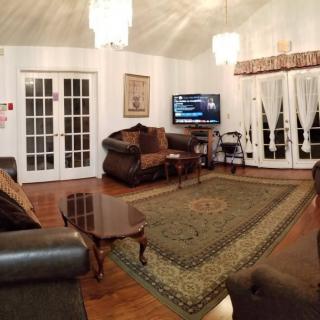
Horizon Home
$3,500 / month1.7 miles away -
from -$500 / mo
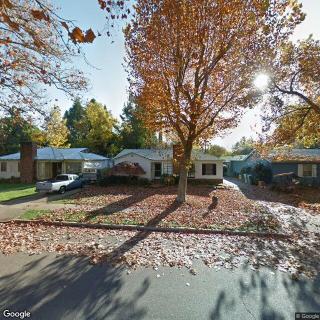
Lake Redding Manor
$2,800 to $4,000 / month2.6 miles away
Overall Review of Creekside Manor
Pros
 The reviewers were impressed with the facility.
- The establishment is very well kept.
- The caregiver was very competent in attending to residents’ meals and needs.
- The home is clean and orderly, with no smells, and residents appear happy to be there.
- The staff demonstrated attentiveness and responsiveness to residents’ needs.
Cons
 The front gate is unlocked, compromising security.
- There isn’t enough staff to supervise residents outside.
- The gate cannot be locked because the Fire Marshal said so, which raises safety concerns.
- There is a conflict between Title 22 guidance (which allows a locked gate for dementia facilities) and the facility’s current policy.
Review
Creekside Manor in Redding, California is best suited for families seeking a clean, home-like senior living option with steady, attentive daily care. It delivers a practical, comfortable environment where meals are handled competently and housekeeping is meticulous. Residents appeared content and the setting is orderly, with clear routines and a calm atmosphere that reduces family anxiety about day-to-day quality of life. This community fits households that value a respectful, well-kept place over flashier amenities or aggressively marketed dementia programming. It is not pitched as a high-security dementia campus, but it does require attention to wander concerns for certain residents.
From a caregiving perspective, Creekside Manor earns solid marks. The kitchen and dining routines run smoothly, and caregivers tend to immediate needs with competence, evident in small, practical acts like promptly responding to a resident who wants extra food. The facility is described as clean, odor-free, and orderly, with visible signs that residents enjoy daily life there. The combination of cleanliness, predictable routines, and approachable staff creates a sense of safety for families who want reassurance that basic needs are consistently met. Ownership also matters here, with the same operator running Pacific Heights, suggesting a consistent care philosophy across locations.
However, security and outdoor supervision expose real trade-offs. While Creekside Manor is described as secure in intent, the front gate being unlocked has sparked questions about wander risk for residents prone to wandering. Management indicated this was a Fire Marshall constraint, and that a locked-gate solution is being pursued, but the tension with Title 22 guidance remains unresolved for now. The reported shortage of staff to supervise outdoor time compounds the concern, limiting outdoor freedom for residents who enjoy being outside. Families should evaluate willingness to accept occasional outdoor access restrictions.
These positives offset the drawbacks to a practical degree. A clean, well-maintained environment reduces infection risk and supports resident dignity, while competent caregiving translates into reliable meal service, responsive problem-solving, and a calm daily rhythm. The waitlist status signals sustained demand and a stable path forward for residents already onboard, which can translate into predictable care continuity. The ownership linkage to Pacific Heights also offers a sense of governance continuity and potential cross-location resources. In short, Creekside Manor can deliver solid day-to-day quality if security gaps align with a family’s risk tolerance.
Prospective families who require rigorous, locked-security or a dedicated dementia unit should consider alternatives. Facilities with strict dementia wards, higher staff-to-resident ratios, or more robust outdoor supervision often outperform Creekside Manor on safety metrics. Those needing immediate placement rather than a waitlist will also want to shop elsewhere. The Pacific Heights option, also run by the same owner, might be worth a tour to compare environment and costs, as it may offer different staffing patterns or design that better suits specific needs.
Practical next steps involve visiting for a firsthand assessment of safety and daily life. Prospective buyers should verify current gate status, ask for explicit wander-management plans, and observe outdoor supervision in action. Request details on staff-to-resident ratios during day and night, dementia-focused training, and how meals and activities are tailored to individual preferences. Clarify admission timelines to understand the waitlist dynamics, and compare pricing and included services with nearby options. Creekside Manor stands as a credible, well-run option for families prioritizing cleanliness, dependable caregiving, and a comfortable home atmosphere, while acknowledging that tighter security may drive some to look elsewhere.
 Board and Care Home
 Memory Care
 Activities off-site
 Bath tubs
 Devotional services off-site
 Indoor common areas
 Outdoor common areas
 Private
 Private bathrooms
 Respite or short term stays offered
 Wheelchair accessible showers
 Redding Municipal (6 miles away)
 Ambulatory care
 Diabetic care
 High acuity care
 Incontinence care
 Medication management
 Kosher
 Memory Care Pathways: A Holistic Guide to Dementia Support
 Comprehending Evening Confusion in Dementia: Causes, Manifestations, and Support
 Delirium and Dementia: Unraveling the Key Differences