
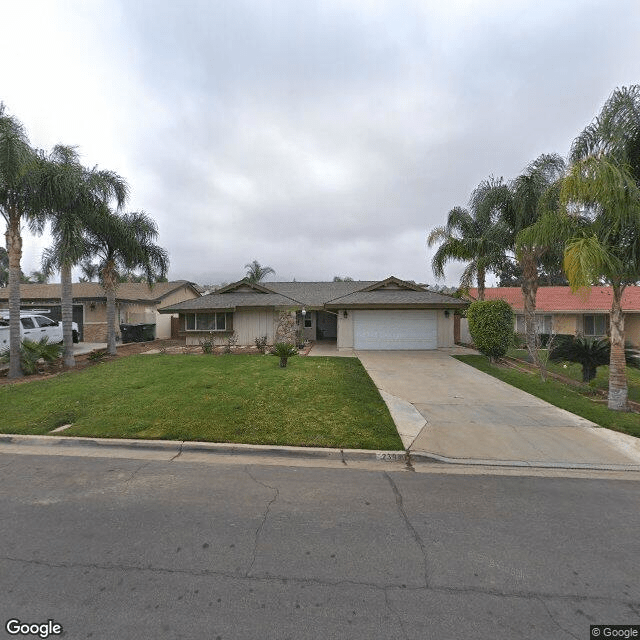
2394 Monterey Peninsula Drive, Corona, CA 92882
To contact a resident: (951) 415-6941
For more information about senior living options: (866) 208-4318
Overall Review of Monterey Peninsula I
Pros
 The staff are great and go above and beyond.
- The staff are really friendly and caring.
- The community is clean and well maintained.
- The exterior landscaping is nice.
- The home is pleasant with no noticeable odor.
- The owner is a nurse and knowledgeable.
- The director is very nice and is a knowledgeable critical care nurse.
- The facility offers wheelchair-accessible showers and private rooms.
- There is a nice yard area to sit.
Cons
 The caregivers were not very assertive.
- There were no planned activities.
- The bedroom window was easy to get out of.
- The Crestview location is an older house.
- There was a chemical odor.
Review
Monterey Peninsula I in Corona is best suited for families seeking a warm, home-like setting where staff genuinely care and attention to individual residents is visible every day. This community tends to attract an older population with memory challenges and a strong preference for personal interaction over clinical tempo. The strongest case is made for families who value hands-on kindness from caregivers, a nurse-led ownership perspective, and a pleasant, low-key environment where staff aren’t afraid to go the extra mile, such as instances of personal grooming assistance that reflect genuine attentiveness. When memory needs are present, and a resident benefits from a smaller, personable setting with accessible spaces, Monterey Peninsula I offers reassuring continuity and a familiar, nurturing vibe.
The standout positives center on people. Staff are consistently described as friendly, caring, and willing to exceed expectations, a thread that runs through multiple observations. Cleanliness and curb appeal, well-kept grounds and an inviting exterior, add to confidence that the place is well maintained. The presence of an owner who is a nurse contributes to trust in medical awareness and daily oversight. For residents who prize private accommodations, Monterey Peninsula I can provide a private room with a wheelchair-accessible shower, a feature that makes ongoing daily living easier and safer. The director’s background as a critical-care nurse is also cited as a reassuring leadership touch that translates into practical, capable care on the floor.
However, several material drawbacks temper the otherwise reassuring picture. A notable gap is the lack of structured, organized activities, which matters for residents who require regular engagement to sustain mood and cognition. Two 24-hour caregivers on site without strong assertive supervision may leave families worried about consistent redirection or response during cognitive or behavioral episodes. The facility is described as an older house with occasional odors, a factor that can be a deal-breaker for residents with sensitivities or for families seeking a consistently fresh environment. Although private rooms are available at Monterey Peninsula I, relative to nearby options, the price point can be higher, and the building’s aging infrastructure may not meet every family’s expectations for modern amenities.
These strengths and weaknesses help clarify who may want to consider alternatives. For families prioritizing a robust activity calendar, advanced dementia-specific programming, or more contemporary architectural standards, Monterey Peninsula I may fall short. Alternatives that provide stronger structured programming, more assertive supervision, or newer facilities could suit those needs better. The reviews also point to Crestview as a lower-cost option in the area, with some similar care attributes and a shared-room model, which could appeal to budget-conscious families who still want knowledgeable staff and accessible features. Those seeking a highly modernized environment with odor control or expansive common spaces may want to explore other campuses before committing.
In balancing the positives against the caveats, Monterey Peninsula I often delivers the most for families who place a premium on personal warmth, nurse-aware leadership, and a homelike feel over clinical intensity or high-end modernity. The key persuasive factors are the staff’s kindness, the director’s nursing background, the clean, pleasant environment, and the option of private rooms with accessible features. The most consequential risks are the lack of scheduled activities, potential gaps in proactive supervision, and the odor/infrastructure realities that come with an older house. For families comfortable with a softer care tempo and valuing relational care, the pros can readily offset the cons; for others requiring rigorous programming, tighter safety nets, or contemporary facilities, alternatives deserve serious consideration.
To make a sound decision, approach a tour with a concrete checklist: confirm how daily activities are organized and who leads them; ask about memory-care capabilities and wandering safety, including window alarms and staff-to-resident ratios during peak hours; inspect the odor control and overall air quality, and request a recent maintenance log for odors and plumbing. Verify the cost structure for private versus shared rooms, and compare it against nearby options to determine true value. Finally, speak with front-line caregivers about what a typical day looks like and request a trial period or a day-pass if possible. This approach will reveal whether Monterey Peninsula I’s warmth and attentiveness align with the resident’s needs and the family’s expectations.
 Board and Care Home
 Memory Care
 Ontario International (12 miles away)
 Diabetic care
 Incontinence care



 Understanding the Distinctions: Assisted Living and Memory Care Explained
 How to Communicate with a Loved One Living with Dementia: 10 Supportive Strategies
 Comprehensive Guide to VA Nursing Homes: A Crucial Long-Term Care Resource for Veterans