
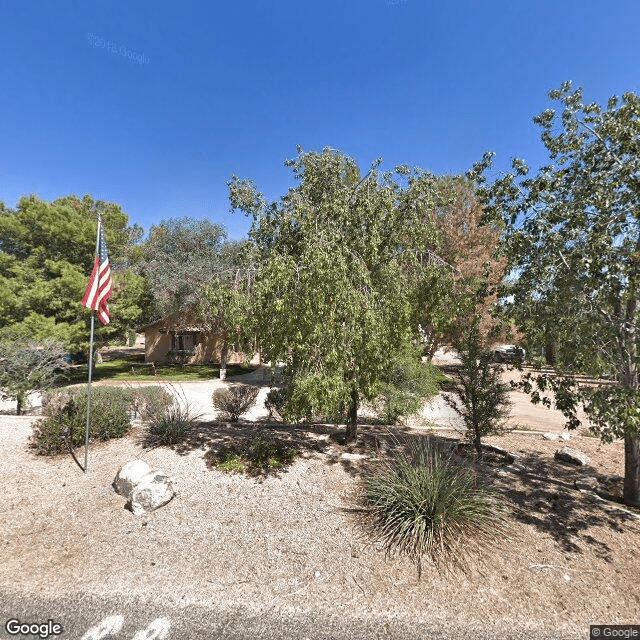
18642 E Cloud Road, Queen Creek, AZ 85142
To contact a resident: (480) 888-2284
For more information about senior living options: (866) 208-4318
A Caring Manor I Costs & Pricing
A Caring Manor I offers a range of accommodations at competitive prices when compared to both Pinal County and the broader Arizona state averages. For semi-private rooms, residents can expect a monthly fee of $2,900, which is slightly higher than the county average of $2,798 but remains below the state average of $2,820. Those opting for private rooms will pay $3,200, aligning closely with the county's average of $3,209 and offering a more budget-friendly alternative to the state average of $3,345. However, the 1-bedroom option at A Caring Manor I stands out at $4,900, notably exceeding both county and state averages of $3,659 and $3,532 respectively. This pricing structure reflects a thoughtful balance between quality care and affordability within the local market.
| Floor plans | A Caring Manor I | Pinal County | Arizona |
|---|---|---|---|
| Semi-Private | $2,900 | $2,798 | $2,820 |
| Private | $3,200 | $3,209 | $3,345 |
| 1 Bedroom | $4,900 | $3,659 | $3,532 |
Memory care communities with a similar price nearby
-
from -$400 / mo

La Bella Vita ALH
$2,500 to $7,000 / month11.7 miles away -
from -$500 / mo
Golden Touch One Adult Care Home
$2,400 to $5,800 / month12.0 miles away -
from +$100 / mo
Desert Winds I
$3,000 to $3,800 / month17.3 miles away -
from +$100 / mo
Altercare Assisted Living Home
$3,000 to $3,500 / month8.4 miles away -
from -$400 / mo
Villa Jean
$2,500 to $3,000 / month12.9 miles away
Overall Review of A Caring Manor I
Pros
 The facility is a family-owned business.
- The staff are incredibly friendly and attentive.
- The care services are excellent.
- The community is stunningly beautiful and transitions into living arrangements are seamless.
- Meals and medications are consistently on time, and the overall quality of care is superb.
- Caregivers are amazing and make residents feel cared for.
- The environment is clean, well maintained, and staffed by efficient, up-to-date professionals.
- The community feels like a family, with residents treated warmly and like family.
- There are meaningful activities and opportunities for residents to stay engaged.
- The presence of animals adds joy to residents' daily life.
Cons
 The owner lied to the reviewer and staff refused to administer prescribed pain medications, leaving the father in severe pain.
- The staff did not want to be bothered with the father and failed to monitor him properly.
- The reviewer was told they could stay overnight but were not allowed to sleep, signaling poor caregiving boundaries.
- The reviewer describes the facility as a terrible place and warns others not to bring family members there.
- Caregivers are described as problematic, with failures to dust, need to be asked to vacuum, and frequent medication mix-ups.
- The meals are nutritionally lacking, with little fresh produce and a reliance on canned meats, and heart-healthy guidelines not followed.
Review
A Caring Manor I is best suited for families seeking a warm, family-operated setting in Queen Creek where residents experience a genuine home feel, personalized attention, and staff who are visibly invested in daily well-being. The community tends to appeal to seniors who value small-scale, hospitable environments, consistent friendly interactions, and a level of intimacy often described as “home away from home.” It suits those who appreciate services that feel personal, nails, hair, and other touchpoints that create a sense of dignity and normalcy. However, it may not be ideal for loved ones who require stringent medical oversight, frequent adjustments to pain management, or a highly structured activity calendar with robust, therapy-driven programs.
The strongest advantages hinge on staff warmth and the semblance of a family atmosphere. Multiple reviews highlight friendly, efficient caregivers who know residents well and attend to personal needs with promptness. The facility’s cleanliness, the beauty of the space, and the claim of seamless transitions into the living arrangement contribute to a reassuring first impression. Families note that care services can be well-matched to individual routines, with attentive attention to personal grooming and social engagement. When these human-centered qualities align, they offset, for many, the inevitable trade-offs of a smaller, less clinical operation.
Yet, the picture is not uniformly pristine. A notable portion of feedback flags serious concerns about care management and oversight. Accusations range from medication mishandling and delayed pain relief to a troubling pattern of communication gaps with families, including late notifications about a loved one’s condition. There are claims of staff being overwhelmed or reluctant to address urgent needs, and even episodes where a family member felt unsafe or undervalued. These signals, if borne out by current operations, cut directly against the core expectations for an accountable, safety-first environment and suggest that governance and day-to-day supervision may require heightened vigilance.
Activity levels and program breadth also appear uneven. Some residents describe meaningful engagement, social interaction, and accessible, enjoyable routines that foster a sense of belonging. Others report a thinner activity slate, with opportunities that feel optional rather than integrated into a structured day. The contrast matters: in a setting where daily engagement supports cognitive and emotional health, the absence of consistent programming can erode satisfaction over time. Prospective families should probe for a current activities calendar and ask how staff tailor options to different mobility levels and interests.
Nutrition and meal quality present a mixed picture. Several reviews depict home-cooked, nutritious meals that align with residents’ preferences and dietary needs, reinforcing comfort and routine. However, other testimonies point to limited variety, a reliance on canned items, and a food plan that may not meet all heart-healthy or fresh-produce expectations. The ability to bring in outside fruits or vegetables at personal expense is mentioned, but that adds a cost consideration for families budgeting long-term care. Prospective residents should request a recent menu and a transparent meal-nutrition policy to gauge consistency with their expectations.
In the final assessment, A Caring Manor I can be a solid fit for families prioritizing a welcoming, intimate setting where staff attention and a homelike ambiance can meaningfully enhance daily life. The right fit hinges on alignment between resident needs and what the community can consistently deliver: dependable medication management, proactive family communication, and a robust, reliably executed activity program. For families ensuring meticulous clinical oversight, or for those whose loved one requires frequent, proactive pain management and round-the-clock safety assurances, alternatives with larger scale operations and clearer governance may be prudent. An informed visit, armed with a list of must-haves, a review of current care plans, and direct conversations with caregivers and the administrator, will reveal whether this manor stands up to the responsibilities of long-term care.
 Board and Care Home
 Memory Care
 Private
 Phoenix Sky Harbor International (24 miles away)
 Ambulatory care
 Diabetic care
 High acuity care
 Incontinence care
 Medication management





 Dementia, Paranoia, and Caregiver Guidance: Understanding the Connection
 Engaging Memory Care Activities That Enhance Quality of Life
 When to Transition from Assisted Living to Memory Care: Key Indicators, Steps, and Finding the Right Community